
In a major milestone for blockchain adoption in Latin America, Mercado Bitcoin, one of the region’s largest crypto exchanges, has announced a plan to tokenize over $200 million in real-world assets (RWAs) using the XRP Ledger (XRPL). The move not only underscores the growing interest in tokenized finance but also marks a significant step in the XRP Ledger’s global expansion strategy.
The tokenized assets will include regulated fixed-income and equity instruments, aiming to boost access to compliant digital financial products across Latin America and Europe.
Latin America Pushes Ahead in Tokenized Finance
Tokenization—the process of representing traditional financial assets like bonds or stocks on blockchain—has become a fast-growing area of fintech innovation. Analysts estimate the tokenized asset market could exceed $600 billion by 2025 and surge toward $19 trillion by 2033, according to research from Ripple and Boston Consulting Group.
“Across Latin America, we’re seeing forward-looking institutions explore how tokenization can improve access and efficiency in financial markets,” said Silvio Pegado, Ripple’s Managing Director for LATAM. “Mercado Bitcoin’s integration with the XRPL shows how public blockchain infrastructure is becoming a trusted foundation for regulated financial products.”
This trust in public networks represents a broader shift in institutional attitudes toward blockchain. Financial heavyweights such as BlackRock and Guggenheim Partners have also shown growing interest in the space, further validating tokenization’s potential in mainstream finance.
XRP Ledger: Closing the Gap with Ethereum
Despite Ethereum’s early dominance—with over $7.5 billion in tokenized asset value—other blockchain networks are aggressively positioning themselves to capture more of the market.
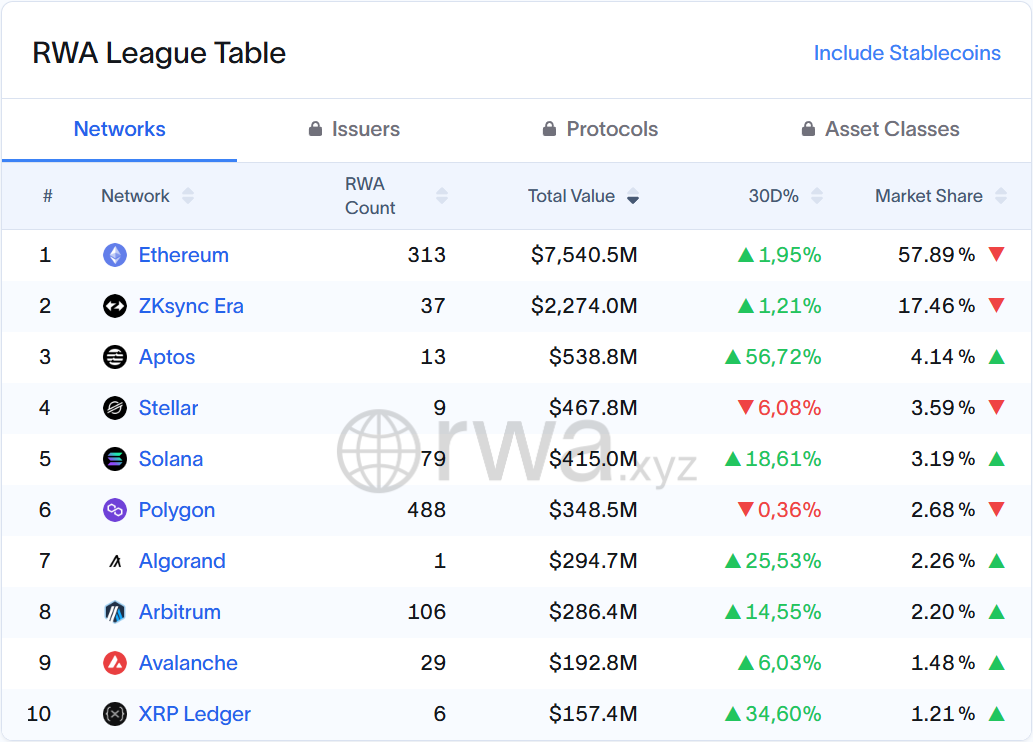
According to RWA.XYZ, the XRP Ledger currently ranks 10th, with approximately $157 million in tokenized assets. But Ripple executives see plenty of runway for growth. They argue that XRPL’s low-cost structure, fast transaction speeds, and institution-grade compliance make it well-suited for large-scale tokenization.
“With the kind of infrastructure XRPL offers, it’s now possible to bring these [RWA] assets onchain in a way that meets institutional expectations,” said Pegado.
New Upgrades Boost XRPL’s Competitive Edge
Recent upgrades to the XRP Ledger are designed to attract more enterprise and developer activity. Notably, the launch of an EVM-compatible sidechain brings Ethereum-based decentralized applications (dApps) into the XRPL ecosystem.
Other enhancements include:
- Batch transactions for increased efficiency
- Cross-chain interoperability for smoother asset transfers
- Permissioned decentralized exchanges (DEXs) for regulatory alignment
- Token escrow functions for smart contract flexibility
These tools aim to make the network more appealing for institutions seeking reliable, compliant blockchain environments for asset tokenization.



