

Bitcoin’s Circulating Supply Is Shrinking as “Ancient” Coins Rise—Here’s Why That Matters
As of June 8, 17% of all bitcoin falls into the category of “ancient supply”—meaning these coins have not moved in a decade or more. What could this mean for scarcity, market dynamics, and investors’ conviction? Find our team’s thoughts: https://t.co/EALzrfS92c pic.twitter.com/Ckm3MylTLY
— Fidelity Digital Assets (@DigitalAssets) June 18, 2025
A new report by Fidelity has sparked fresh debate in the crypto world: nearly 17% of all Bitcoin—valued at over $360 billion—hasn’t moved in more than a decade. These so-called “ancient Bitcoins” are increasingly influencing the digital asset’s supply dynamics, and that trend is only accelerating.
By 2035, experts warn, nearly a third of all BTC could be effectively frozen. The result? A market shaped by scarcity, long-term holders, and possibly fewer coins available for actual use.
What Is “Ancient Bitcoin”?
“Ancient” Bitcoins are defined as BTC that hasn’t moved in 10 years or more. According to Fidelity’s latest research, approximately 3.4 million Bitcoins now fall into this category. With Bitcoin’s hard cap of 21 million coins, that means over one in six is essentially removed from daily circulation.
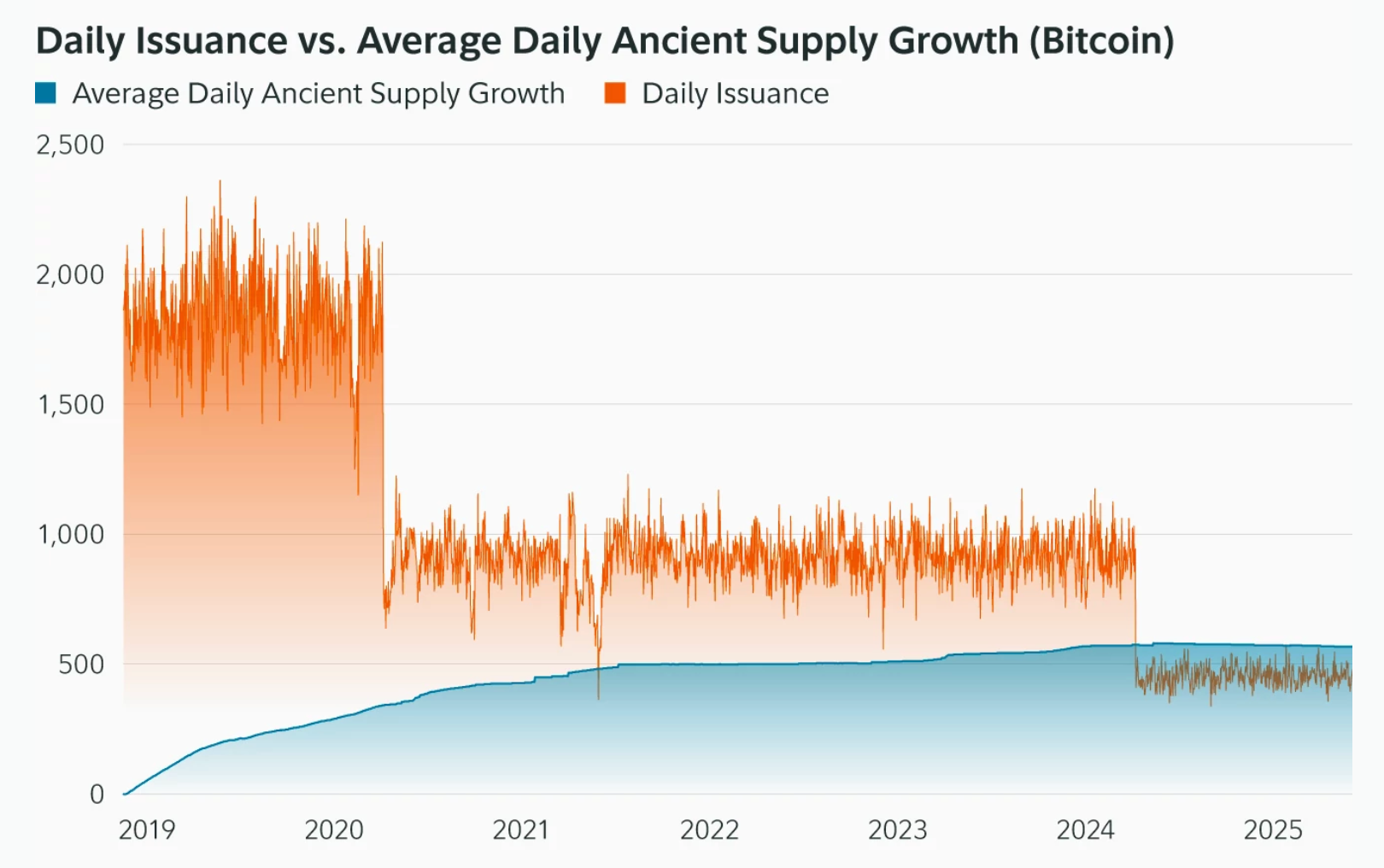
And that figure is growing.
More Bitcoin Is Going Ancient Than Being Mined
In one of the report’s most eye-opening findings, Fidelity states that 566 BTC become ancient every day, while only 450 BTC are newly mined—a troubling imbalance.
This is partly due to Bitcoin’s four-year halving cycle, which steadily reduces mining rewards. At the same time, demand from institutional players—especially ETF issuers—is outpacing new supply. The result is a kind of monetary fossilization: coins are being hoarded or lost faster than they can be replaced.
Why Lost and Dormant Coins Distort the Market
Some ancient Bitcoin is held deliberately. Long-term HODLers and early adopters may be choosing to store wealth for the long haul. But other coins are gone for good—locked in wallets with lost keys, or abandoned in the early days of Bitcoin when its value was negligible.
Blockchain data suggests that up to 20% of all mined BTC is permanently lost. That includes the 1.8 million Bitcoins believed to be linked to Satoshi Nakamoto, which haven’t moved since Bitcoin’s inception.
This shrinking effective supply means the Bitcoin market is more fragile than it appears. Prices may become more volatile, especially when whales control a growing share of the active float.
A Supply Crunch Is Looming
Bitcoin’s design was built on scarcity—but that scarcity may now be intensifying beyond expectations. As ancient and lost coins accumulate, the circulating supply contracts, and liquidity risks rise. While this could drive long-term price appreciation, it also increases the influence of a few large holders.
Investors, developers, and regulators will need to watch how this shapes market behavior—especially as ETFs and institutions continue to buy large volumes of Bitcoin that will likely be held, not spent.



