
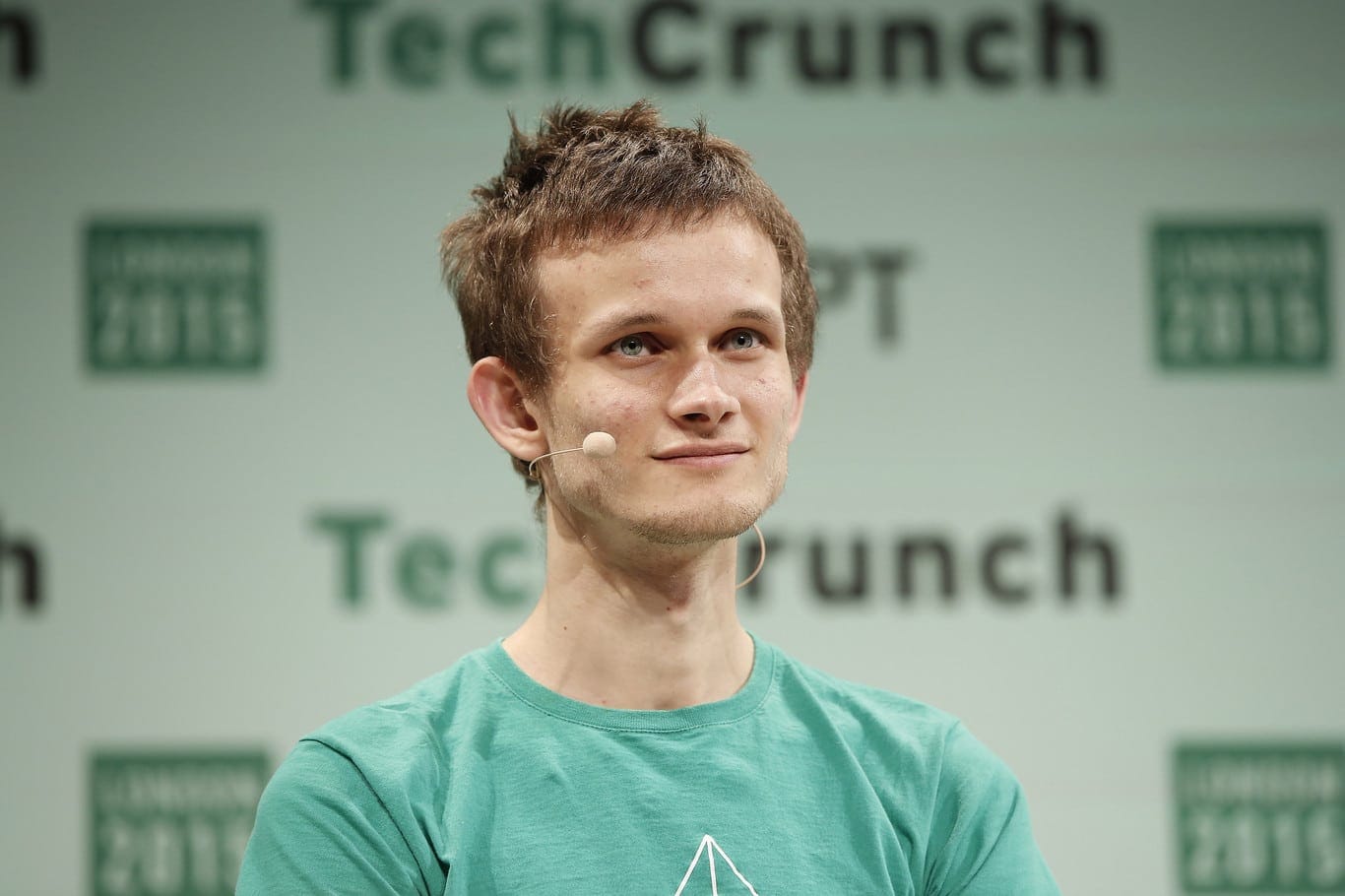
If Bitcoin is the pioneer of digital money, Ethereum is the foundation of the modern crypto economy—and at its core is Vitalik Buterin, the Russian-Canadian programmer who co-created it.
Buterin isn’t just a coder. He’s a writer, thinker, and one of the youngest billionaires in crypto, widely recognized as one of the most influential figures shaping blockchain’s future. Here’s a closer look at his story, from his early fascination with Bitcoin to building Ethereum, the world’s most-used smart contract platform.
Early Life and Introduction to Bitcoin
Vitalik Buterin was born in 1994 . His family moved to Canada when he was six, where he quickly excelled in mathematics and computer science. While studying at the University of Waterloo, he worked as a research assistant under cryptographer Ian Goldberg—an early sign of his deep technical potential.
Buterin discovered Bitcoin in 2011, thanks to his father, who introduced him to the idea of a decentralized digital currency. Fascinated but lacking the money to invest or the hardware to mine, Buterin turned to writing about Bitcoin instead.
He started with Bitcoin Weekly, earning 5 BTC per article—worth only a few dollars at the time. He later co-founded Bitcoin Magazine in 2012, which remains one of the most respected publications in the crypto space. His early writing revealed a sharp mind that could explain complex ideas in simple, compelling ways.
From Bitcoin Enthusiast to Ethereum Visionary
While traveling and meeting fellow crypto enthusiasts, Buterin became frustrated by Bitcoin’s limitations. At the time, developers were experimenting with ways to extend Bitcoin’s functionality through add-on protocols like Mastercoin, but these systems couldn’t keep up with the growing demand for more complex applications.
Buterin envisioned something bolder: a blockchain that could run any program, not just process peer-to-peer payments. He drafted the Ethereum whitepaper in late 2013, describing a network with a built-in programming language capable of powering decentralized applications (dapps) and smart contracts.
By 2014, he and a small team—including Gavin Wood, Joseph Lubin, and others—were developing Ethereum. The project raised funds through one of the earliest Initial Coin Offerings (ICOs), selling Ether (ETH) to support development.
Ethereum officially launched in July 2015, forever changing the blockchain landscape.
What Makes Ethereum Different
Unlike Bitcoin, which is primarily a digital currency, Ethereum is a programmable blockchain. Developers can use it to create dapps that anyone can access, interact with, or build upon—without a central authority.
Key innovations include:
- Smart contracts: Self-executing agreements coded directly onto the blockchain.
- ERC-20 tokens: A standard that enabled thousands of new cryptocurrencies.
- NFTs (non-fungible tokens): Unique digital assets, from art to music, built on Ethereum.
- DeFi (decentralized finance): Applications like lending, trading, and savings tools that don’t rely on banks.
Ethereum quickly became the backbone of Web3. By 2021, it was processing more transactions than Bitcoin and supporting trillions in value across DeFi, NFTs, and beyond.
The Merge and Beyond
One of Ethereum’s biggest milestones came on September 15, 2022, when the network completed The Merge—a long-planned transition from energy-intensive proof-of-work to proof-of-stake. According to the Ethereum Foundation, the shift cut the network’s energy use by 99.9%, addressing one of the biggest criticisms of blockchain technology.
To handle surging demand, Ethereum also relies on layer 2 solutions like Optimism and Arbitrum. These “secondary” blockchains help process transactions faster and more cheaply while anchoring back to Ethereum’s main network for security.
Vitalik Buterin Today
Buterin continues to guide Ethereum’s development, not as a CEO, but as a thought leader. He’s active on social media, writes extensively on his personal blog, and shares nuanced views on crypto’s challenges—from governance to scalability to ethics.
Time Magazine has called him a “builder’s builder” for his vision of blockchain as a tool for creativity, social change, and new forms of economic organization. He’s also one of the youngest people to ever achieve billionaire status in crypto, though he often downplays his wealth and emphasizes Ethereum’s community-driven nature.
Key Takeaways
- Vitalik Buterin (b. 1994) is the co-founder of Ethereum, the leading programmable blockchain.
- He began in crypto as a writer, co-founding Bitcoin Magazine before launching Ethereum in 2015.
- Ethereum powers DeFi, NFTs, DAOs, and thousands of dapps, settling trillions in transactions.
- The 2022 Merge made Ethereum far more energy-efficient, reducing its carbon footprint by 99.9%.
- Buterin remains one of crypto’s most influential voices, shaping how blockchain evolves.



