
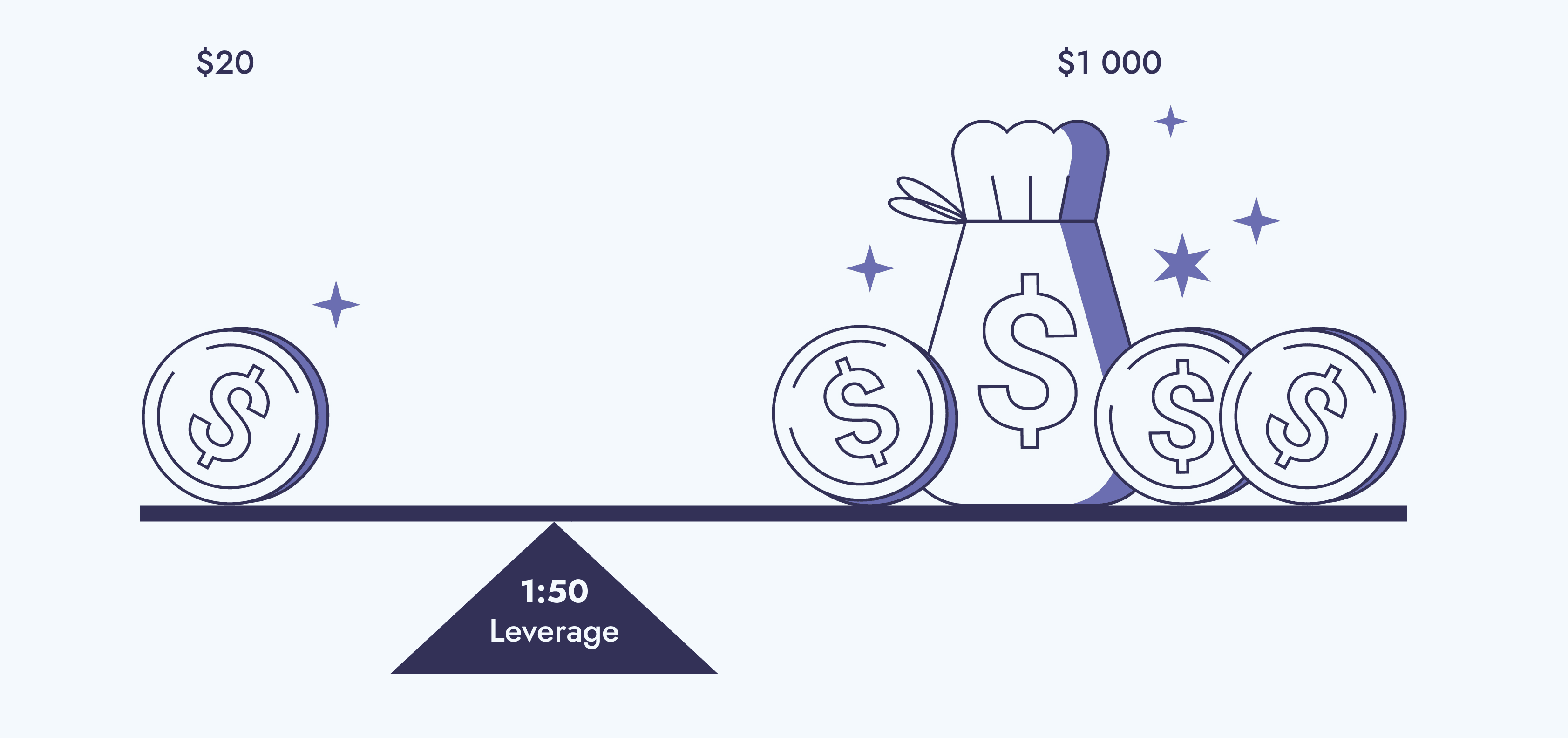
Leverage trading is one of the most powerful — and risky — tools in finance. It allows investors to borrow money to increase their exposure to an asset, potentially amplifying profits. But the same mechanism that can multiply gains can also magnify losses, making leverage a double-edged sword that should be handled with caution.
Understanding Leverage
At its core, leverage means using borrowed capital to make an investment. It’s a common concept in both corporate finance and individual trading.
When a company is “highly leveraged,” it means a large portion of its assets are financed through debt rather than equity. On an individual level, anyone who’s taken out a mortgage to buy a house has used leverage — they’ve borrowed funds to control an asset worth much more than their cash on hand.
The idea behind leverage is simple: use borrowed money to increase potential returns. The risk, however, is equally clear — if the investment moves in the wrong direction, losses can exceed your initial capital.
Types of Leverage
Leverage appears in many areas of finance, but it’s most often discussed in two contexts: corporate finance and trading.
1. Corporate Financial Leverage
In business, leverage helps companies fund operations, acquire assets, or expand without immediately issuing new equity. Analysts use ratios to gauge how much debt a company carries relative to its assets or equity.
Two key ratios include:
- Debt-to-Assets Ratio:
Total Debt÷Total Assets
A value close to 1 means most of the company’s assets are financed by debt. Below 1 is generally safer, while above 1 may suggest insolvency. - Debt-to-Equity Ratio:
This measures how much debt a company uses to finance its operations compared to shareholders’ equity. A higher ratio implies more risk if revenues fall.
Corporate leverage can enhance growth when managed wisely — but excessive borrowing can lead to financial distress, as seen in numerous debt crises throughout history.
2. Margin (Leverage) Trading
In trading, leverage lets investors open larger positions than their cash balance would normally allow. It’s done through margin accounts, where traders post a small amount of capital as collateral to borrow more funds.
A 10:1 leverage ratio (or 10x) means you can trade ten times your collateral. For instance, a $500 deposit would let you control a $5,000 position.
This can boost returns dramatically — but it also raises the risk of being wiped out if the market moves against you.
Example: Leverage in Crypto Trading
Let’s say a trader deposits $1,000 on an exchange that offers 10x leverage, giving them control over a $10,000 position.
- If Bitcoin (BTC) drops from $50,000 to $45,000, and the trader correctly predicted the fall by shorting BTC, they’d make $1,000 in profit — a 100% return on their $1,000 margin.
- But if Bitcoin instead rises to $55,000, the trader loses $1,000 — their entire margin — despite the asset only moving 10% against them.
At 20x leverage, both profits and losses double. A small price swing could erase your capital in seconds, triggering liquidation — the forced closure of your position by the exchange to prevent further losses.
Because of this, brokers often impose maintenance margins and issue margin calls when collateral falls below a set threshold. If you don’t top up your account in time, your position may be automatically closed.
Managing Risk in Leverage Trading
Leverage can be useful, but it demands discipline. Many traders use risk management tools like:
- Stop-loss orders – to automatically close positions when losses hit a set limit.
- Take-profit orders – to lock in gains at predefined price levels.
- Lower leverage ratios – to balance potential reward with manageable risk.
Crypto markets, in particular, are notoriously volatile, which makes high-leverage trading especially dangerous. That’s why regulators in regions like the U.S. and Europe strictly limit the leverage retail investors can use.
Before engaging in leveraged trading, it’s critical to assess your risk tolerance, trading experience, and capital reserves.
Key Takeaways
- Leverage means borrowing funds to increase exposure to an investment.
- In trading, leverage amplifies both profits and losses — a small market move can have a big impact.
- Margin trading requires collateral and can lead to liquidation if losses exceed your margin.
- Risk management is essential. Use stop-loss orders and avoid overleveraging in volatile markets like crypto.
Bottom line:
Leverage trading can supercharge returns, but it’s not for the faint-hearted. Whether you’re investing in traditional markets or crypto, the rule is simple — only use leverage if you fully understand the risks and can afford to lose what you borrow.



