
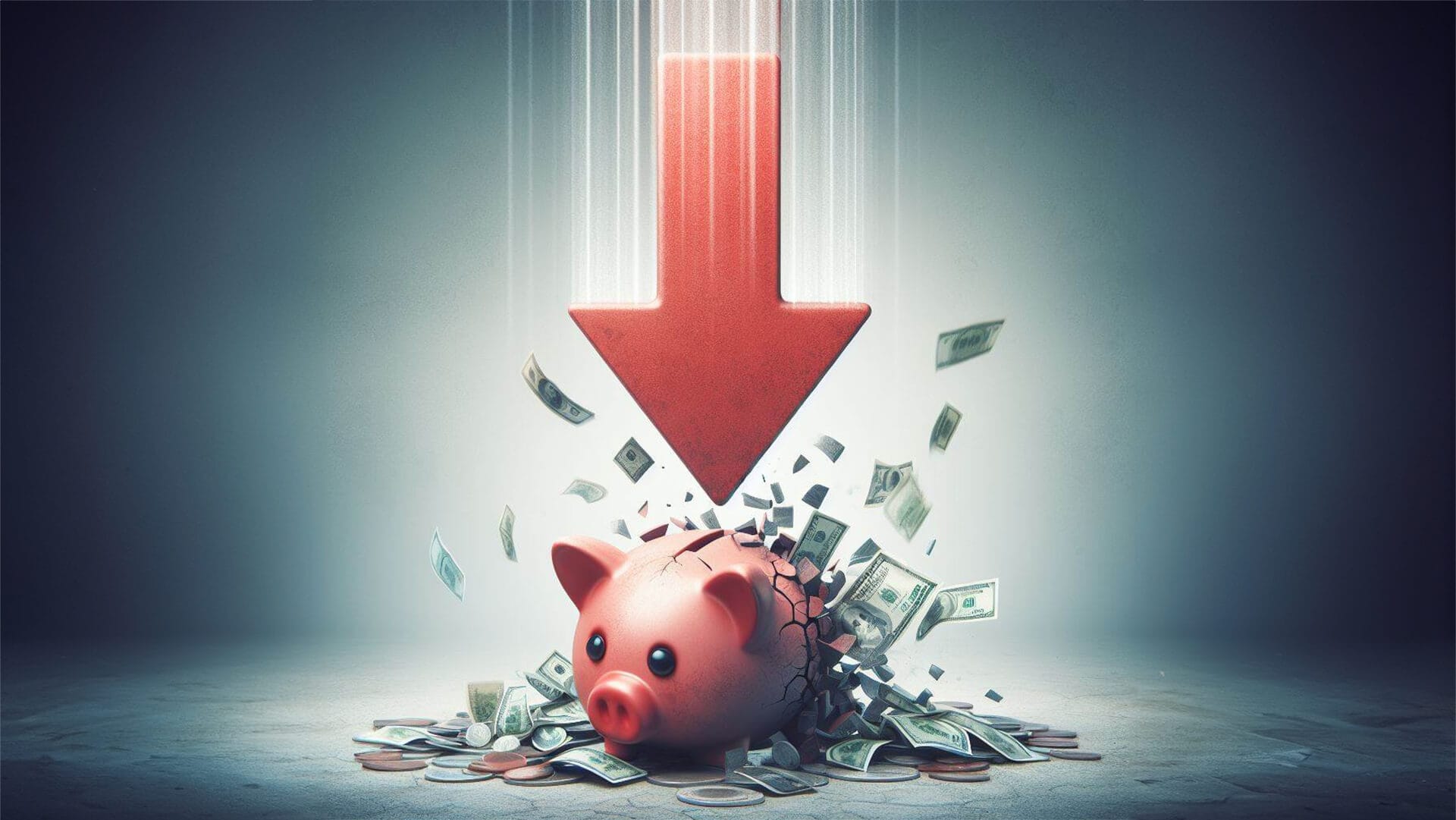
Understanding Deflation
Deflation happens when prices across an economy start to fall — meaning your money buys more than it used to. At first glance, that sounds great. Who doesn’t like cheaper goods and services? But when prices drop for too long or too fast, deflation can quietly choke economic growth, slow business activity, and even push unemployment higher.
Episodes of true deflation are uncommon, especially in modern economies that are designed to avoid it. Still, knowing what drives deflation — and what it can do to your wallet and the wider economy — helps make sense of how central banks manage growth and prices.
What Causes Deflation?
1. Falling demand
When consumers and companies cut back on spending, demand for goods and services falls. Businesses then lower prices to attract buyers — a cycle that can deepen if people keep holding off purchases, expecting prices to drop further.
2. Oversupply
Deflation can also appear when there’s simply too much supply. Advances in technology or production efficiency can make it cheaper to produce goods, flooding the market and pushing prices down.
3. A stronger currency
If a country’s currency strengthens, imports become cheaper. That can drive down domestic prices but also make exports more expensive abroad, hurting local manufacturers.
Deflation vs. Inflation
Both inflation and deflation describe broad price trends — just in opposite directions. Inflation is when prices rise and money loses purchasing power; deflation is when prices fall and money gains value.
Inflation can be triggered by booming demand, rising production costs, or loose monetary policy. Deflation, on the other hand, often stems from weak demand, excess supply, or efficiency gains that cut costs.
While inflation erodes the value of money, it can spur spending and investment. Deflation tends to do the opposite — encouraging saving and delaying consumption, which can stall the economy.
How Governments Fight Deflation
Central banks and governments have several tools to counter falling prices:
Monetary policy: Lowering interest rates makes borrowing cheaper, which can stimulate spending and investment. In more severe cases, central banks may use quantitative easing (QE) — injecting money into the economy by buying government bonds or other assets.
Fiscal policy: Governments can boost demand by increasing public spending or cutting taxes, putting more money in people’s hands and encouraging businesses to invest.
Japan offers a real-world example: after decades of low inflation and mild deflation, the country used aggressive monetary easing and fiscal stimulus to reawaken growth.
The Pros and Cons of Deflation
Potential benefits:
- Lower prices make goods more affordable and can improve living standards.
- Businesses may see reduced input costs from cheaper raw materials.
- Consumers’ savings grow in real value.
Risks:
- People may delay spending, leading to slower growth.
- Debt burdens increase, since loan repayments become more expensive in “real” terms.
- Companies facing weak demand may cut jobs to survive, raising unemployment.
Bottom Line
Deflation isn’t always bad — short-term price drops can ease pressure on households. But when it becomes persistent, it can paralyze spending, deepen debt problems, and stifle growth. That’s why most central banks aim for modest inflation — usually around 2% — to keep economies dynamic and resilient.



