
Caldera: Custom Rollups Without the Complexity
Building on Ethereum has always come with trade-offs—mainly speed and cost. When the network is congested, fees soar, and transactions slow to a crawl. Rollups help by moving activity off the main chain, but most still operate in silos, making it hard for users and developers to move assets or data between them.
That’s where Caldera steps in. Think of it as a Rollup-as-a-Service platform—a toolkit for launching custom blockchain environments in minutes, all pre-connected to other rollups for seamless interoperability. It’s fast, flexible, and built with real-world apps in mind, from DeFi and NFTs to gaming and social platforms.
How Caldera Works
1. Launch Your Own Rollup in Minutes
At the heart of Caldera is its Rollup Engine—a system that lets developers spin up app-specific rollups without needing deep blockchain expertise. Like how AWS simplified cloud deployment, Caldera automates much of the heavy lifting.
Developers can tailor their rollups using popular frameworks:
- Execution Layer: Choose between Optimistic rollups like Arbitrum Nitro or Optimism Bedrock, or go with Zero-Knowledge solutions like zkSync’s ZK Stack or Polygon CDK.
- Data Availability: Options like Ethereum, Celestia, or Avail allow teams to pick where transaction data gets stored.
- Customization: Scale compute resources, schedule upgrades, and fine-tune performance settings on demand.
2. Built-In Interoperability via the Metalayer
Once deployed, every Caldera rollup is instantly plugged into the Metalayer—a behind-the-scenes network that links all Caldera chains together. This is what enables cross-chain communication and liquidity sharing right out of the box.
Key features include:
- Intent-Based Bridging: Need to move stablecoins between rollups? The system routes it automatically using partners like Across, Eco, and Hyperlane.
- Fast Settlement: Transfers and cross-rollup messages finalize in seconds.
- Developer Tools: Caldera provides plug-and-play APIs and UI kits to make building cross-chain dApps intuitive.
3. On-Demand Scaling
As demand spikes—whether it’s a token launch or a major in-game event—teams can spin up new rollups or expand resources without downtime. For example:
- A DeFi platform might launch a high-performance rollup for power users.
- A game studio could create separate rollups for different regions or titles.
- Protocol updates can roll out instantly, with zero user disruption.
Powered by the ERA Token
The ERA token underpins Caldera’s ecosystem. It plays several roles:
- Gas Fees: ERA is used to pay for transaction costs across rollups.
- Staking & Security: Validators stake ERA to secure the Metalayer, verify messages, and support future networks like ZK subnets.
- Governance: Token holders can vote on upgrades, funding proposals, and elect key roles within the protocol.
Caldera’s governance is gradually shifting to on-chain community voting, with the Caldera Foundation bootstrapping the process.
Recent Milestone: ERA Airdrop on Binance
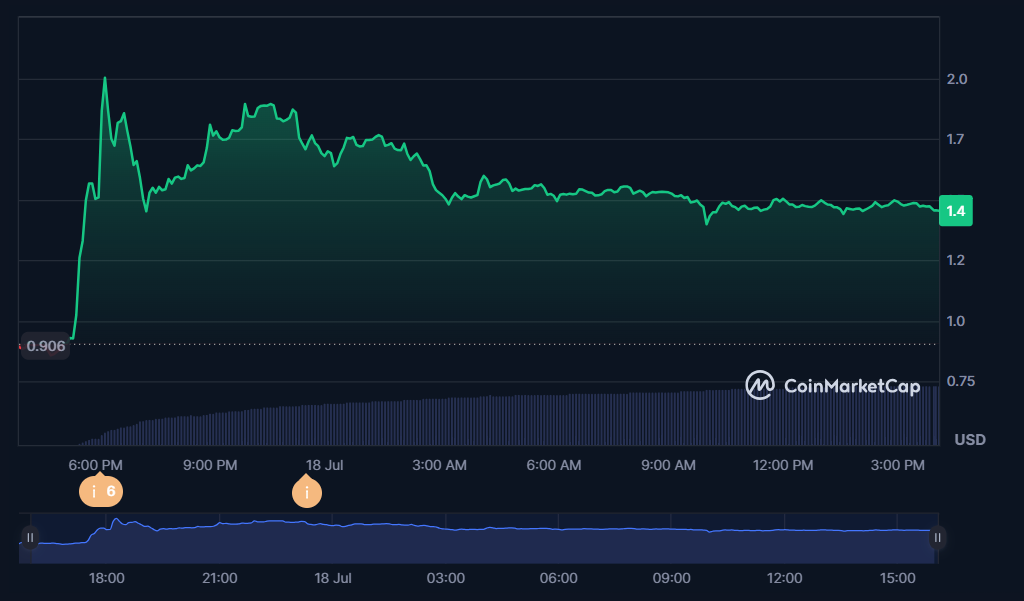
On July 16, 2025, Binance listed ERA as its 27th HODLer Airdrop project. Users who subscribed to BNB staking products between July 1–5 received part of a 20 million ERA token distribution—2% of the total supply. ERA is now trading against USDT, BNB, FDUSD, TRY, and USDC pairs, flagged with a Seed Tag.
Final Thoughts
Caldera is carving out a niche in the blockchain world by doing what AWS did for cloud—making it easy, fast, and scalable. With over 50 live rollups already running on the platform, it’s clear that app-specific chains with native cross-chain communication are more than a trend—they’re the next phase of blockchain infrastructure.
Whether you're building a new DeFi protocol, launching a game, or developing a social app, Caldera offers a modular, future-proof foundation that works with you—not against you.



