
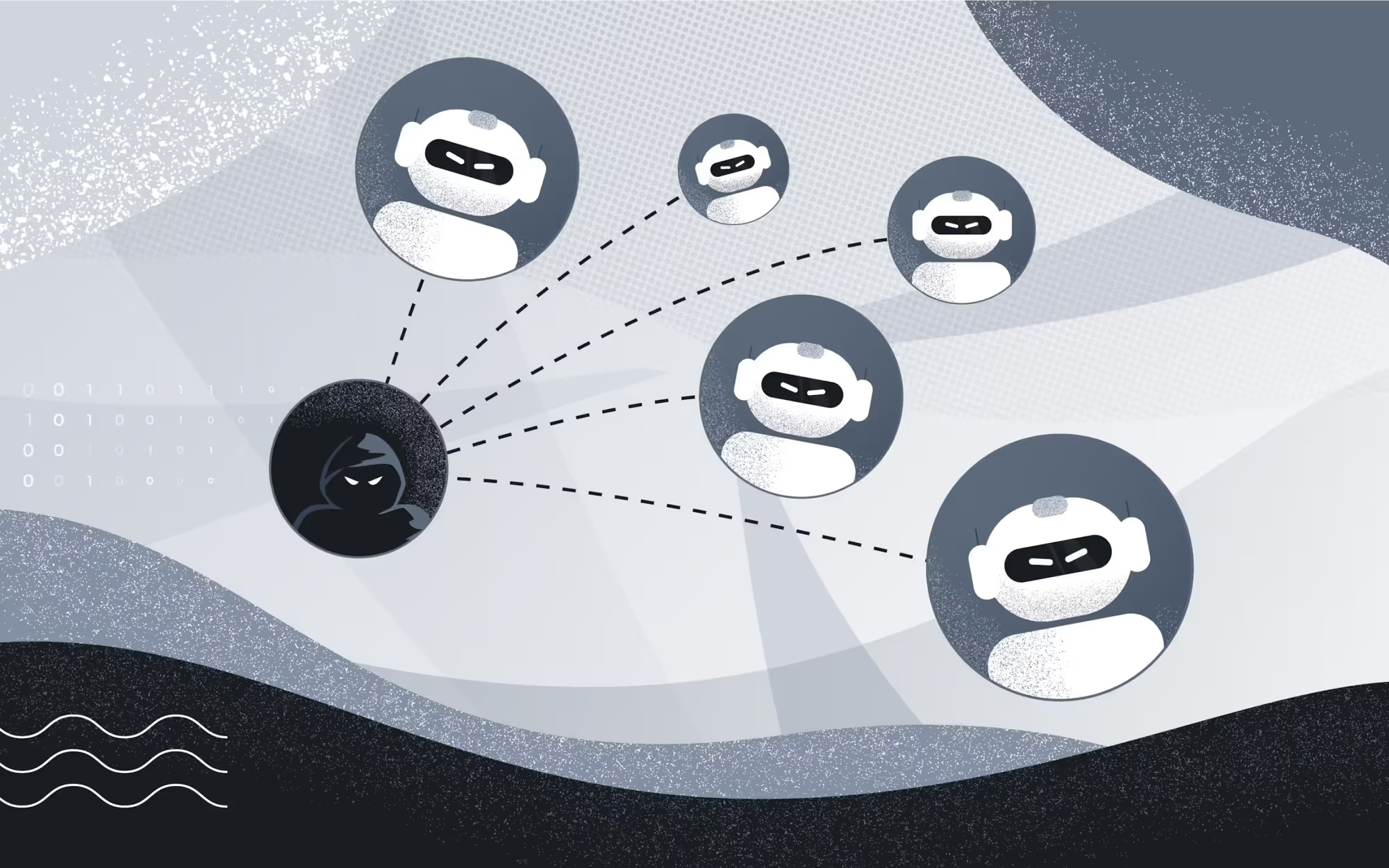
In decentralized systems, trust is everything—and yet, it’s also the easiest thing to exploit. One of the most common and dangerous ways attackers do this is through what’s known as a Sybil attack, a method where a single entity creates multiple fake identities to manipulate or overwhelm a network.
This type of attack doesn’t just threaten cryptocurrencies—it can compromise any peer-to-peer (P2P) system that relies on open participation and pseudonymous users. Here’s how Sybil attacks work, why they matter in blockchain, and what’s being done to stop them.
What Is a Sybil Attack?
A Sybil attack occurs when one participant in a network pretends to be many. By creating a swarm of fake identities—known as “Sybil nodes”—an attacker can gain disproportionate influence over the network.
In the context of blockchain, these identities take the form of nodes, each appearing to operate independently even though they’re controlled by the same entity. This allows an attacker to manipulate consensus, disrupt communication between honest nodes, or even attempt to rewrite parts of the blockchain.
The term “Sybil” comes from Sybil, a 1973 book by Flora Rheta Schreiber about a woman with dissociative identity disorder—a fitting metaphor for one entity pretending to be many.
Why Blockchain Networks Are Vulnerable
Blockchain networks are designed to be trustless—meaning users don’t need to know or trust one another to transact. While that’s a strength, it also opens the door to identity-based exploits.
Because nodes on a blockchain are pseudonymous and cheap to create, a determined attacker could flood the network with fake participants. Once in control of a large enough portion of the network, the attacker could:
- Censor or delay transactions by isolating honest nodes.
- Manipulate network perception, such as misleading users about transaction confirmations.
- Undermine consensus, paving the way for larger exploits like double-spending.
Complete takeovers are rare, but even partial control can erode trust and slow the network.
Everyday Examples of Sybil Behavior
Sybil-style attacks aren’t unique to crypto. They appear in various online systems:
- Social media: Bots inflating likes, follows, or engagement metrics.
- Voting systems: Coordinated fake accounts swaying polls or reviews.
- Online gaming or reputation systems: Players creating multiple accounts to cheat rankings.
In each case, the principle is the same—fake identities create an illusion of consensus or popularity.
How Blockchains Defend Against Sybil Attacks
The key to preventing Sybil attacks lies in making identity creation costly or verifiable. Major blockchains use several layers of defense:
1. Proof of Work (PoW)
Used by Bitcoin and other early blockchains, PoW requires nodes to perform energy-intensive computations to validate transactions.
Because generating fake nodes doesn’t grant extra mining power, splitting resources across multiple identities doesn’t help an attacker. They’d be better off concentrating their power in a single node.
2. Proof of Stake (PoS) and Delegated PoS
PoS-based systems tie network participation to the amount of cryptocurrency a user locks up (“stakes”). To control many fake nodes, an attacker would need enormous capital.
Delegated Proof of Stake (DPoS) goes a step further, letting the community elect trusted validators—reducing the influence of malicious actors.
3. Proof of Authority (PoA)
Here, a limited group of verified entities is authorized to validate blocks. It’s fast and resistant to Sybil attacks but relies on a degree of centralization and trust.
4. Resource or Identity Requirements
Some blockchains make node creation intentionally difficult by imposing hardware, storage, or collateral requirements. For example, running a Bitcoin full node requires storing hundreds of gigabytes of data—making large-scale fake node creation costly.
5. Network-Level Monitoring and Reputation Systems
Blockchains and node operators can flag and ignore nodes that repeatedly relay false or inconsistent data, reducing their impact over time.
Can a Sybil Attack Succeed on Major Blockchains?
It’s highly unlikely.
On massive, decentralized networks like Bitcoin or Ethereum, the cost and complexity of creating enough fake nodes to meaningfully disrupt the system would be astronomical. Their consensus mechanisms and node diversity make Sybil attacks theoretically possible but practically infeasible.
However, smaller or newer blockchains—especially those without strong validation systems—remain more exposed. Developers of such projects must strike a delicate balance between open participation and robust identity protection.
A Sybil attack is a reminder that decentralization, while powerful, isn’t foolproof. It shows how even the most democratic networks can be gamed when identity is cheap and trust is blind.
That’s why mechanisms like Proof of Work, Proof of Stake, and validator-based consensus remain essential—they anchor digital identities to something tangible: computation, capital, or reputation.
The battle against Sybil attacks isn’t over, but for now, the biggest blockchains have learned how to keep their networks honest.



