

Across industries, leaders are facing the same problem: everyone wants workers who understand AI, yet the talent pool is growing too slowly to meet rising demand. The OECD has already noted the gap. Many companies say they need AI skills, but only a small share of job listings require them, which slows down both adoption and innovation.
Europe, however, is starting to offer a preview of what the future workforce could look like. A mix of universities, nonprofits, and regional programs are testing new ways to weave AI into learning. Their early progress offers lessons for companies struggling to attract or develop the right talent.
Training educators to use AI: Lessons from Manchester
At the University of Manchester, educators in training are learning how to use generative AI in thoughtful and creative ways. They are expected to work with AI, not rely on it, blending their own judgement with what the tools provide.
 University of Manchester
This shift points to a future workplace where employees help shape learning rather than simply absorb it. New generations will arrive expecting AI to support them in daily tasks. The real advantage will come not from whether people use AI, but whether they can use it responsibly. UNESCO has echoed this idea, emphasizing that AI should expand human capabilities rather than replace them.
Building AI fluency early: Inside AI-ENTR4YOUTH
AI-ENTR4YOUTH, a partnership between Junior Achievement Europe and organizations across ten European countries, is bringing AI into entrepreneurship education. Students use AI tools to solve practical problems while connecting new technology to innovation, creativity, and European values.

The program broadens the range of students exposed to AI. It reaches future founders, managers, and analysts, not only those pursuing technical degrees. For businesses worried about limited talent, the message is clear. Instead of waiting for specialists to emerge, companies can support or mirror these types of programs to grow their own pipeline.
Roberta Kostadinova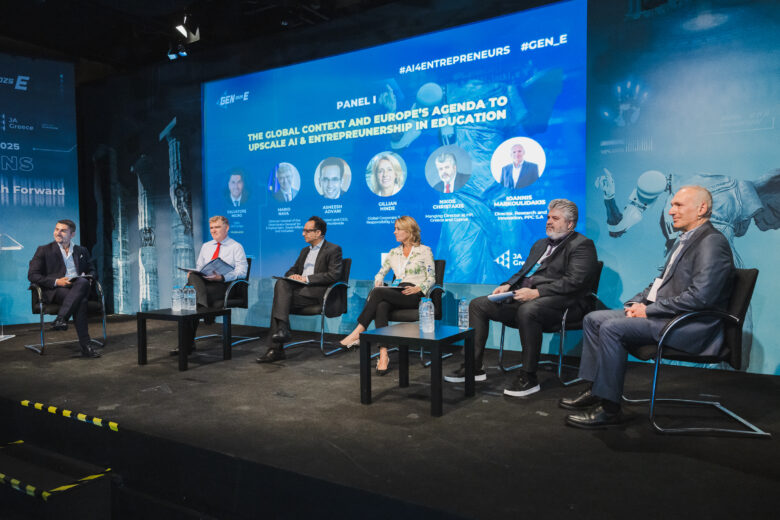
Personalized learning and bigger impact: The Social Tides view
Social Tides, which backs education innovators across Europe, highlights projects that use AI to tailor learning for students with diverse needs. Tools help teachers adjust content, offer guidance, and build supportive communities around learners.
marialinardouext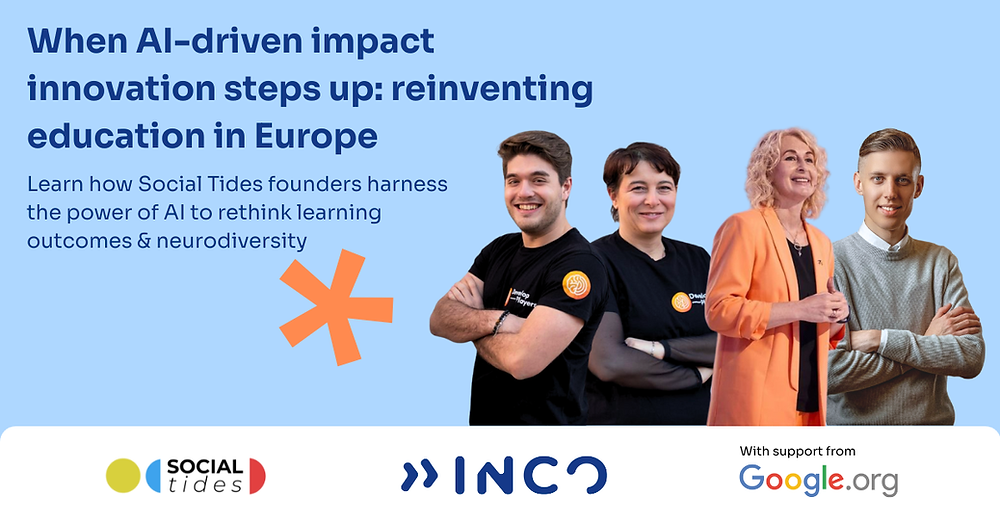
Human oversight remains central. AI can suggest pathways and insights, but educators still lead the way. This mirrors what many companies want: training programs that feel personal, practical, and woven into everyday work, while still grounded in human judgement.
Questions leaders should be asking
For businesses, these developments raise a few important questions:
• Are we creating personalized, AI supported learning paths inside our organization?
• Are we building relationships with schools and universities to influence the future talent pool?
• Do we have clear ethical guidelines for how AI is used in training and development?
• Are our AI tools aligned with our values and the regulations we must follow?
These programs may be early experiments, but they offer a glimpse of what workplace learning will look like in the coming years. Companies that pay attention now will be better prepared to attract talent, adapt quickly, and build teams that grow alongside emerging technology.



