
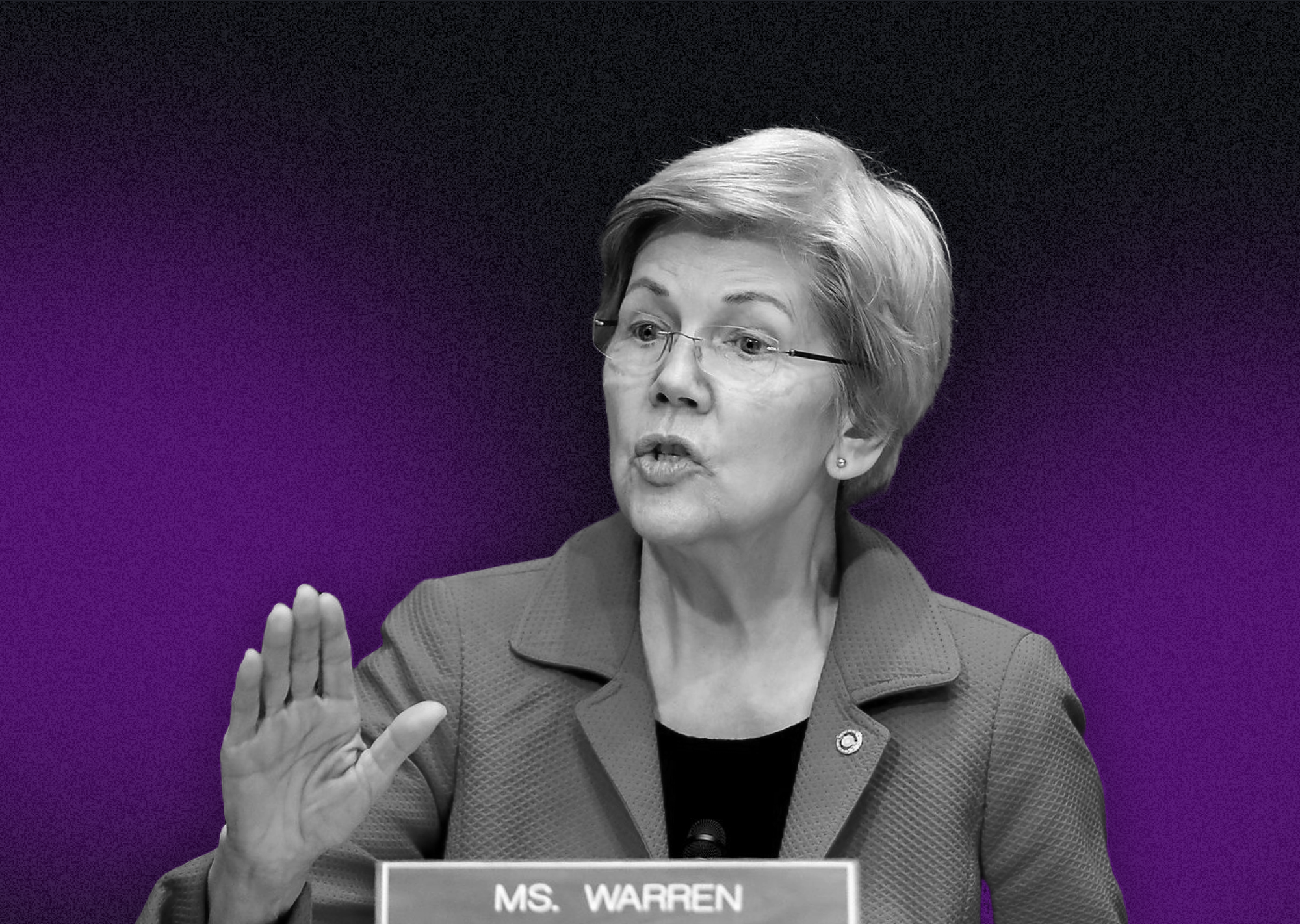
Senator Elizabeth Warren is sounding alarms over two multibillion-dollar deals linking former President Donald Trump, U.S. technology policy, and a powerful member of the United Arab Emirates’ ruling family.
A New York Times investigation revealed overlapping agreements: one granting the UAE access to a vast supply of advanced AI chips, and another funneling $2 billion into Trump’s cryptocurrency firm, World Liberty Financial (WLFI). While reporters noted there’s no direct evidence of a quid pro quo, the timing and scope of the deals have sparked concerns about conflicts of interest at the highest levels of government.
In the last couple of weeks alone, the Trump family added $1.3 BILLION to their wealth through their crypto schemes.
— Elizabeth Warren (@ewarren) September 10, 2025
Trump continues to profit off of the presidency while costs skyrocket for families.
“Backroom Deals” and National Security Risks
Warren didn't mince words in his statement:
“A foreign power, in essence, has co-opted the foreign policy of the United States through backroom crypto deals that hand over access to sensitive US technology while enriching the families of the President and senior officials. To call this corruption does not do justice to the scale of harm that these deals will do to our national security.”
Her warning comes as Washington continues to grapple with growing competition from China in the global race to dominate artificial intelligence.
The UAE’s AI Play
The UAE has made no secret of its ambition to be a global leader in AI. That requires advanced chips, mostly designed by U.S. firms like Nvidia, to power large-scale models and data processing.
Sheikh Tahnoon bin Zayed Al Nahyan, the UAE’s national security adviser and chairman of the tech giant G42, is at the center of these negotiations. He oversees roughly $1.5 trillion in sovereign wealth and also chairs MGX, the AI investment firm that put $2 billion into WLFI.
Under President Biden, U.S. officials had taken a harder stance. They pressed Sheikh Tahnoon to choose between aligning with the U.S. or China, eventually approving only a small, tightly restricted deal for chips through Microsoft.
But the Trump administration’s return shifted the landscape dramatically.
Policy Meets Business
According to the Times, Trump’s envoy to the Middle East, Steve Witkoff, and David Sacks, dubbed Trump’s “AI and crypto czar,” lobbied for a much broader chip deal. A new proposal called for 500,000 AI chips, with around 20% going directly to G42.
At the same time, Trump’s WLFI secured its massive investment from MGX, effectively tying the former president’s family business to Sheikh Tahnoon.
The overlap between national policy decisions and private financial gains is what Warren argues represents a profound national security threat.
Why It Matters
The controversy underscores the growing entanglement of politics, technology, and finance. AI chips are now viewed as strategic assets, with Washington restricting exports to China under the CHIPS Act and other measures. Allowing large-scale transfers to another foreign power—even a U.S. ally—raises fresh questions about who controls America’s technological edge.
For Warren, the deals highlight a deeper risk: the blurring of lines between public office and private enrichment in a world where crypto and AI are no longer niche industries but central to global power.



