

Visa is taking a significant step deeper into blockchain-based payments with the launch of a stablecoin settlement service in the United States. The new offering allows U.S. financial institutions to settle payments using Circle’s USDC stablecoin on the Solana blockchain, signaling growing confidence among major banks and payment providers in digital dollar infrastructure.
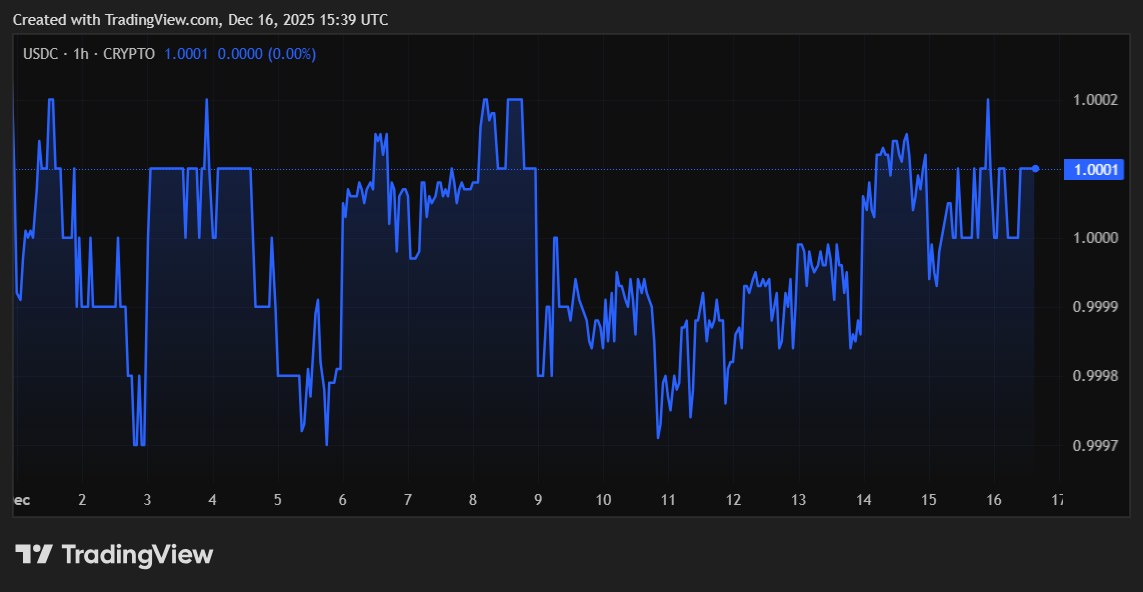
The payments giant announced Tuesday that it will open access to USDC settlement for back-end payment flows, with Cross River Bank and Lead Bank, which is backed by venture firm a16z, among the first participants. Visa said the service will roll out more broadly and continue expanding through 2026.
According to Visa, interest from banks has moved beyond exploration and into active preparation. Rubail Birwadker, Visa’s Global Head of Growth Products and Strategic Partnerships, said financial institutions are increasingly focused on faster and more flexible settlement tools that fit within existing treasury systems.
By enabling USDC settlement in the U.S., Visa aims to offer a bank-ready option that improves operational efficiency while meeting the company’s long-standing standards around security, compliance, and reliability.
A broader push into stablecoins
The U.S. launch builds on a series of recent initiatives that show Visa’s growing commitment to stablecoin infrastructure. Earlier this week, the company introduced a stablecoin advisory practice designed to help banks and corporate clients navigate issuance, custody, and onchain payments. In recent months, Visa has also expanded pilot programs for onchain settlement in multiple regions and introduced USDC-based payouts for creators.
Visa’s collaboration with Circle extends beyond settlement services. The company is a design partner for Circle’s upcoming Arc Layer 1 blockchain and plans to use the network for USDC settlement. Visa also intends to operate a validator once Arc goes live, further embedding itself in the stablecoin ecosystem.
Regulatory clarity fuels momentum
Visa’s move comes as the U.S. regulatory environment around stablecoins becomes more defined. The passage of the GENIUS Act in July marked the country’s first federal framework for stablecoins, creating clearer rules for issuers and financial institutions. Since then, large players have accelerated efforts to build compliant, scalable infrastructure for dollar-backed digital assets.
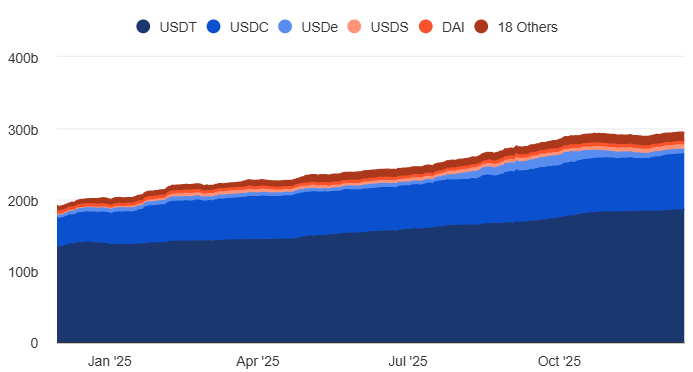
The stablecoin market, currently valued at around $300 billion, is projected to grow to $2 trillion by 2028. That growth potential has intensified competition among both fintech firms and traditional financial institutions to offer high-throughput settlement rails tied to the U.S. dollar.
Circle, the issuer of USDC and the second-largest stablecoin by market value, has been positioning itself to meet institutional demand. The company, which is publicly traded under the ticker CRCL, launched the Arc testnet in October with participation from firms including Visa, BlackRock, and Anthropic. Circle has also expanded its focus on interoperability, most recently through its acquisition of Interop Labs, the original developer behind the Axelar Network.
Solana’s rising institutional profile
Visa’s decision to use Solana-native USDC reflects broader institutional interest in the network. Solana has become the second-largest blockchain in decentralized finance by activity, and recent announcements suggest growing adoption by traditional finance firms.
Over the past month, JPMorgan worked with Galaxy to issue a Solana-based token for a debt offering. State Street and Galaxy have also revealed plans to launch a tokenized private liquidity fund on the network. These developments point to Solana’s appeal as a high-speed, low-cost blockchain suited for financial applications.
Infrastructure upgrades are also supporting that momentum. Firedancer, an independent Solana validator client developed by Jump Crypto, went live on mainnet last week. The upgrade is designed to significantly increase network throughput, with the long-term goal of supporting up to one million transactions per second.
Looking ahead
Visa’s U.S. stablecoin settlement launch underscores a broader shift in how major financial institutions view blockchain technology. What was once treated as experimental is now being integrated into core payment and treasury operations. As regulatory clarity improves and infrastructure matures, stablecoins like USDC are increasingly positioned as a bridge between traditional finance and onchain systems.
For Visa, the move strengthens its role at the center of global payments, even as the rails beneath those payments continue to evolve.



