

Visa is deepening its role in the fast-growing stablecoin economy with the launch of a new advisory service designed to help financial institutions and businesses develop practical, informed strategies around stablecoins.
The payments giant announced the creation of its “stablecoins advisory practice” on Monday. The initiative sits within Visa Consulting & Analytics and is aimed at banks, fintech companies, merchants, and large enterprises that are exploring how stablecoins could fit into their products, services, or internal operations.
The new practice will provide a range of services, including training, market analysis, strategy development, use-case assessment, and technical guidance. Visa says the goal is to help organizations move beyond theory and better understand where stablecoins can add real value, whether through payments, settlements, or cross-border transfers.
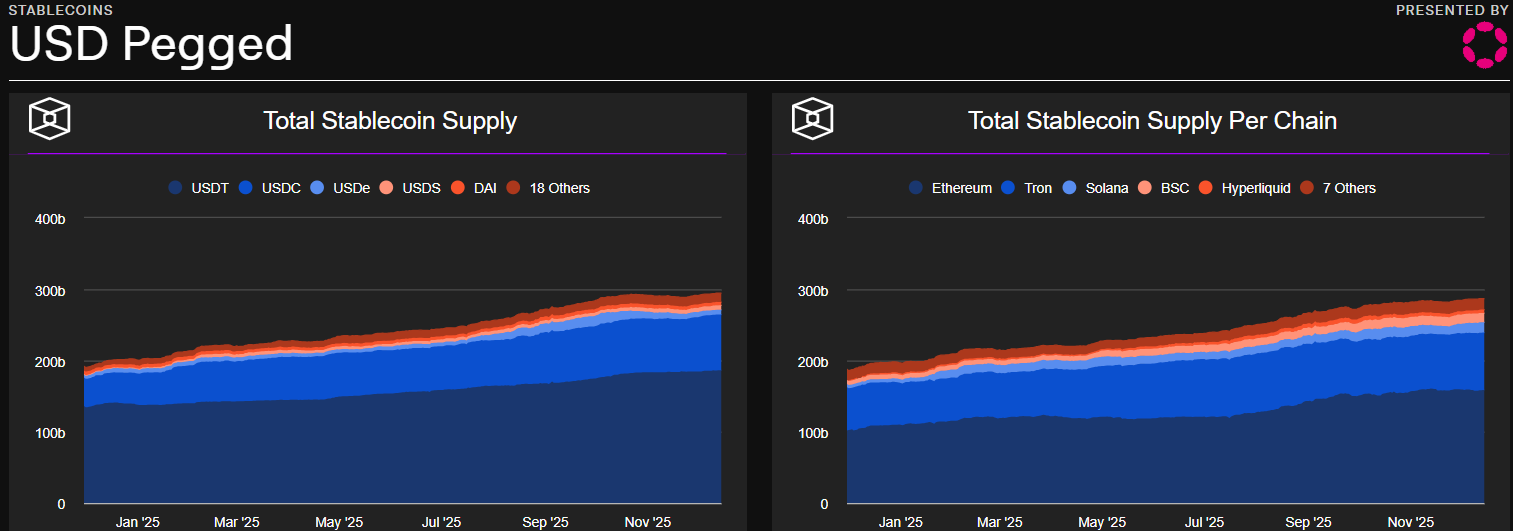
The move comes at a time when stablecoins are gaining traction across the financial system. The total market capitalization of stablecoins has now surpassed $300 billion, reflecting growing adoption among consumers, businesses, and institutions. Visa’s own activity in the sector has also increased. As of Nov. 30, the company’s stablecoin settlement volume had reached a $3.5 billion annualized run rate.
Carl Rutstein, global head of Visa Consulting & Analytics, said the launch reflects rising demand from clients seeking clarity in a rapidly evolving space. According to Rutstein, developing a clear stablecoin strategy has become increasingly important as digital payments infrastructure changes and new options emerge.
Several organizations are already working with Visa through the new advisory practice. Early clients include Navy Federal Credit Union, Pathward, and VyStar Credit Union.
Navy Federal, which serves roughly 15 million members worldwide, is evaluating how stablecoins could support its broader payments strategy. Matt Freeman, the credit union’s senior vice president, said the institution is assessing potential use cases that align with member needs and long-term goals.
Pathward has also participated in the advisory program. President Anthony Sharett said the bank received detailed analysis and actionable recommendations as it explored stablecoin opportunities. Visa did not disclose the financial terms of these engagements.
The advisory practice builds on Visa’s expanding involvement in stablecoin technology. In 2023, the company piloted stablecoin settlement using Circle’s USDC. Since then, Visa has supported more than 130 card programs linked to stablecoins across over 40 countries. These programs allow users to spend stablecoin balances through traditional card networks, blending digital assets with familiar payment experiences.
Visa is also testing stablecoin-based cross-border payouts through Visa Direct. The service allows approved businesses to pre-fund transfers and send money directly to users’ stablecoin wallets, potentially reducing settlement times and costs compared with traditional international payments.
Stablecoins, which are typically pegged to fiat currencies such as the U.S. dollar, have increasingly been described as one of the most practical applications of blockchain technology. Over the past year, their use has expanded across payments, trading, and remittances, particularly in regions where access to fast and affordable financial services is limited.
Traditional financial institutions are paying close attention. Banks such as JPMorgan have begun using tokenized deposits to speed up intraday and cross-border settlements. Payments companies including Visa and Stripe are integrating stablecoins into their platforms to support faster and cheaper money movement.
Regulatory developments have also played a role in accelerating adoption. In the United States, the GENIUS Act, signed into law in July, established a federal framework for the issuance and oversight of stablecoins. The legislation has provided banks and fintech firms with clearer guidelines, reducing uncertainty and encouraging further experimentation.
Market analysts expect continued growth. Citi has projected that the stablecoin market could reach $1.9 trillion by 2030 under a base scenario, with potential to rise as high as $4 trillion if adoption accelerates. Standard Chartered has offered a similarly optimistic outlook, estimating the market could grow to $2 trillion by 2028.
With its new advisory practice, Visa is positioning itself not just as a payments processor, but as a strategic partner for organizations navigating the next phase of digital money. As stablecoins move closer to the financial mainstream, the company is betting that guidance and infrastructure will be just as important as the technology itself.



