
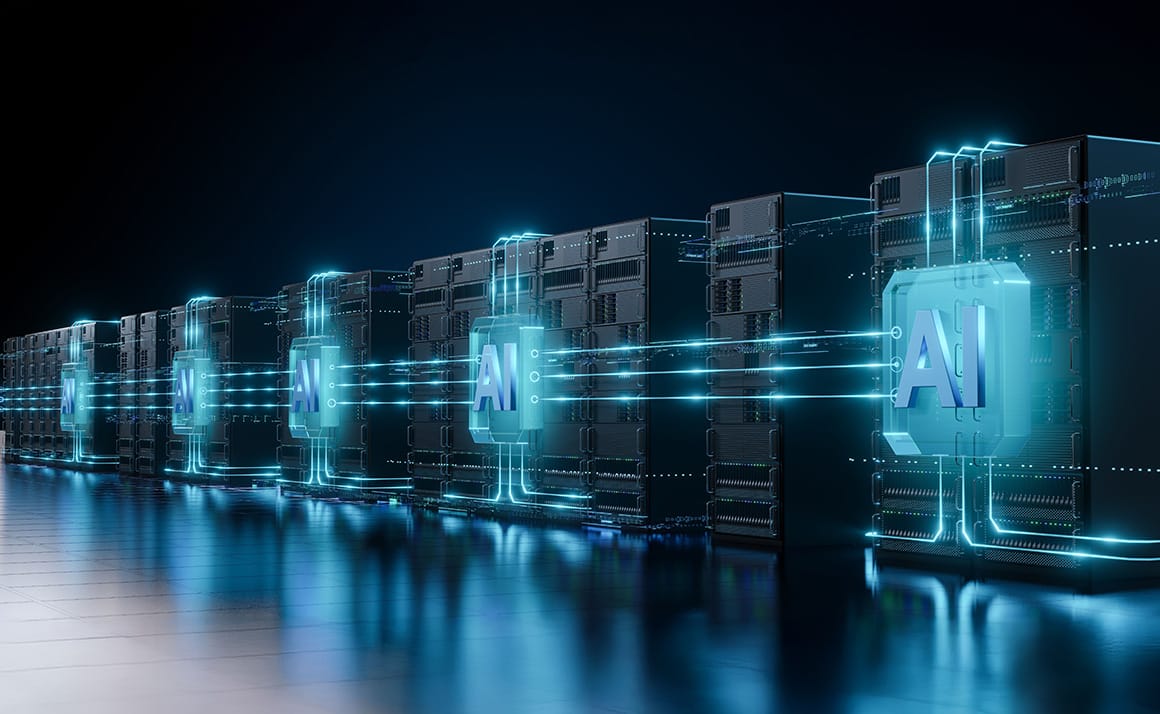
Artificial intelligence is reshaping industries across Asia Pacific, but it’s also putting unprecedented pressure on the region’s data centres. Traditional facilities—built for earlier generations of computing—are struggling to cope with the energy demands, cooling requirements, and workload fluctuations of AI-powered systems.
By 2030, rack power densities could climb to 1 MW, making incremental upgrades insufficient. Instead, operators are moving toward purpose-built “AI factory” data centres designed from the ground up to support GPU-heavy workloads.
Explosive Growth Ahead
The AI data-centre market is forecast to grow from $236 billion in 2025 to nearly $934 billion by 2030. Industries such as finance, healthcare, and manufacturing are driving adoption, as they increasingly rely on dense GPU clusters for advanced analytics and generative AI applications.
In Asia Pacific, the pace is amplified by government-led digitalisation initiatives, rapid 5G expansion, and hyperscale cloud rollouts. According to Paul Churchill, Vice President of Vertiv Asia, meeting this demand will require more than just expanding floor space.
“Infrastructure leaders must move beyond piecemeal upgrades. A future-ready strategy involves adopting AI-optimised infrastructure that combines high-capacity power systems, advanced thermal management, and integrated, scalable designs,” Churchill said.

Cooling and Power Challenges Intensify
As rack densities rise from today’s 40 kW to as high as 250 kW by 2030, traditional air cooling methods will no longer be sufficient.
To tackle this, Vertiv is developing hybrid cooling solutions that blend direct-to-chip liquid cooling with advanced air-based systems. These setups dynamically adjust to fluctuating workloads, cut energy use, and maintain reliability.
Power delivery is another hurdle. AI workloads can spike unpredictably, making real-time response essential. Vertiv’s evolving rack power distribution units and busway systems aim to handle higher voltages, improve load balancing, and extend uptime—particularly important in Southeast Asia, where power grid stability varies.
From Retrofits to AI-First Designs
The emergence of liquid-cooled GPU pods and racks approaching 1 MW, already being tested by hyperscalers like Microsoft, Google, and Meta, signals a fundamental shift in data-centre design.
“The future of data-centre architecture is hybrid, and these infrastructures require facilities to be built around liquid flow,” Churchill explained.
This means rethinking layouts, coolant distribution, and integrated monitoring from the chip level to the grid.
By 2030, Asia Pacific is expected to surpass the U.S. in commissioned data-centre capacity, nearing 24 GW of power. To support that scale, enterprises are adopting modular, prefabricated systems that allow phased growth without major disruption.
The Role of DC Power and Sustainability
Vertiv recently introduced PowerDirect Rack, a DC power shelf aimed at AI and high-performance computing. By reducing energy conversion steps, DC power minimizes losses and aligns with renewable energy and storage systems—a vital consideration in markets like Vietnam and the Philippines, where energy constraints are common.
Sustainability is also rising to the top of operators’ agendas. From lithium-ion energy storage and grid-interactive UPS systems to solar-backed microgrids and hybrid cooling, data centres are adopting technologies that balance high performance with environmental and regulatory goals.
Modular Solutions for Rapid Expansion
In emerging Asia Pacific economies, limited land, unstable power supply, and skill shortages make large-scale builds challenging. Here, prefabricated modular systems provide a practical alternative.
These solutions can cut deployment times by up to 50%, scale capacity gradually, and improve efficiency—an advantage in AI-driven environments where demand can surge unpredictably.
Preparing for the AI Era
The rapid rise of AI is forcing data centres in Asia Pacific to evolve at speed. The shift from incremental upgrades to AI-optimised factory-style facilities reflects a broader recognition: yesterday’s infrastructure can’t handle tomorrow’s workloads.
With new approaches to cooling, power distribution, and modular design, the region is laying the foundation for sustainable, high-performance data centres capable of supporting the next decade of digital growth.



