

Adjusted transaction volume for USD Coin has surpassed that of Tether so far this year, according to new research from Mizuho. The shift suggests growing usage of USDC in real-world payment flows and institutional transfers.
Mizuho analysts estimate USDC currently accounts for about 64% of “adjusted” stablecoin transfer volume in 2026. The metric filters out high-frequency trading activity and automated wallet churn, focusing instead on transfers that resemble actual economic transactions by individuals or institutions.
Analysts defined adjusted volume as activity from addresses associated with centralized exchanges, decentralized exchanges, or identifiable entities, excluding wallets executing more than 1,000 transactions or $10 million in volume during a 30-day period. The goal is to isolate movements that likely represent payments, treasury operations, or capital transfers between platforms.
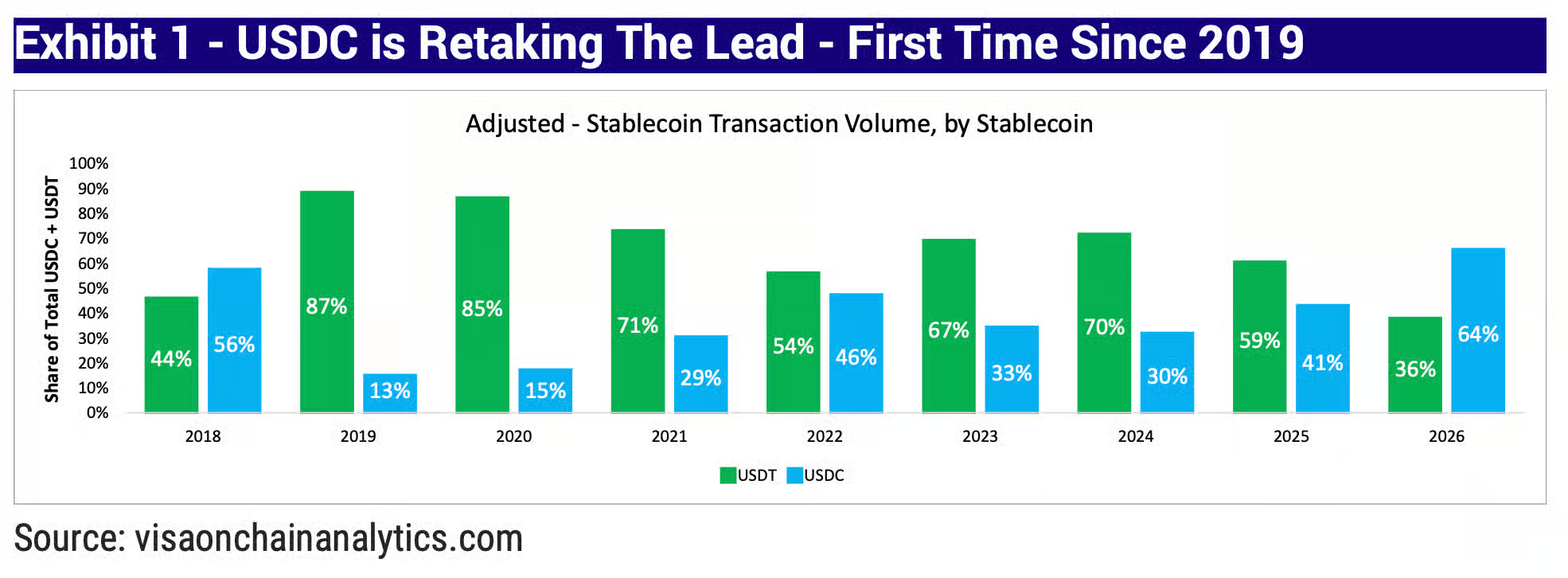
Could Transaction Activity Decide The Stablecoin Leader?
The result reverses a long-standing trend. From 2019 through 2025, USDT consistently dominated stablecoin transaction volumes across trading venues and onchain settlement layers.
Yet the supply picture remains different. Data shows USDT still leads in overall market capitalization with roughly $184 billion outstanding, compared with approximately $79 billion for USDC.
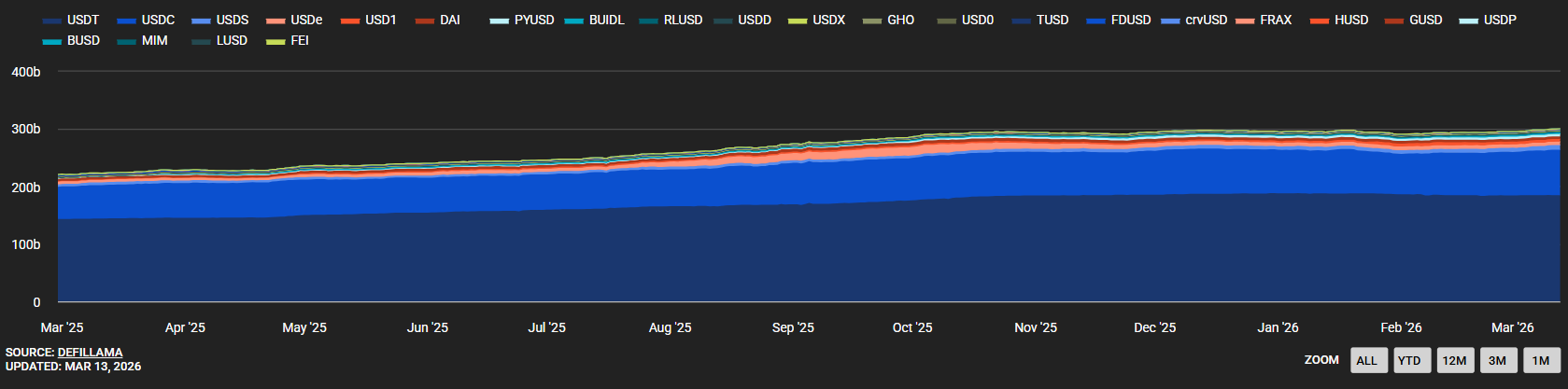
The divergence highlights two different measures of influence within the stablecoin market: total circulating supply versus actual payment and settlement activity. Analysts said the adjusted metric captures transfers more likely tied to real economic use cases, including corporate payments, decentralized finance interactions, or funds moving between exchanges.
“We believe that longer term, the stablecoin winner will be the one mostly used in everyday economic activity, rather than just the highest market cap,” Mizuho analysts wrote in the research note.
USDC is widely issued by Circle and has gained traction in payment-focused use cases across centralized exchanges, decentralized finance protocols, and prediction markets. Analysts pointed to examples such as users funding accounts on trading platforms or settling payments between counterparties.
Still, the broader question remains unresolved: will transaction activity eventually translate into market cap leadership within the stablecoin sector?
Market participants are likely to watch whether USDC’s share of real-economy transfers continues expanding through 2026, particularly as regulatory frameworks for dollar-backed stablecoins evolve across the United States and Europe.



