
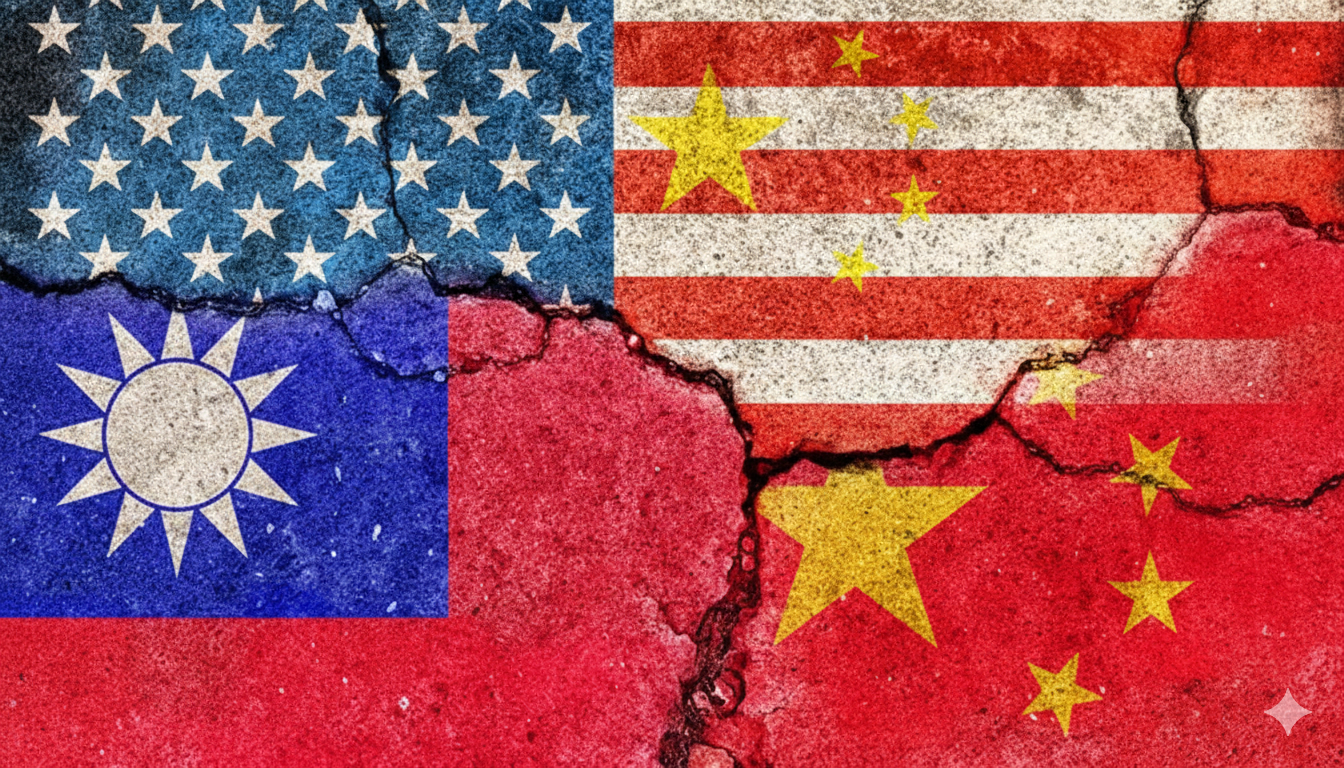
The United States and Taiwan have reached a long-anticipated trade agreement that lowers tariffs and deepens cooperation in advanced technologies, marking a significant step in reshaping global semiconductor supply chains.
Under the deal announced Thursday, the US will reduce tariffs on Taiwanese goods to 15%, down from 20%. The move aligns Taiwan with other key Asian trading partners such as Japan and South Korea and ensures the new rate does not stack on top of existing most-favored-nation duties, according to Taiwan’s cabinet.
In return, Taiwan committed to a major expansion of its US footprint. Taiwanese technology firms will invest at least $250 billion directly into American operations spanning semiconductors, artificial intelligence, and energy. An additional $250 billion in credit guarantees will support further investment, particularly benefiting small and mid-sized Taiwanese companies building facilities in the US.
US– Taiwan just struck a massive chip deal 🇺🇸🇹🇼 $250B in US fab investments + $250B supply-chain guarantees, with #tariffs capped at 15%. Goal: pull advanced #semiconductors onshore as geopolitics heat up. pic.twitter.com/5NwwsLnUOM
— BLOCKLORE (@BlockLore_) January 15, 2026
While the US Commerce Department did not name specific firms, the agreement has clear implications for Taiwan Semiconductor Manufacturing Co., the world’s largest contract chipmaker and a key supplier to Nvidia Corp.. US Commerce Secretary Howard Lutnick said he expects Taiwanese chipmakers to expand significantly, noting reports that future investments could effectively double their US presence.
TSMC has already committed $100 billion to US projects in 2025 and is considering at least four additional fabrication plants beyond the six already planned. Earlier pledges, including $65 billion announced during the previous administration, are not included in the new $250 billion total.
The agreement also provides targeted tariff relief. Generic pharmaceuticals from Taiwan will enter the US duty-free, while sector-specific tariffs on auto parts, timber, and wood products are capped at 15%. Semiconductor companies building US facilities will be allowed to import up to 2.5 times their current chip capacity without tariffs during construction, with lower thresholds once production begins.
Trade talks were led by Lutnick and US Trade Representative Jamieson Greer, following a period of tension during which Taiwan faced the prospect of sharply higher duties. The deal was finalized after senior Taiwanese officials traveled to Washington to conclude negotiations with representatives of Donald Trump.
Beyond trade, the pact eases a longstanding economic friction between Taiwan and its main security partner, the United States, at a time of heightened regional uncertainty involving China. Taiwan had been keen to secure the agreement ahead of a planned meeting between Trump and Chinese President Xi Jinping, expected later this year.
For Taiwan, the agreement removes a lingering risk to an economy already buoyed by booming tech exports tied to global demand for AI infrastructure. The island recently raised its 2025 growth forecast to 7.3%, its strongest pace in more than a decade, while its trade surplus with the US reached a record $150 billion last year.



