
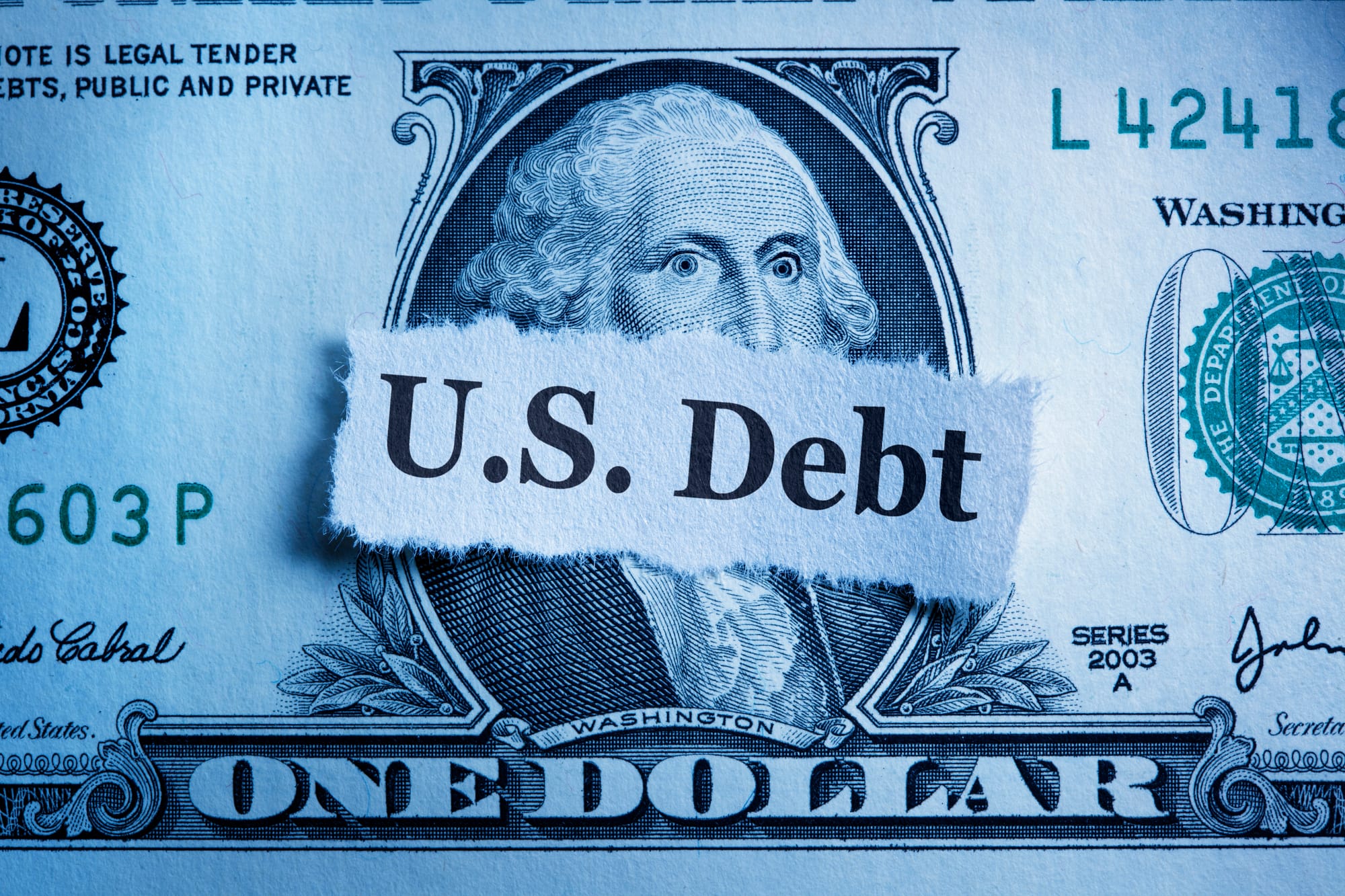
The U.S. national debt just grew by another $1 trillion in only 48 days, pushing the total close to $38 trillion. For crypto investors, the pace of borrowing isn’t just a headline number — it’s a signal that the long-term case for Bitcoin and other decentralized assets is getting stronger.
The Debt Spiral: Spending vs. Rates
The U.S. is now adding about $21 billion in debt every single day. In July alone, Washington posted a $291 billion deficit, the second-largest on record for that month. Overall, deficits are running at $1.63 trillion for fiscal year 2025, up 7.4% year-over-year, and likely headed north of $2 trillion.
Government spending has surged to 44% of GDP — a level last seen during World War II and the 2008 financial crisis. Revenues, meanwhile, are crawling along at just 2.5% growth, while spending is ballooning at nearly 10%.
That mismatch is why some analysts argue the U.S. doesn’t just have a rate problem — it has a spending problem. As the Kobeissi Letter bluntly put it:
“It’s a spending issue, NOT an interest rate issue… It’s a spending crisis.”
Even if the Federal Reserve cut interest rates tomorrow, annual deficits would still be measured in trillions.
Bond Market Warning Signs
Investors are starting to demand higher returns to finance the U.S. government. Recent Treasury auctions cleared yields above 5%, a rare level in modern history.
The logic is simple: as the debt pile grows, refinancing costs explode, deepening the fiscal hole. That’s bad news for equities and bonds in the short term — but it could be good news for crypto.
Why This Matters for Bitcoin and Crypto
In the near term, higher bond yields tend to pull money out of risk assets, crypto included. But the long-term picture is different. Persistent trillion-dollar deficits weaken faith in the dollar and highlight the appeal of assets with fixed supply.
That’s where Bitcoin’s “digital gold” narrative gets stronger. With only 21 million coins ever to exist, its scarcity stands in sharp contrast to an endlessly expanding U.S. debt.
Crypto analysts argue the U.S. fiscal path all but guarantees future monetary inflation. As one market note put it:
“On our current fiscal path, there is 100% certainty of U.S. bankruptcy over the long run.”
For Bitcoin advocates, that’s not just hyperbole — it’s a hedge thesis in real time.
Beyond Bitcoin: Altcoins and Stablecoins
While Bitcoin remains the primary “hard money” play, other corners of crypto could benefit from the debt spiral too:
- Stablecoins are already seeing inflows as investors look for dollar-linked assets outside the traditional banking system.
- Tokenized Treasuries are gaining traction, offering yield exposure on-chain.
- Altcoins may attract spillover capital as institutions explore crypto allocations beyond BTC.
The Road Ahead
What happens next depends on two big variables:
- Whether Congress reins in spending (unlikely in an election year).
- How the Fed balances interest rates with debt sustainability.
Either way, the trend is clear — the U.S. is borrowing at a historic pace, and that fiscal reality continues to fuel the long-term investment case for Bitcoin and decentralized finance.



