

Nearly 40% of payments sent to cryptocurrency platforms in the UK are being blocked or delayed by banks, according to a new survey from the UK Cryptoasset Business Council. The findings point to mounting tension between traditional financial institutions and the country’s digital asset sector, even as the UK moves toward a clearer regulatory framework.
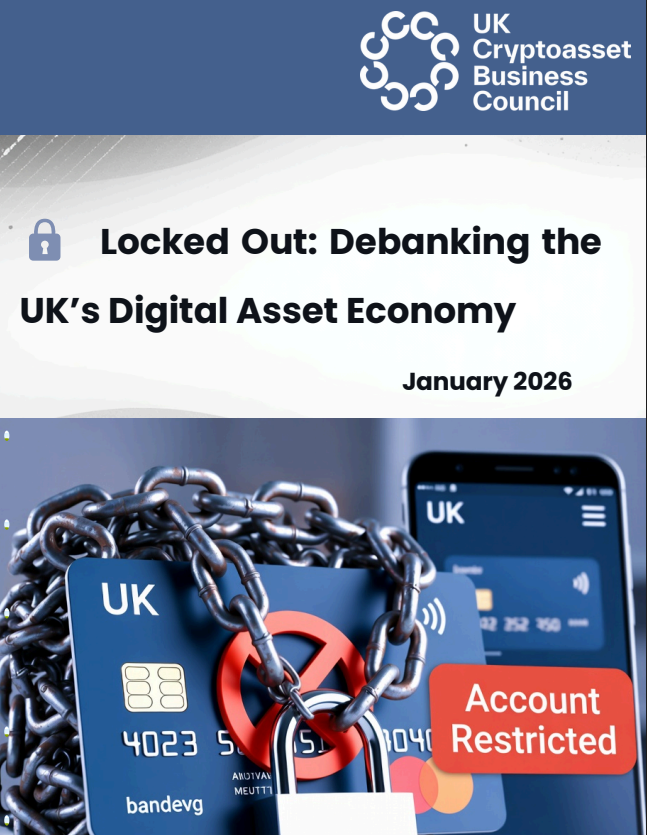
The survey gathered responses from ten major centralized crypto exchanges operating in the UK, including Coinbase, Kraken, OKX, Gemini, and Bitpanda. One exchange reported that close to £1 billion in transactions were declined over the past year due to bank-side restrictions, based on card payments and bank transfers visible to its platform.
Payment issues appear to be worsening. Around 80% of surveyed exchanges said customer problems with deposits and transfers have increased sharply over the last 12 months. Seven in ten described the UK banking environment as increasingly “hostile,” with the country scoring 7.9 out of 10 for difficulty in accessing banking services compared with other global markets.
For some firms, the impact has been strategic. One large exchange noted that banking barriers have become the single biggest obstacle to launching or expanding crypto products in the UK, prompting it to prioritize growth in other regions instead.
The report also highlights a lack of transparency. All participating exchanges said banks typically provide no clear explanation when payments are blocked, even when the exchange is registered with the Financial Conduct Authority (FCA). Sixty percent reported disruption across both bank transfers and card payments, suggesting the restrictions are broad rather than targeted.
Several high-street banks were identified as particularly challenging. Virgin Money, Metro Bank, Starling Bank, TSB, and Chase UK reportedly maintain outright blocks on both transfers and debit card payments to crypto exchanges. Larger incumbents such as Barclays and HSBC UK have imposed transaction caps, limiting single transfers to £2,500 and total payments to £10,000 over a rolling 30-day period. These measures remain in place despite the UK’s crypto regulatory framework still being developed under the Financial Services and Markets Act 2000 (FSMA).
The Cryptoasset Business Council argues that blanket restrictions, especially those applied to FCA-registered firms, may conflict with existing UK laws. It points to the Payment Services Regulations 2017, which require case-by-case assessments, the FCA’s Consumer Duty to prevent foreseeable customer harm, and the Competition Act 1998, which aims to prevent anti-competitive behavior.
Rather than calling for new rules, the council is urging regulators to enforce current obligations more clearly. Its recommendations include a public statement from the FCA and government pushing banks to adopt risk-based, individual assessments instead of sector-wide limits. It also suggests a formal framework that distinguishes between exchanges, a shared forum for banks and crypto firms to exchange fraud data, and a more nuanced approach to retail customer risk that separates vulnerable users from experienced ones.
At the same time, the UK’s broader crypto regulation is progressing. HM Treasury laid the relevant FSMA regulations before Parliament in December 2025, and the FCA is consulting on final rules. Full implementation of the new authorization regime is expected in October 2027.
As the UK balances innovation with consumer protection, the survey underscores a key challenge: aligning banking practices with regulatory intent. How quickly that gap is closed may shape the country’s role in the global digital asset market.



