
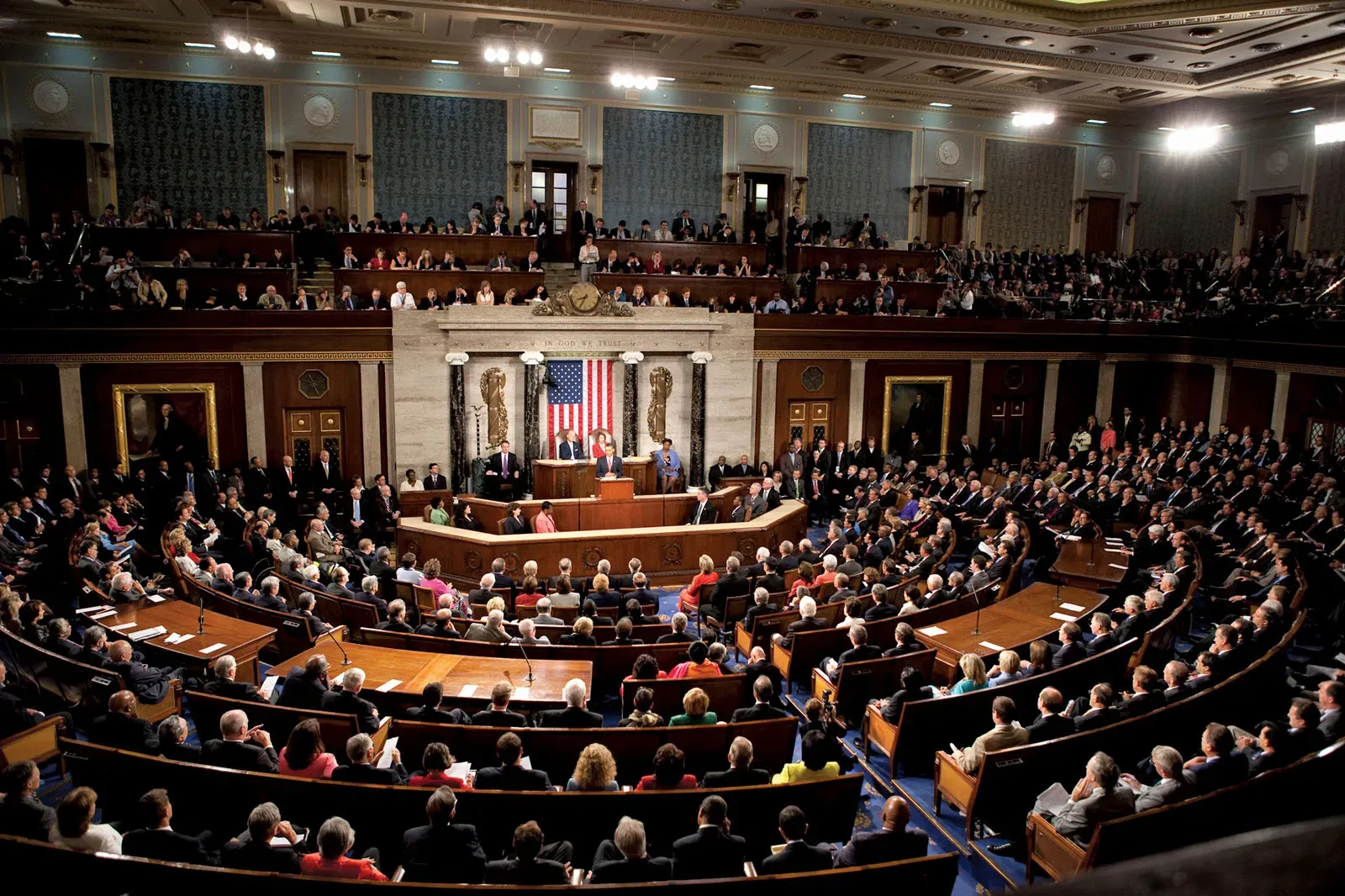
In a major legislative milestone for the digital economy, the U.S. House of Representatives has passed the Deploying American Blockchains Act of 2025 (H.R. 1664), signaling a pivotal shift in how the federal government approaches blockchain and decentralized technologies. If approved by the Senate, this bipartisan bill could establish the groundwork for a unified national strategy, supporting innovation across sectors and strengthening America’s position in the global blockchain race.
A Federal Blueprint for Blockchain Integration
Introduced during the 119th Congress, the bill empowers the U.S. Department of Commerce to lead nationwide efforts in blockchain and distributed ledger technology (DLT) development. This includes formulating strategic policies, defining technical standards, and facilitating cooperation between public and private entities.
Crucially, H.R. 1664 is the first legislation to assign clear blockchain responsibilities to federal agencies. It seeks to streamline regulatory frameworks, support open-source infrastructure, and ensure that the United States is not left behind in an increasingly digital global economy.
Driving Innovation Through Clarity and Coordination
The bill’s goals are ambitious yet timely: enhance international competitiveness, eliminate regulatory ambiguity, and remove obstacles faced by blockchain-focused startups and enterprises. For years, the U.S. tech community has called for more clarity, pointing to a fragmented regulatory environment that has driven both talent and investment overseas.
Placing blockchain leadership under the Department of Commerce represents a significant organizational shift, one that could unify currently overlapping jurisdictions. The legislation also emphasizes the development of critical use cases, such as digital identity solutions, supply chain transparency, and financial innovation—all areas where blockchain is already gaining traction.
Global Context and Bipartisan Momentum
With growing competition from countries like China, Singapore, and the UAE—each rapidly scaling their national blockchain initiatives—the U.S. move toward centralized policy leadership is viewed as both urgent and strategic. The bipartisan backing for H.R. 1664 reflects a growing consensus in Washington that blockchain technology has far-reaching implications beyond cryptocurrencies, including in defense, healthcare, finance, and public infrastructure.
The bill aligns with evolving attitudes in federal leadership, particularly following previous pro-crypto rhetoric from figures like former President Donald Trump. It marks a transition from passive oversight to active engagement, setting the stage for stronger regulatory alignment and coordinated investment in blockchain infrastructure.
What’s Next: Senate Decision Will Define the Future
While the House’s passage of H.R. 1664 is a landmark event for the blockchain industry, the bill’s final trajectory depends on Senate approval. Any amendments or delays could shape its long-term impact. However, if enacted, the legislation will lay the foundation for a cohesive national blockchain strategy—potentially transforming how the U.S. government and economy interact with Web3 technologies.



