
U.S. Enacts Landmark Crypto Law With New Stablecoin Oversight
President Donald Trump has officially signed the GENIUS Act into law, ushering in the first federal framework for regulating stablecoins in the United States. The legislation passed the House with strong bipartisan support—306 votes in favor to 122 against—and represents a major milestone in the country’s evolving crypto policy.
The GENIUS Act, short for Guaranteed Essential National Infrastructure for Ubiquitous Stability, sets enforceable national standards for stablecoin issuance. Under the law, all issuers must maintain full 1:1 reserves, undergo routine audits, and register with either federal or state regulators. It also places a ban on unbacked algorithmic stablecoins, aiming to reduce systemic risk in the digital asset space.
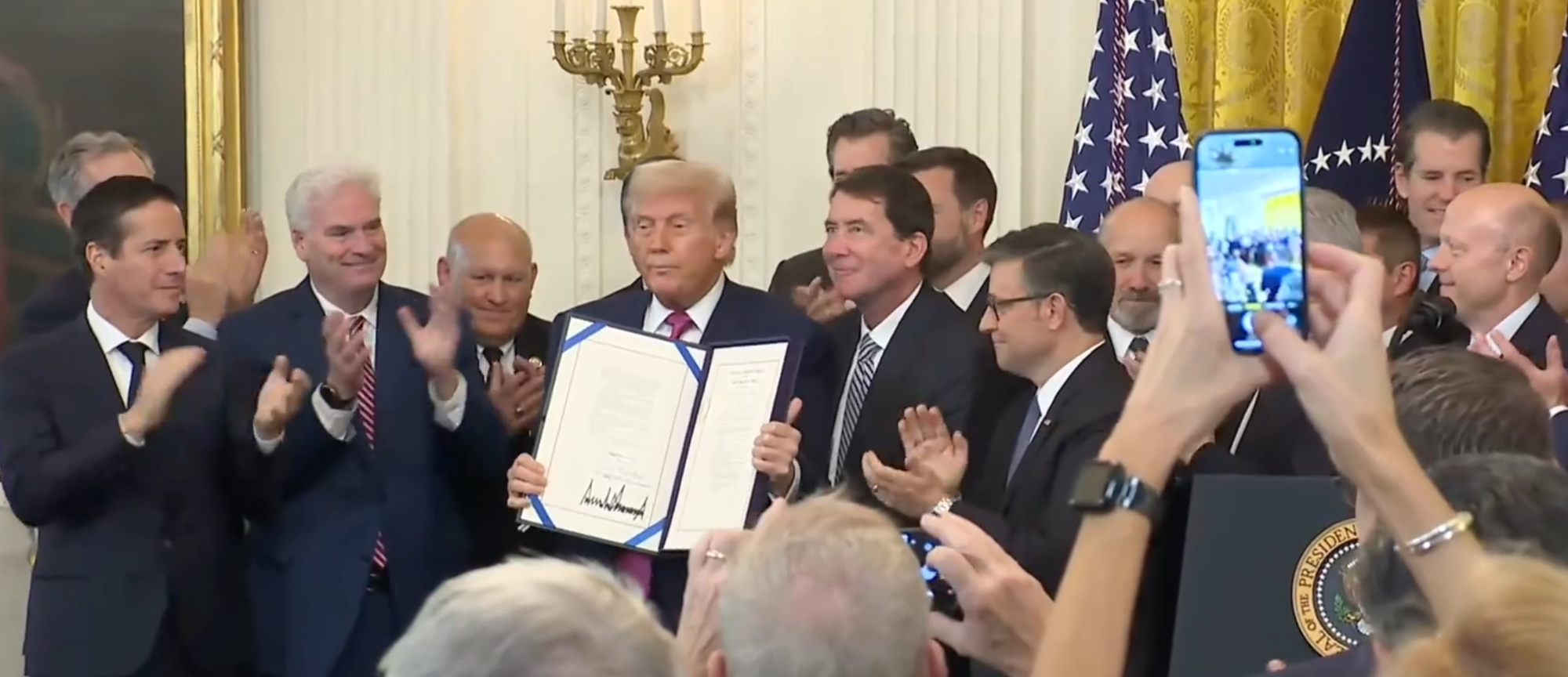
Trump signed the bill during a closed-door session Friday morning. In characteristically brash style, he quipped to reporters, “It’s called the GENIUS Act. I think it’s named after me.”
A Turning Point for U.S. Crypto Regulation
The bill’s passage followed intense negotiations, including a pivotal role played by David Sacks—dubbed the “crypto czar”—who helped broker a last-minute deal after declaring the bill “dead” earlier this week. According to Sacks, Trump’s direct involvement served as a decisive factor in reviving the legislation.
Despite widespread bipartisan support, the GENIUS Act wasn’t without opposition. Some far-right lawmakers expressed concerns about potential overreach. Representative Marjorie Taylor Greene warned on social media that the bill could open the door to a central bank digital currency (CBDC), potentially ushering in a cashless society.
“Congress is passing a bill today that opens the back door to a central bank digital currency,” Greene posted, referencing the Federal Reserve’s ongoing research into a digital dollar.
Critics like Greene were frustrated that House Republicans did not secure Senate approval for the Anti-CBDC Act, a separate piece of legislation aimed at banning any future U.S. central bank digital currency.
What the GENIUS Act Means for Stablecoins
Supporters argue the GENIUS Act provides clarity—not control. By banning algorithmic stablecoins and mandating dollar-backed reserves, it offers a framework for transparency, investor protection, and consumer confidence.
With Trump’s signature, the GENIUS Act takes effect immediately, though the actual rollout is expected to take time. U.S. regulators, including the Federal Reserve and the Office of the Comptroller of the Currency (OCC), now have until 2026 to finalize the rules and licensing structures that will govern stablecoin compliance.



