
The Rise of Digital Treasures: Are NFTs the Next Corporate Treasury Asset?
GameSquare Holdings, Inc. recently made waves in the financial world with its acquisition of CryptoPunk #5577 for $5.15 million in preferred shares, officially designating the iconic NFT as a strategic treasury asset. This bold move has ignited a fascinating debate: could non-fungible tokens, once seen primarily as speculative digital collectibles, be on the cusp of redefining corporate finance?
For years, the idea of incorporating digital assets like Bitcoin and Ethereum into corporate treasuries has gained traction. GameSquare's decision to add a high-value NFT to its reserves places digital art in a similar strategic light, prompting industry leaders to consider a future where NFT treasury companies become a norm.
A Growing Trend? Industry Insiders Weigh In
Garga, CEO of Yuga Labs, the creative force behind the Bored Ape Yacht Club, is a strong proponent of this emerging trend. He envisions a future where "NFT treasury companies" are commonplace, even expressing a desire for an APE-focused treasury firm. "The world isn’t ready for NFT treasury companies, but they are coming anyway," Garga asserted.
Matt Medved, a prominent figure on the Digital Art Council at Art Basel, shares this optimism, highlighting the substantial growth potential within the relatively small NFT market. Beyond mere financial speculation, some investors, like Loki, emphasize the unique cultural and social dimensions that NFTs bring to the table. "This won’t be just a cold finance strategy like what Michael Saylor is doing. It will involve real social dynamics," Loki commented, hinting at a deeper integration of digital culture into corporate strategy.
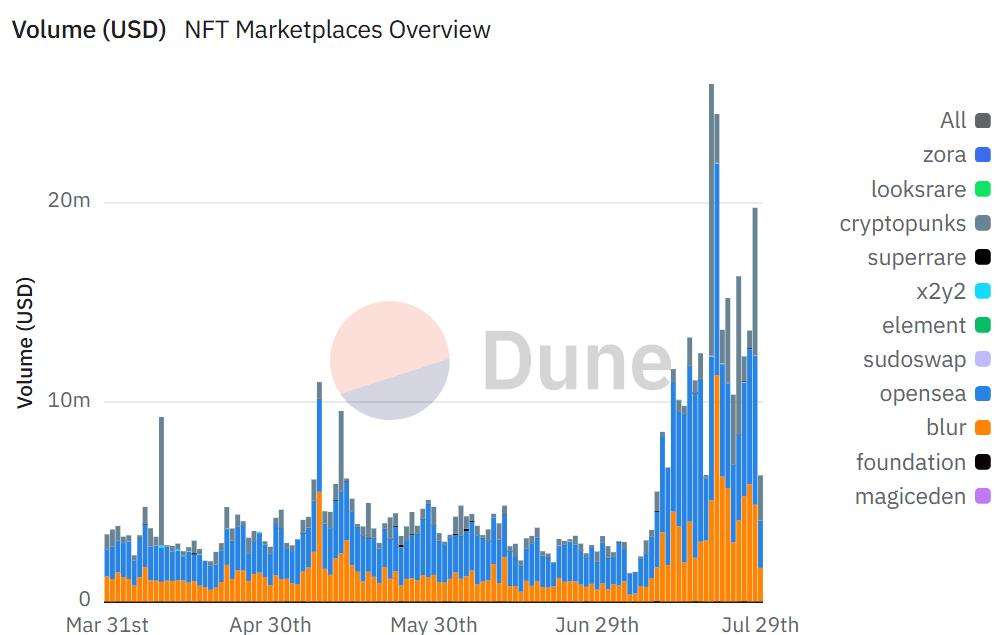
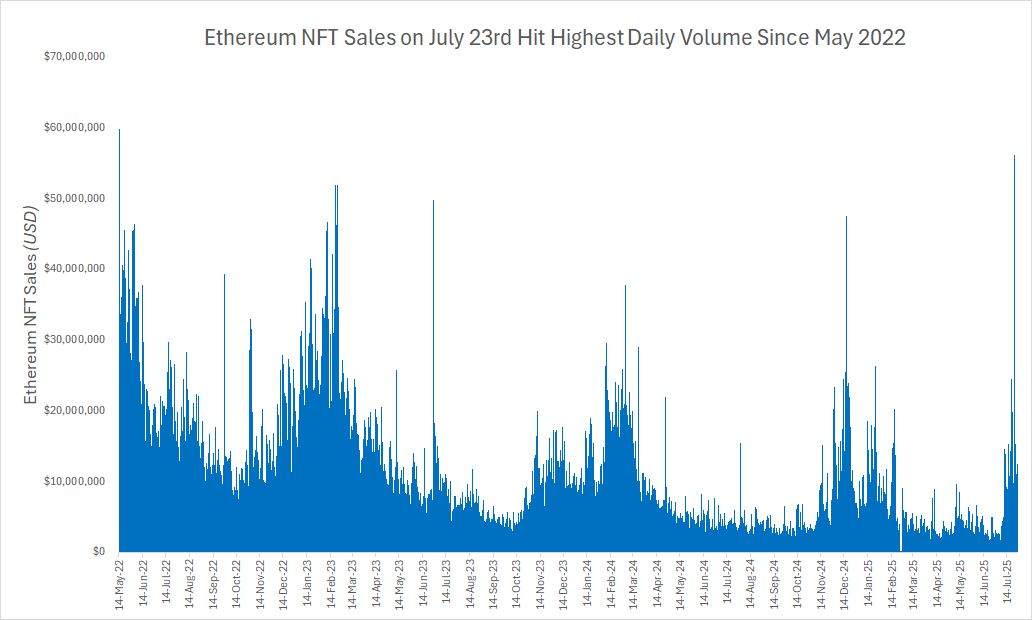
Indeed, the NFT market has shown signs of renewed vigor in July. Data from Dune Analytics reveals a significant spike in NFT marketplace volumes, with daily trading sometimes exceeding $26 million and consistently staying above $10 million. Reports also indicate a surge in floor prices for prominent collections like CryptoPunks and Moonbirds, signaling a potential resurgence for the broader NFT ecosystem. Ethereum NFT trading volume on July 23 notably reached its highest level since May 2022, suggesting a rekindled investor interest that could pave the way for businesses to seriously consider these assets for their strategic reserves.
Should this movement gain momentum, leading NFT collections such as Pudgy Penguins, CryptoPunks, and Bored Ape Yacht Club, which currently hold the majority of the market's liquidity, are poised to benefit significantly.
The Elephant in the Room: Intrinsic Value and Market Volatility
Despite the enthusiasm from some corners of the NFT world, the fundamental value of NFTs remains a contentious topic, even within the broader crypto community. Anatoly Yakovenko, co-founder of Solana, has been a vocal critic, candidly describing NFTs and memecoins as "digital slop" with "no intrinsic value," likening them to mobile game loot boxes.
This skepticism extends beyond just NFTs. The very concept of using any cryptocurrency as a strategic reserve has long been met with scrutiny. Concerns linger about the potential for speculative bubbles, where companies might issue bonds to acquire NFTs, potentially inflating both NFT and stock values. If capital inflows were to weaken and NFT prices experience a significant downturn, such a cycle could pose considerable risks to retail investors who hold shares in companies with high-value NFT portfolios. For any asset to serve as a reliable strategic reserve, it must demonstrate sustainable growth—a characteristic where NFTs, historically, have differed from more established cryptocurrencies like Bitcoin.
The debate surrounding NFTs as corporate treasury assets highlights the ongoing evolution and growing maturity of the digital asset landscape. While GameSquare's move is a significant signal, only time will tell if this bold bet marks the beginning of a widespread trend or remains an outlier in the world of corporate finance.



