
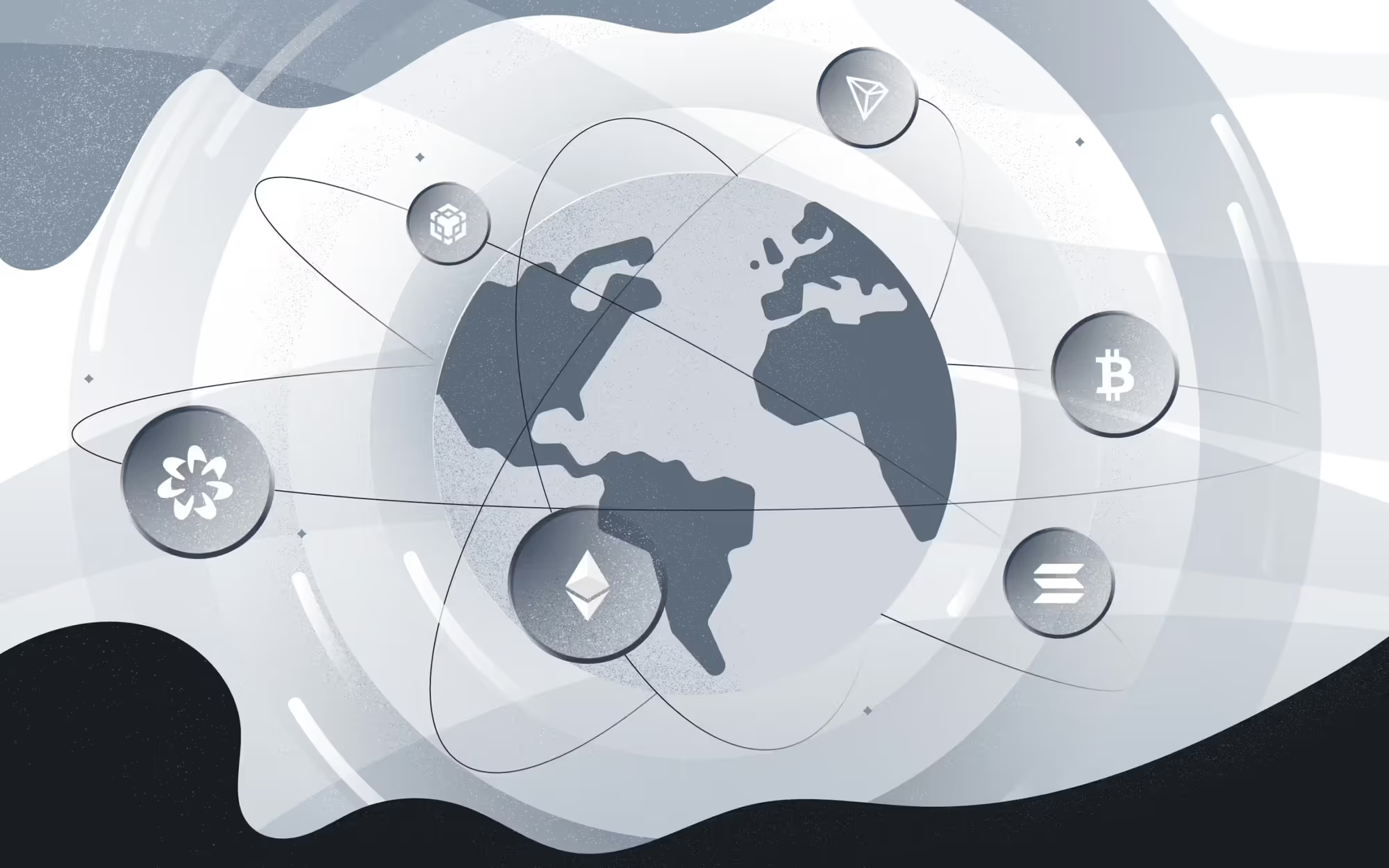
If you look at the raw data, the future of cryptocurrency isn't being built in the financial centers of the West; it's being embraced at a furious pace across Asia, Africa, and Latin America. Research consistently shows that the highest rates of cryptocurrency adoption are found in low- and middle-income nations.
For millions in these regions, digital assets aren't just a speculative investment; they are a vital tool for economic survival, a trusted alternative to unstable financial systems, and a lifeline for cross-border transactions.
The Core Drivers: Instability and Inclusion
Why are people in developing economies turning to decentralized digital assets? The reasons are structural, relating directly to the stability of local fiat currencies and the accessibility of traditional banking.
1. A Lifeline Against Inflation
In countries where local currencies are prone to rapid devaluation due to hyperinflation or political instability, a highly volatile asset like Bitcoin or a stablecoin can ironically be a more reliable store of value.
Consider nations like Venezuela, Zimbabwe, or Argentina, which have experienced crushing currency devaluations, wiping out life savings overnight. In relative terms, a global, decentralized asset, even one with sharp price swings, can offer a far better hedge against extreme local economic conditions than a rapidly depreciating fiat currency.
2. Bypassing Centralized Gatekeepers
Access to traditional financial services is a major obstacle for an estimated 1.4 billion people globally. One of the biggest barriers? The lack of government-issued identity documents required for Know Your Customer (KYC) processes and opening a bank account.
Cryptocurrency’s permissionless design is the solution here. You only need a smartphone and an internet connection to create a blockchain address, set up a wallet, and begin transacting immediately, with no ID or bank account required. This instantly positions crypto as a powerful tool for financial inclusion.
Remittances: Faster, Cheaper, Better
For many developing economies, the flow of money sent home by citizens working abroad (remittances) is a massive economic driver. In 2019, low- and middle-income countries received nearly $550 billion in remittances (Source: The World Bank). In places like El Salvador, remittances account for as much as 20% of the national economy.
However, cross-border payments via traditional channels are notoriously slow and expensive, with third-party providers often levying high fees. This makes sending smaller, crucial sums uneconomical.
Cryptocurrency cuts out those intermediaries. Using a secure and fast blockchain, transactions can settle for a fraction of the cost and in a matter of minutes. This efficiency is why companies, including remittance giant MoneyGram, have explored using networks like the Stellar blockchain to settle stablecoin remittances.
Government Adoption: El Salvador and CAR
The potential benefits have even spurred government action. El Salvador became the first country to recognize Bitcoin as legal tender in 2021, followed by the Central African Republic in 2022. Both governments explicitly sought to capitalize on crypto’s benefits, specifically citing the reduction of remittance costs and the expansion of economic opportunity. This move, while criticized by bodies like the International Monetary Fund over volatility concerns, demonstrates the growing sovereign interest in decentralized alternatives.
The Roadblocks Ahead
Despite the overwhelming demand and compelling advantages, widespread crypto adoption still faces critical challenges in these regions:
- Scams and Fraud: Where regulation is light or ineffective, users can be easily preyed upon. High-profile scams, such as the OneCoin fraud, have specifically targeted users in rural areas of nations like Nigeria, necessitating government warnings. Users must be educated on the associated risks and proper security practices.
- The Fiat Conversion Problem: While it's easy to get crypto, using it for daily life remains difficult. If you need to pay for groceries or rent, the cryptocurrency must still be converted back into local fiat currency, a process that typically requires a bank account. Therefore, a lack of merchant acceptance remains a key practical limitation to crypto's full utility for financial inclusion.
Ultimately, the high adoption rates in developing nations signal a genuine demand for more transparent, accessible, and censorship-resistant financial tools. This demand is not fleeting; it’s a long-term economic reaction to deeply entrenched issues of currency instability and financial exclusion.



