
Tether, the world’s largest stablecoin issuer, may be on track to become one of the most profitable companies in history—potentially surpassing even oil giant Saudi Aramco, according to Bitwise Chief Investment Officer Matt Hougan.


In a recent client memo, Hougan addressed reports that Tether is eyeing a $500 billion valuation, a figure that places it alongside powerhouse startups like SpaceX and OpenAI. While that number raised eyebrows, Hougan argued the company’s growth trajectory makes sense when viewed in the context of the massive global money markets it is tapping into.
Tether’s Expanding Reach
Earlier this year, Tether CEO Paolo Ardoino revealed that USDT—the company’s flagship stablecoin—is used by more than 400 million people worldwide, with adoption growing by 35 million wallets each quarter. Much of this growth is concentrated in developing economies, where USDT is often seen as a more stable alternative to local currencies while reinforcing the role of the U.S. dollar abroad.

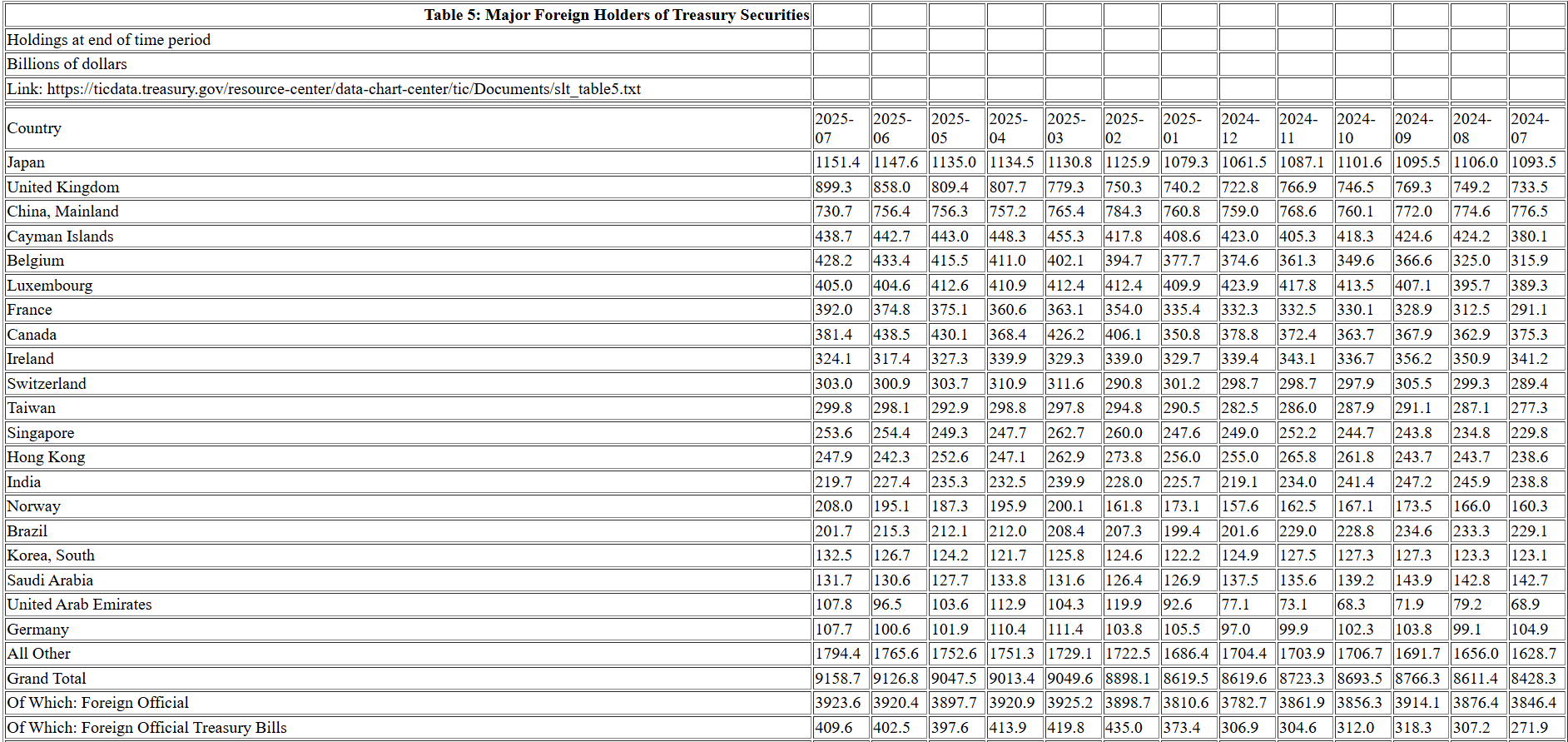
Tether has also become one of the largest holders of U.S. Treasurys, with more than $127 billion under management as of the second quarter of 2024. That positions it among the top 20 global holders, ahead of countries like Germany and the UAE and just behind Saudi Arabia, according to U.S. Treasury Department data.
Hougan noted that Tether’s near-dominance in stablecoin adoption across non-Western markets could fuel even greater expansion. If emerging economies were to shift significantly from local currencies to USDT, the company could end up managing trillions of dollars in assets. At today’s interest rates, he added, $3 trillion in holdings would generate more profit than Saudi Aramco’s projected $120 billion in 2024.
Diversification Beyond Stablecoins
Tether’s growth story extends beyond digital dollars. With a lean team of fewer than 200 employees, the company generated roughly $13 billion in profit in 2024 and currently holds more than 100,000 BTC valued at $11.4 billion. It has also deployed capital into a wide range of industries, including artificial intelligence, telecommunications, data centers, renewable energy, and bitcoin mining.
Most recently, the company launched USAT, a new U.S.-regulated, dollar-backed stablecoin aimed at American users, complementing USDT’s global reach.
A Reflection of Crypto’s Potential
Hougan framed Tether’s trajectory as an example of the broader opportunities within crypto. Unlike traditional tech firms, which must disrupt existing giants to grow, digital assets are targeting massive global markets with relatively low penetration.
For instance, bitcoin’s $2.3 trillion market capitalization still represents less than 10% of the $25 trillion gold market it is competing against. Similarly, Ethereum and Solana are aiming at the multi-trillion-dollar global payments and capital markets. McKinsey estimates the payments industry processes $1.8 quadrillion annually, while stocks, bonds, and real estate together total around $665 trillion in value.
“The markets are so large, in fact, that no single centralized company could dream of capturing more than a small fraction,” Hougan said. “But Ethereum and Solana, as decentralized global networks, have a real chance to take meaningful share.”
Investor Takeaways
For investors, Hougan stressed two lessons: crypto’s upside lies in its exposure to some of the largest markets in the world, and diversification is essential given the sector’s volatility. He compared investing in crypto to early-stage venture capital, where most projects fail but a few deliver extraordinary returns.
“The real question,” Hougan concluded, “is not which specific token will win, but whether crypto as a whole will matter more five years from now.”



