

Tether now holds roughly 1.95 million shares in Antalpha, making it one of the firm’s largest shareholders. The position signals deeper capital allocation into bitcoin-backed lending infrastructure as mining finance remains under pressure.
The stake was disclosed in a Schedule 13D filing with the Securities and Exchange Commission (SEC, US) on Monday. The filing shows Tether acquired the shares through affiliated entities, with Chairman Giancarlo Devasini retaining shared voting and dispositive power over the holdings.
Why Is Tether Backing Bitcoin Lending Firms Now?
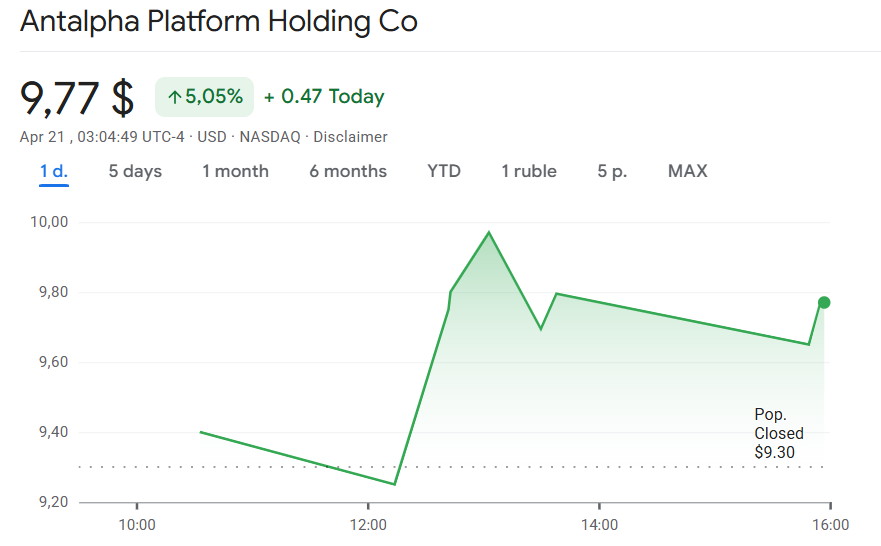
Antalpha operates a lending platform focused on bitcoin-collateralized loans and mining equipment financing, working closely with hardware supplier Bitmain. The company raised $49.3 million in its May 2025 initial public offering (IPO) at $12.80 per share, yet its stock remains below that level despite a 7.2% intraday gain Monday to around $9.97.
The investment comes as parts of the mining sector face structural changes, with several public miners reallocating capital toward artificial intelligence and high-performance computing. Against this backdrop, Antalpha reported $79.7 million in 2025 revenue, up 68% year-over-year, while net income reached $18.5 million, more than tripling from the prior year.
Tether has increasingly deployed profits into adjacent sectors, including tokenization, digital asset banking, and mining services. CEO Paolo Ardoino said previously the firm has backed over 120 companies through its venture arm, funding those investments from earnings rather than stablecoin reserves.
Data from DeFiLlama shows Tether’s USDt (USDT) maintains a market capitalization of about $187 billion, accounting for 58.4% of the stablecoin market. That scale provides balance sheet flexibility to pursue equity stakes across crypto infrastructure, but will these investments translate into sustained influence over core industry rails?
Further movement in Antalpha’s share price and additional disclosures on Tether’s position size will be closely watched as indicators of institutional confidence in bitcoin-linked credit markets.



