
Tether, the world’s largest stablecoin issuer, has consolidated 80 tons of gold—worth roughly $8 billion—into a single high-security vault in Switzerland, reinforcing its growing reliance on hard assets amid ongoing scrutiny of its reserves.
While the move highlights Tether’s expanding footprint in global finance and offers a hedge against currency volatility, it also reignites calls for greater transparency, particularly as the company continues to operate without a full independent audit.
A Gold Power Play
Tether has steadily increased its gold holdings since it launched a gold-backed token two years ago. Earlier this year, the company reported 7.7 tons of gold in its Q1 2025 report. With its latest acquisition, that total now sits at 80 tons—placing Tether among the world’s largest non-sovereign gold holders.
CEO Paolo Ardoino emphasized the strategic value of the move. “We have our own vault. I believe it’s the most secure vault in the world,” he said in an interview. Ardoino also framed the move as a cost-efficient way to manage custody and safeguard a durable asset. “Gold should logically be a safer asset than any national currency.”
With geopolitical tensions and inflation concerns boosting gold’s appeal, the timing of this consolidation could work in Tether’s favor—especially as demand for alternative store-of-value assets continues to rise globally.
Not Just an Investment—A Reserve Strategy
It’s important to note: Tether’s gold isn’t held for speculation. The precious metal forms part of the reserves backing USDT, the company’s widely used U.S. dollar-pegged stablecoin. At over $159 billion in circulation, USDT is the most traded digital asset in the crypto world.
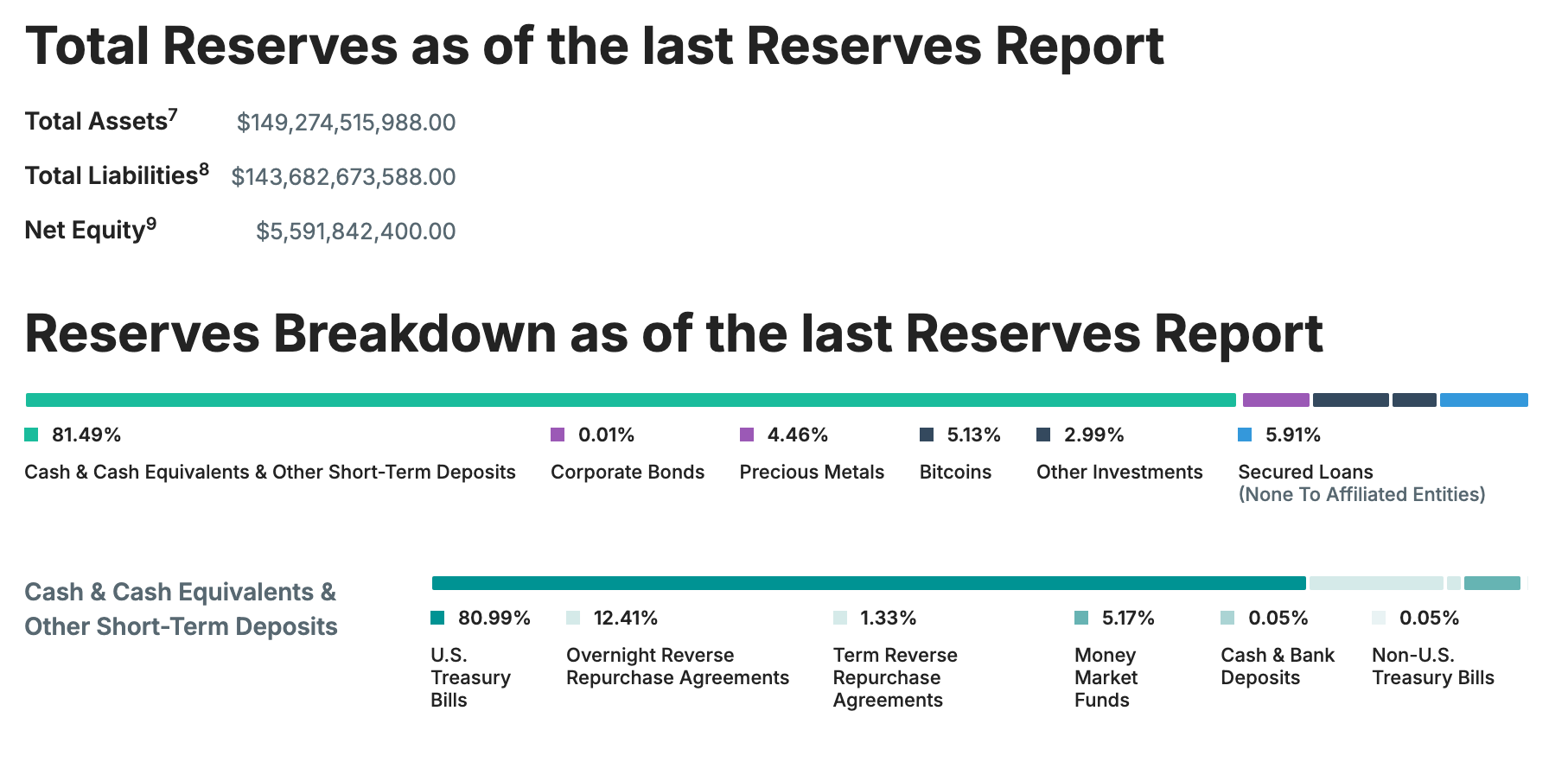
Despite the headline figure, Tether’s gold reserves represent less than 5% of its total backing. Most of its reserves are tied up in other assets, primarily U.S. Treasury bonds, which accounted for $98 billion in Q1 2025 alone—a figure that has likely grown since.
A Secure Vault, But Where’s the Audit?
While the gold vault reflects Tether’s ambition to project strength and reliability, critics argue that the announcement misses the bigger issue: accountability.
Despite years of public promises and pressure from regulators, Tether has yet to undergo a full, independent audit of its reserves. The lack of a transparent audit continues to cloud investor confidence, especially in light of past controversies and mounting regulatory scrutiny across the industry.
Some community members reacted with skepticism to the Swiss vault news, viewing it as a distraction from the more pressing demand for transparency. The question remains: What backs the remaining 95% of Tether’s reserves?
In an industry increasingly demanding proof, not promises, verification matters as much as accumulation.



