

Tether, the company behind the world’s largest stablecoin, is steadily expanding its footprint far beyond digital assets. According to CEO Paolo Ardoino, the stablecoin giant is on course to become one of the world’s largest holders and traders of gold, positioning itself for a future where reliance on the U.S. dollar may weaken.
In an interview with Bloomberg, Ardoino said Tether expects its role in the global gold market to grow as geopolitical rivals to the United States explore alternatives to dollar dominance, including gold-backed systems. He reiterated his long-held view that gold offers greater long-term security than national currencies, especially during periods of economic uncertainty.
Building a sizable gold reserve
Tether has been reinvesting a significant portion of its earnings into physical gold. Ardoino said the company is currently purchasing one to two tons of gold each week and plans to maintain that pace for at least the next few months. These steady acquisitions have pushed Tether’s total gold holdings to nearly 140 tons.
The gold is stored in a fortified Swiss bunker originally built during the Cold War. According to Bloomberg, this makes Tether’s reserve the largest known private gold holding outside of those managed by central banks, exchange-traded funds, and commercial banks.
Rising precious metal prices have further boosted the value of these holdings. With gold continuing a strong rally, Tether’s reserves are now valued at more than $23 billion, highlighting how traditional assets are becoming an increasingly important part of the company’s balance sheet.
Moving from storage to trading
Tether’s ambitions extend beyond simply holding gold. The company plans to actively trade its bullion, putting it in direct competition with established financial institutions such as JPMorgan and HSBC. Ardoino said Tether is evaluating market conditions and trading strategies to take advantage of arbitrage opportunities.
To support this move, the firm has hired two senior gold traders from HSBC, signaling a serious push into the bullion trading business. At the same time, Tether has expanded its exposure to precious metals through equity investments, including stakes in Canadian-listed firms Elemental Altus Royalties and Gold Royalty Corp.
Stablecoins funding expansion
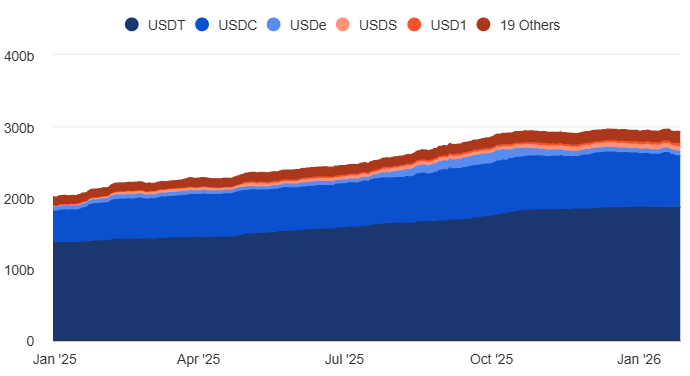
Tether’s core business continues to provide the capital for this diversification. Its flagship stablecoin, USDT, remains the dominant player in the global stablecoin market, with more than $186 billion in circulation. The scale of USDT allows Tether to generate substantial earnings, which it then reinvests into assets such as gold.
The company also issues Tether Gold (XAUT), a gold-backed digital token that accounts for more than half of the gold stablecoin market, with a market value of roughly $2.6 billion.
Adding to its product lineup, Tether recently announced the launch of USAT, a U.S. dollar-pegged stablecoin designed specifically for U.S. customers. The rollout follows the appointment of Bo Hines, formerly a White House crypto policy advisor, to the USAT team.
A broader financial vision
Together, these moves reflect Tether’s evolving strategy. By blending digital currencies with traditional assets like gold, the company appears to be preparing for a more fragmented global financial system, one where investors and institutions may seek alternatives to long-standing monetary anchors.



