
A decade ago, a bold vision emerged from the nascent world of blockchain: Ethereum. What began as a whitepaper penned by a then-teenage cryptographer, Vitalik Buterin, promised to revolutionize the internet itself. Today, as Ethereum celebrates its tenth anniversary on July 30, 2025, it stands as the formidable backbone of a $75 billion decentralized economy, powering everything from playful meme coins to multi-billion-dollar institutional financial applications.
I am honored to be asked to be a torch bearer for the run up to the 10th anniversary celebration of Ethereum's launch and non-stop, essentially flawless, operation of the protocol -- even as the protocol underwent many major upgrades "in flight" – without missing a block. pic.twitter.com/kkf7937wnz
— Joseph Lubin (@ethereumJoseph) July 21, 2025
Joined by co-founders like Gavin Wood, Charles Hoskinson, Anthony Di Iorio, and Joseph Lubin, Buterin's initial concept for a "world computer" aimed to transcend Bitcoin's capabilities. This decentralized machine would execute "smart contracts" – self-executing code automating agreements without intermediaries – and host a new generation of trustless applications. After a successful presale in mid-2014, the Ethereum genesis block was mined on July 30, 2015, ushering in an era of unprecedented blockchain programmability and a philosophical shift towards large-scale decentralized coordination. Co-founder Joseph Lubin is among those marking the occasion, participating in the ceremonial NFT Torch.
Navigating Crises and Catalyzing Innovation
Ethereum's journey was not without its trials. In 2016, "The DAO," an early decentralized venture fund built on Ethereum, suffered a major hack, with an attacker siphoning off 3.6 million ETH. This crisis forced a profound decision upon the community: should the blockchain, by its nature designed for immutability, be altered to reverse the theft? A controversial but widely supported hard fork ultimately recovered the stolen funds, leading to the split that created Ethereum Classic (ETC) for those who disagreed. This pivotal event, while challenging, highlighted the importance of robust code and sparked critical discussions about decentralized governance.
Ironically, the lessons learned from The DAO hack inadvertently paved the way for Ethereum's next explosive growth phase: Initial Coin Offerings (ICOs). The introduction of the ERC-20 token standard simplified the creation and issuance of tokens on Ethereum, transforming the platform into a powerful fundraising engine. By 2017, projects were raising billions, positioning Ethereum as a decentralized Kickstarter for startups to bypass traditional funding routes. While the ICO boom also attracted regulatory scrutiny and bad actors, it cemented Ethereum's "product-market fit" as a platform for bootstrapping new economic systems.
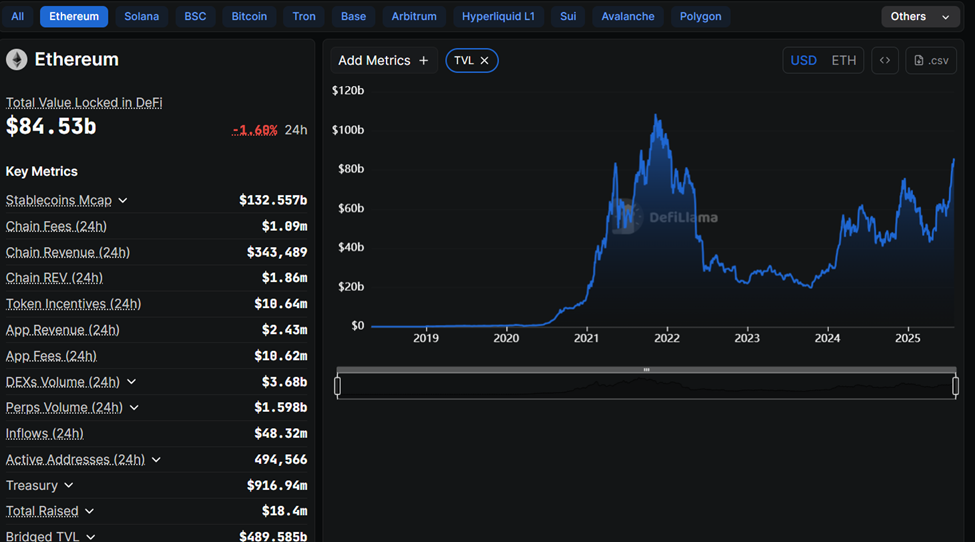
The next major leap came with "DeFi Summer" in 2020. Decentralized Finance (DeFi) protocols like Uniswap, Aave, Compound, and MakerDAO emerged, offering trustless alternatives for borrowing, lending, trading, and yield farming. The total value locked in DeFi surged past $11 billion, showcasing Ethereum's "composability" – the ability for applications to seamlessly build upon one another. This success, however, also exposed scalability limitations, leading to skyrocketing transaction fees and highlighting the urgent need for network upgrades.
The Path to Scalability and Beyond
The culmination of years of development arrived in September 2022 with "The Merge." This historic transition from a proof-of-work (PoW) to a proof-of-stake (PoS) consensus mechanism drastically cut Ethereum's energy consumption by over 99.95% and made ETH a deflationary asset. It was a monumental technical achievement, fundamentally realigning the network with global sustainability goals.
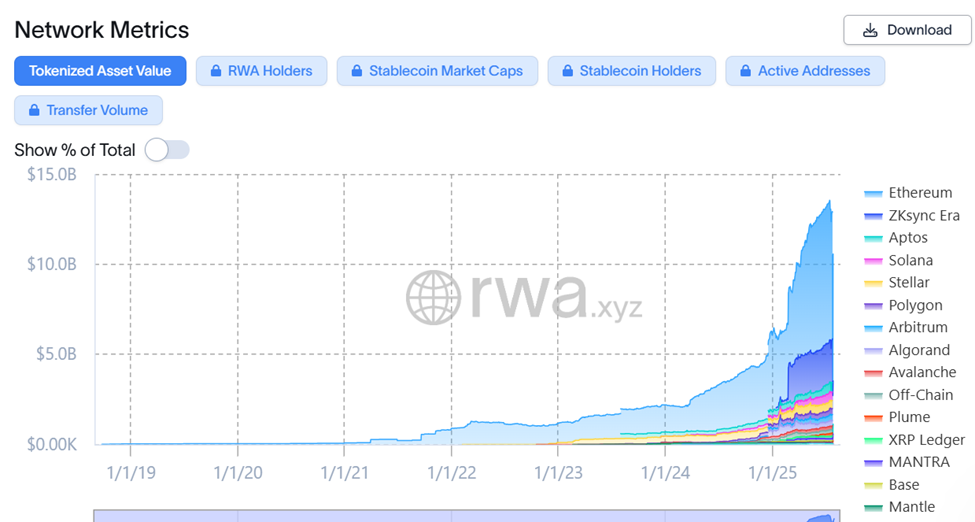
Post-Merge, Ethereum's roadmap continued to evolve, focusing on scalability through Layer-2 (L2) solutions. The 2023 Shapella upgrade enabled staked ETH withdrawals, and the 2024 Dencun (Cancun-Deneb) upgrade introduced proto-danksharding, significantly reducing L2 data fees through "blobs." This has allowed rollups like Arbitrum, Optimism, and Base to mature rapidly, pushing Ethereum's effective transaction throughput to over 250 transactions per second (TPS). This increased efficiency has not gone unnoticed by traditional finance, with BlackRock's BUIDL tokenized fund, launched in 2024, notably operating on Ethereum.
ethereum has been online ten years straight with zero pauses and zero maintenance windows.
— binji (@binji_x) July 27, 2025
in that time:
- facebook went down for 14 hours
- aws kinesis froze for 17
- cloudflare dropped 19 datacenters
- alt L1s…well, you know.
every centralised giant blinks, they rely on… pic.twitter.com/MaGi326xHI
Hart Lambur, Co-founder of Risk Labs, observes this significant shift: "Ethereum started as a smart contract platform. Ten years later, it underpins a growing share of global finance: ETH ETFs in the US, ETH in corporate and DAO treasuries, and major institutions like BlackRock tokenizing funds on Ethereum." The recent Pectra upgrade in 2025, with enhancements like EIP-3074 and Verkle Trees, further improves user experience and data handling, laying the groundwork for even broader adoption and modular blockchain design.
The Next Frontier: Seamless Interoperability
Despite the remarkable progress in scaling, the user experience on Ethereum's burgeoning L2 ecosystem can still be fragmented. Moving between different L2s can be slow, costly, and daunting for new users. Lambur believes that solving this "interoperability UX" is the "real endgame." He envisions a "giant payments and exchange network that connects every blockchain," where Ethereum serves as the ultimate settlement and payment layer for all tokenized assets on the internet – from money to equities and bonds.
This vision hinges on creating a unified experience that makes moving assets between chains instant and low-cost. Lambur predicts an upcoming economic battleground where chains will compete for liquidity, similar to how banks compete for deposits, through loyalty programs and incentives. This competition could fundamentally reshape DeFi economics and accelerate the emergence of a multi-chain ecosystem settled by Ethereum.
As it marks its tenth anniversary, Ethereum has not merely survived; it has thrived, defining the digital asset era through its pioneering smart contracts, fueling DeFi, giving rise to NFTs, and laying the groundwork for decentralized autonomous organizations (DAOs). Its global developer community, consistent uptime, and remarkable adaptability solidify its position as foundational infrastructure for a truly decentralized internet. If Bitcoin is digital gold, Ethereum is the engine of Web3 – a testament not just to resilience, but to explosive growth and transformative potential.



