
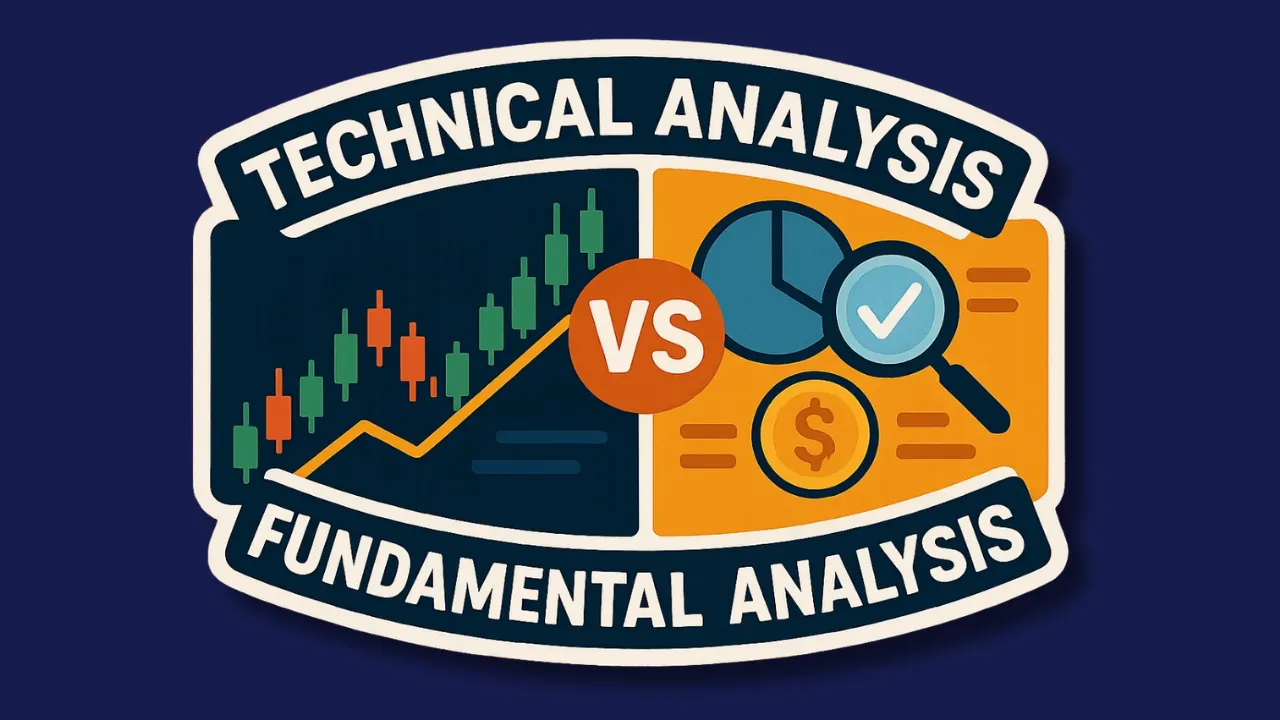
When it comes to trading or investing—whether in stocks, crypto, or commodities—analysis is everything. Without it, you’re basically gambling. Two of the most common approaches are technical analysis (TA) and fundamental analysis (FA). Both aim to forecast market trends, but they do so in very different ways.
Why Analysis Matters
Markets are volatile, and emotions like fear and greed often push people into bad decisions. Proper analysis doesn’t guarantee profits, but it does help you cut through the noise and make rational choices. That’s where TA and FA come in—tools to help you see the market more clearly.
What Is Technical Analysis?
Technical analysis looks at price charts and historical data to try to predict where an asset might move next. It assumes that all available information is already reflected in the price.
Traders use chart patterns and indicators like:
- Candlestick charts – show open, close, high, and low prices for a time period.
- Trendlines and moving averages – help spot momentum and direction.
- Oscillators (like RSI or MACD) – measure overbought or oversold conditions.
- Fibonacci retracements & Ichimoku cloud – tools for spotting support, resistance, and trend strength.
TA can feel very numbers-driven, but in reality, it’s about studying human behavior. Markets move because of people, and people are emotional—chasing hype or panicking on dips. Chart patterns often reflect those emotions.
Limitation: Technical analysis is never foolproof. Just like a weather forecast, it can point to likely outcomes, but it’s not a crystal ball.
What Is Fundamental Analysis?
Fundamental analysis takes a completely different angle. Instead of charts, it looks at the bigger picture—the real-world factors that give an asset value.
For crypto and other assets, that means examining:
- Partnerships and adoption – Who’s actually using or supporting the project?
- Technology updates – Upgrades, forks, or new features that add value.
- Regulation – Government policies or legal changes that could help or hurt.
- Market demand – Is there real utility driving long-term growth?
FA is usually long-term focused, asking: Is this asset worth more than its current price suggests?
Limitation: Markets don’t always react logically to news. For example, good news might pump prices—but if you join too late, you risk buying at the top just as hype cools down.
Why Use Both?
Most experienced traders combine TA and FA:
- FA helps you decide what to invest in (the long-term value).
- TA helps you decide when to buy or sell (the short-term timing).
Used together, they give a fuller picture. Still, no method can erase uncertainty—markets will always surprise you.
Key Takeaway
- Technical analysis = charts and patterns
- Fundamental analysis = real-world value drivers
- Best strategy = use both, but stay cautious
Whether you’re trading Bitcoin, stocks, or gold, learning these two approaches gives you the tools to move beyond gut feelings and start making informed, disciplined decisions.



