

While investors in the U.S. and Europe debate ETFs and complex DeFi products, Sub-Saharan Africa (SSA) is showing another side of crypto: real-world utility. For millions of people across the region, Bitcoin and stablecoins aren’t speculative bets — they’re lifelines against inflation, currency restrictions, and costly remittances.
Crypto Growth Surges in Sub-Saharan Africa
According to the latest Chainalysis report, Sub-Saharan Africa is now the third-fastest-growing crypto market worldwide. Between July 2024 and June 2025, on-chain transaction volume jumped 52% year-over-year, hitting more than $205 billion.
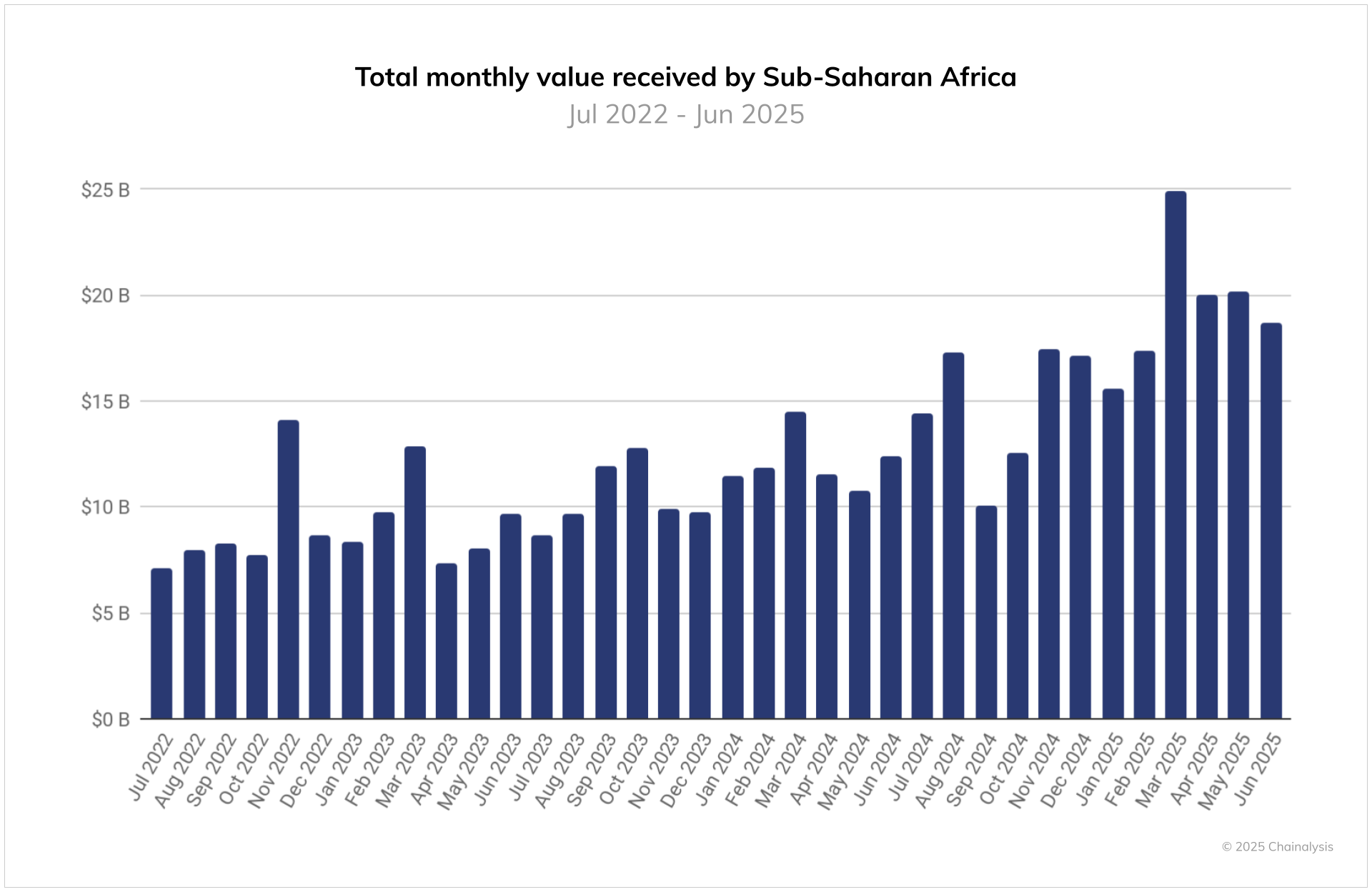
This growth is overwhelmingly retail-led. Instead of hedge funds and institutions, it’s everyday users turning to Bitcoin and stablecoins for payments, savings, and cross-border transfers.
Nigeria and South Africa: Two Different Stories
- Nigeria: With $92.1 billion in transaction value, Nigeria leads the region. Inflation and strict foreign exchange controls have driven citizens to embrace Bitcoin as “digital gold” and stablecoins like USDT as substitutes for scarce U.S. dollars. In Nigeria, Bitcoin accounts for 89% of retail transactions.
- South Africa: Here, the trend looks different. A clearer regulatory framework and supportive banks — including Absa, one of the country’s largest — have positioned South Africa as an institutional crypto hub. The focus is on cross-border payments and the development of new financial products, with Bitcoin making up 74% of retail activity.
How SSA Compares Globally
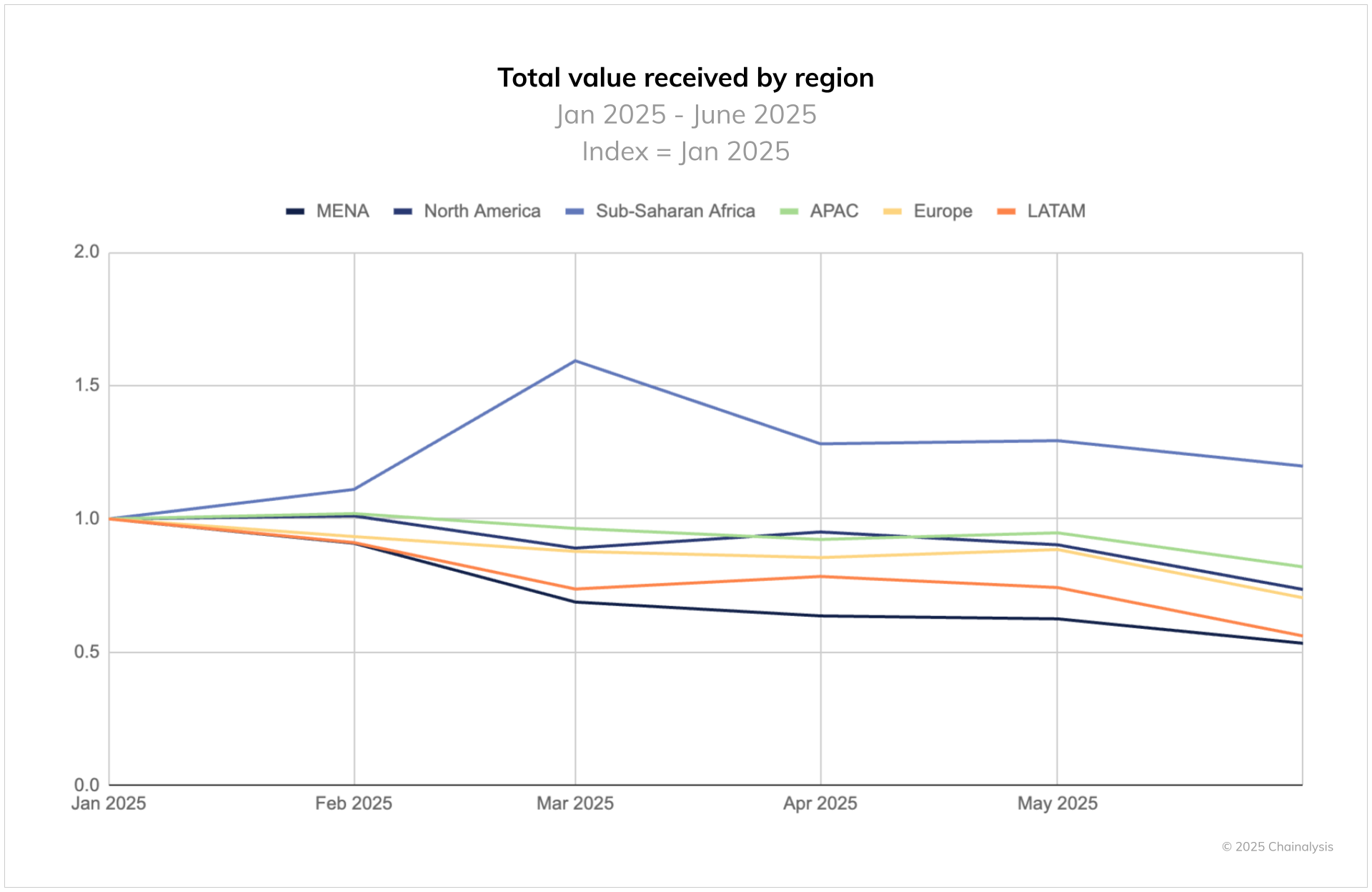
Placed on the global crypto map, SSA tells a strikingly different story:
- Asia-Pacific (APAC): The fastest-growing region, with 69% YoY growth, driven by DeFi expansion, Layer-2 scaling, and institutional capital flows in hubs like Singapore and South Korea.
- Latin America: Up 63% YoY, thanks to remittances and P2P payments, particularly in Brazil and Mexico.
- North America & Europe: The largest markets by capital flow — $1.2 trillion and $1.1 trillion respectively — fueled by institutional adoption, ETFs, DeFi, and regulatory frameworks such as MiCA in Europe.
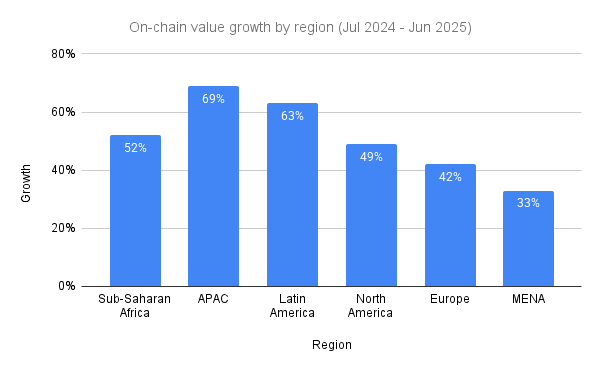
By comparison, SSA’s total volumes are smaller, but its practical use cases stand out. While developed markets lean on speculative or advanced financial instruments, SSA showcases crypto’s power to solve fundamental economic challenges.
Sub-Saharan Africa is proving that crypto isn’t only about high finance or investment hype. In regions where inflation erodes savings and cross-border payments are slow and expensive, Bitcoin and stablecoins offer immediate, tangible value.
If regulators in SSA can strike the right balance between innovation and oversight, the region could become a global hub for grassroots crypto adoption — and a model for how digital assets can reshape financial infrastructure from the ground up.



