
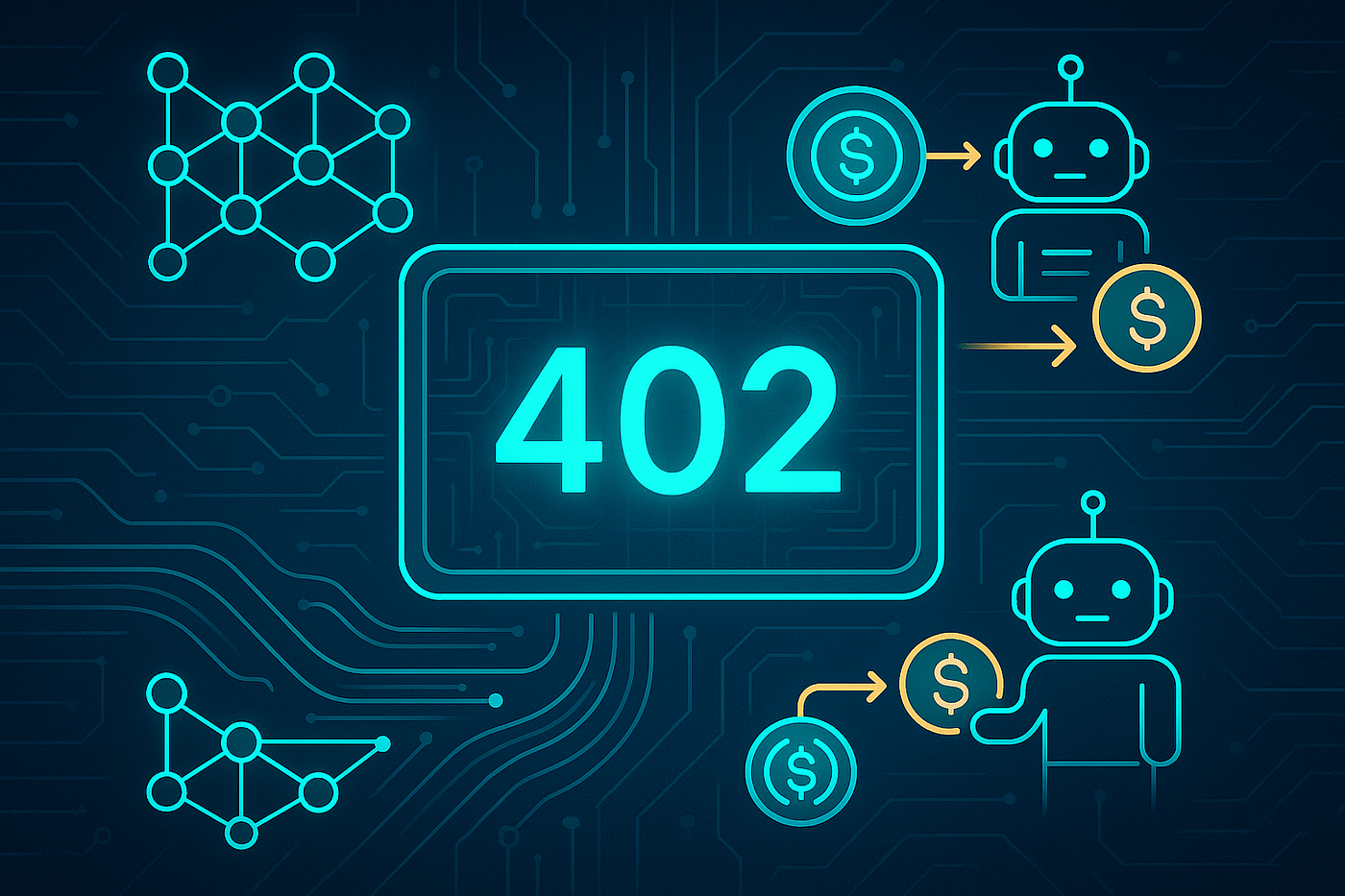
Stripe has introduced a preview of a new payment feature designed specifically for AI agents, marking a notable step toward machine-to-machine commerce. The company is integrating the open x402 protocol to allow developers to charge AI agents directly in USDC on Coinbase’s Base network.
The move reflects a broader shift in how digital services may be paid for in the age of autonomous software. Instead of relying solely on traditional billing systems built for human users, Stripe’s new approach aims to support automated, real-time payments between machines.
Building Payments for Autonomous Systems
Jeff Weinstein, Stripe’s product lead, announced the preview on X, explaining that the system enables businesses to programmatically charge AI agents for API usage, Model Context Protocol calls, and HTTP requests through Stripe’s existing PaymentIntents API.
Autonomous agents are an entirely new category of users to build for, and, increasingly, to sell to.
— Jeff Weinstein (@jeff_weinstein) February 10, 2026
Today, we’re launching (a preview) of machine payments on @stripe—a way for developers to directly charge agents, with a few lines of code. 🤖💸
$ Let’s start tinkering… ⤵️
The x402 protocol, developed by Coinbase, revives the long-unused HTTP 402 “Payment Required” status code. In practice, this allows a web service to request onchain payment as part of a standard web interaction. When an agent attempts to access a paid endpoint, it receives a 402 response with payment instructions. The agent can then attach a USDC payment authorization and retry the request, completing the transaction within the flow of a normal web call.
Weinstein noted that today’s financial infrastructure is largely designed around human behavior. AI agents, by contrast, may need to make frequent microtransactions, operate around the clock across borders, and rely on fast settlement. The x402 integration is meant to address those requirements.
How the Stripe Preview Works
Under the preview, a developer creates a PaymentIntent through Stripe. The platform generates a deposit address, which is passed to an AI agent. The agent can send USDC funds or a payment token, after which transaction status can be tracked via API, webhook, or directly in the Stripe dashboard.
Importantly, Stripe says that businesses can continue using its standard tools for sales tax, refunds, and reporting. Developers only need to interact with crypto-specific components if they choose to. To help teams experiment, Stripe has also released an open-source command-line tool called “purl,” along with Node.js and Python sample code.
Weinstein added that the current rollout is a preview and that Stripe plans to expand support to additional protocols, currencies, and blockchains over time.
CoinGecko Launches x402-Powered API Access
In parallel, crypto data platform CoinGecko announced it has integrated x402 into its API infrastructure. The update turns certain endpoints into a pay-per-use service, allowing autonomous agents to access price and onchain data for a flat fee of $0.01 USDC per request.
Notably, no account or API key is required. Instead, agents follow the standard x402 handshake: request an endpoint, receive a 402 response with payment details, submit USDC authorization, and retry the call to retrieve the data.
CoinGecko’s broader data coverage includes more than 18,000 cryptocurrencies across over 250 networks. The company said the integration could support use cases such as automated arbitrage monitors or onchain risk-tracking systems.
Broader Business Context
The product announcements come as Bloomberg reported that Stripe is exploring a tender offer that could value the company at $140 billion, citing a person familiar with the matter. That figure would represent a 31% increase from the company’s $107 billion valuation last year. In 2023, Stripe raised $6.5 billion in a Series I funding round led by Thrive Capital.


While the valuation discussions are separate from the x402 rollout, they underscore Stripe’s continued expansion into emerging payment technologies.
A Glimpse at the Future of Machine Commerce
Stripe’s x402 integration signals a growing interest in infrastructure built not just for people, but for software agents that can transact independently. By combining stablecoins, blockchain networks like Base, and web-native standards, companies are experimenting with new ways to price and deliver digital services.
The preview remains early-stage, but it offers a clear glimpse into how AI systems might one day pay for data, compute, and APIs in real time, without human intervention. For developers building autonomous tools, that shift could open up entirely new business models.



