
A compromise on stablecoin rewards is nearing agreement in the Senate, removing a key barrier to advancing a broader U.S. crypto market structure bill. The breakthrough could unlock long-stalled legislation that defines oversight between federal regulators and shapes digital asset adoption.
Sens. Angela Alsobrooks and Thom Tillis have led negotiations on the issue, which has divided banks and crypto firms for months. Draft language now targets passive yield while allowing activity-based rewards, as the Senate Banking Committee prepares for a markup on the Clarity bill. The timeline remains uncertain as April hearings appear unlikely.
Can Stablecoin Rewards Bridge Banking And Crypto Interests?
The dispute reflects a deeper tension between traditional finance and crypto-native models. Banking groups warn that allowing rewards could accelerate deposit outflows, while industry participants argue restrictions would limit innovation and user incentives. A White House analysis recently found limited systemic risk, though banks disputed its assumptions.
 Jesse Hamilton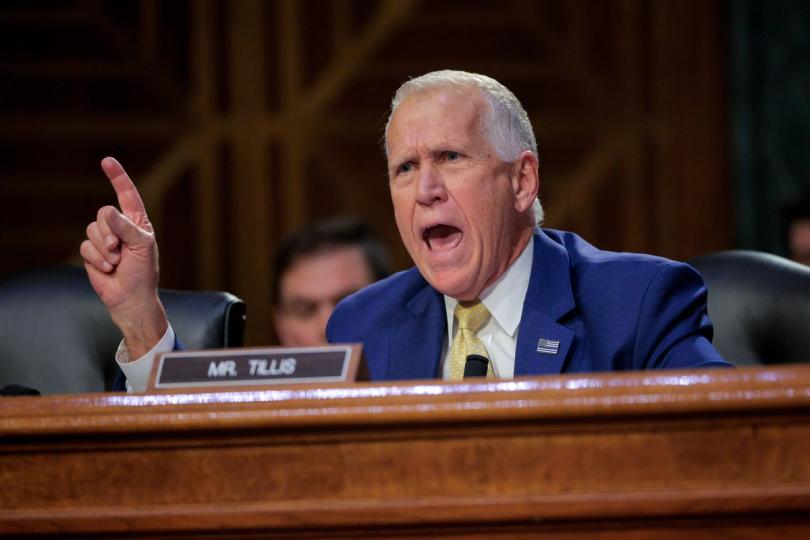
Debate intensified publicly this week.
“You can’t be for CLARITY and against rewards,” said Paul Grewal, Chief Legal Officer at Coinbase, urging lawmakers to reconcile competing positions.
News: Sen. Tillis (R-NC) told Senate Banking Committee Chair Tim Scott (R-SC) the panel should not plan to advance a major crypto bill in April.
— Brendan Pedersen (@BrendanPedersen) April 20, 2026
Negotiators need more time to finalize a bank-crypto compromise on stablecoin yield, Tillis said, pointing to a potential May markup pic.twitter.com/PIaAjPCb24
A source familiar with negotiations described the compromise as “hard fought” over three months, adding that major revisions now could derail progress.
Attention is already shifting beyond rewards. Senators are raising concerns about illicit finance provisions tied to the Blockchain Regulatory Certainty Act, while ethics scrutiny is building around President Donald Trump’s crypto-related income and affiliations. Bloomberg estimates Trump-linked ventures have generated roughly $1.4 billion, amplifying calls for conflict-of-interest safeguards.
ABA Banking Journal Guest Contributor
Still, momentum hinges on securing bipartisan alignment before legislative windows narrow further. Lawmakers face increasing pressure to finalize language as May deadlines approach, with the next catalyst likely to be a scheduled committee markup that determines whether the bill advances to a full Senate vote.



