

ProShares has launched a money market exchange-traded fund built specifically to qualify as stablecoin reserves under U.S. law. The structure aligns directly with statutory requirements and could reshape how issuers source compliant collateral.
The ProShares GENIUS Money Market ETF (NYSE Arca: IQMM) began trading Thursday on NYSE Arca. It is designed to comply with the GENIUS Act, signed into U.S. law last July, which mandates that dollar-backed stablecoins be backed one-to-one with safe, liquid assets such as U.S. Treasury bills. IQMM invests exclusively in cash and U.S. government securities with maturities of 93 days or less, matching the statute’s eligibility criteria.
Can A Dedicated ETF Become Stablecoin Infrastructure?
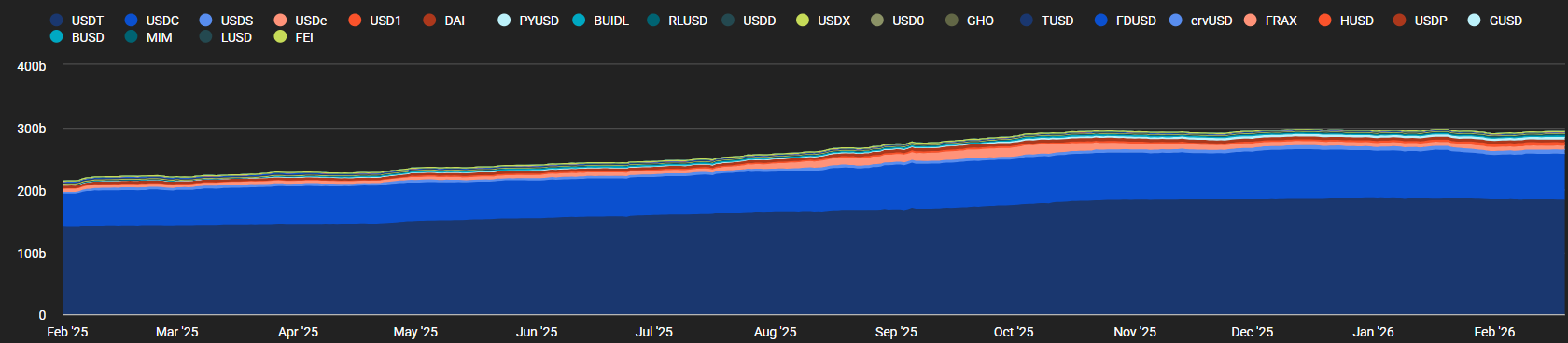
The launch comes as stablecoin circulation sits just below $300 billion, according to data. That base is widely expected to expand as regulatory clarity deepens and institutional participation grows. Treasury Secretary Scott Bessent has said the market could surpass $2 trillion by 2028 and later reach $3 trillion by 2030, while Citi projected $1.9 trillion in a base case and $4 trillion in a bullish scenario by 2030.
By capping maturities at roughly three months, IQMM aims to reduce duration risk for issuers facing daily redemptions. Short-dated Treasury exposure allows managers to meet outflows without liquidating longer-term bonds at potential losses during stress periods. Standard Chartered has projected the market could reach about $2 trillion by decade’s end and warned up to $500 billion could migrate from U.S. bank deposits into stablecoins by 2028.
The fund’s structure signals growing integration between regulated asset managers and digital dollar issuers. If stablecoin supply accelerates toward trillion-dollar forecasts, demand for compliant reserve vehicles may expand in parallel, making flows into short-term Treasury ETFs a key indicator to watch.



