

U.S. spot bitcoin exchange-traded funds saw a sharp reversal on Thursday, recording $869.9 million in net outflows—the second-largest daily exit since these products launched. The only larger wave of withdrawals happened on Feb. 25, 2025, when outflows topped $1.14 billion.
Fresh data from SoSoValue shows Grayscale’s Bitcoin Mini Trust led the retreat with $318.2 million pulled. BlackRock’s IBIT followed with $256.6 million in outflows, while Fidelity’s FBTC shed $119.9 million. Additional outflows hit Grayscale’s GBTC alongside ETFs from Ark and 21Shares, Bitwise, VanEck, Invesco, Valkyrie, and Franklin Templeton.
Market analysts say the withdrawals reflect a broader mood shift rather than a breakdown in long-term demand.
“Institutions are stepping back as macro uncertainty grows,” said Vincent Liu, CIO of Kronos Research. He described the pullback as a short-term pressure point, not a threat to bitcoin’s long-range investment case. “These bleed-outs align with oversold conditions, opening doors for long-term opportunists.”
Min Jung, research associate at Presto Research, echoed that view. “It signals broad de-risking,” she said. “Investors are rotating out of higher-beta assets amid uncertainty around the Fed’s path and weakening macro sentiment.”
Bitcoin Slides Alongside ETF Outflows
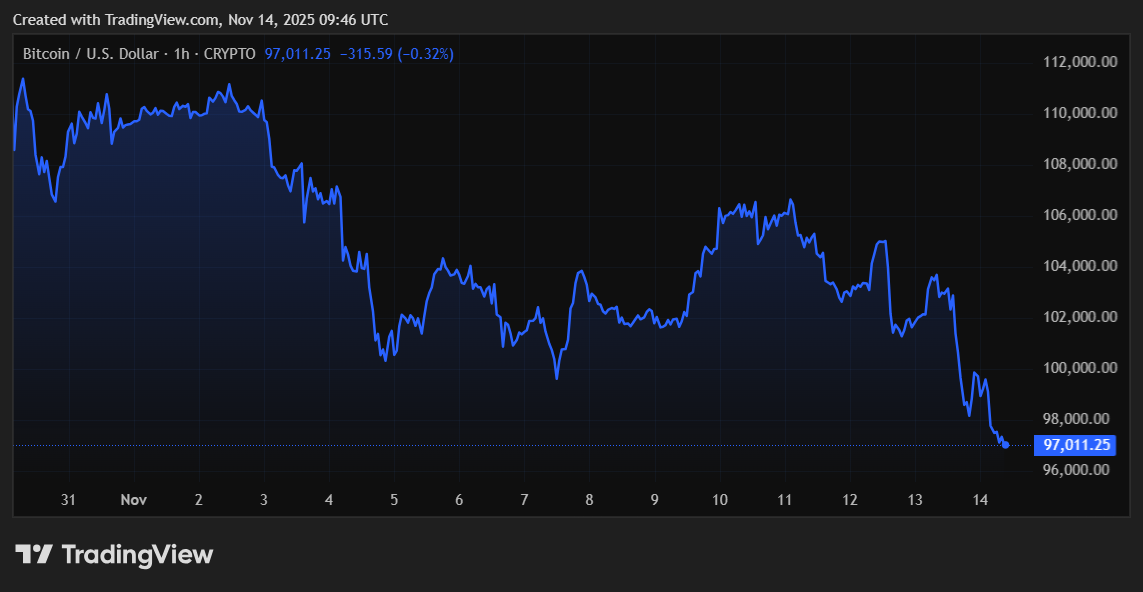
The ETF exits landed during a wider cryptocurrency sell-off. Bitcoin fell 6.4% in the past 24 hours, dropping to $96,956 early Friday.
Liu attributed the decline to a “liquidity let-down,” where thinning buy-side depth met cascading liquidations. He pointed to a $92,000–$95,000 support area where buyers are gradually rebuilding.
Market analyst Justin d’Anethan of Arctic Digital said current levels may attract dip-buyers, especially those who missed bitcoin’s recent surge above the mid-$120,000s.
“If prices slip into the low $90Ks, many will see that as an opportunity,” he said.
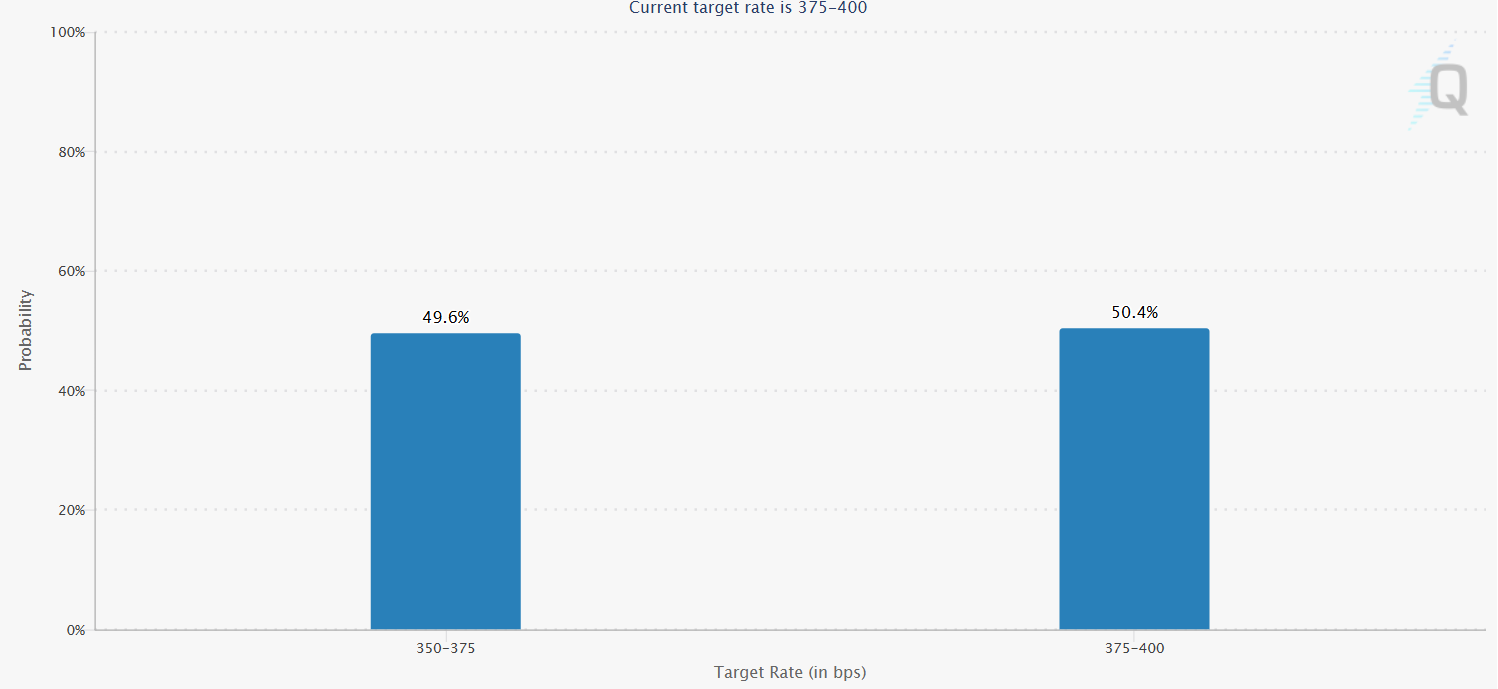
Jung added that the downturn had no single trigger, noting that softer ADP and NFIB readings signal a cooling labor market. That backdrop supports a cautious approach from the Federal Reserve heading into the December FOMC meeting. Rate-cut expectations have shifted as well—the probability of a December cut has eased to 52.1%, according to CME Group’s FedWatch.



