

South Korea recorded $60 billion in crypto outflows in the second half of 2025. The scale of capital movement signals sustained demand for offshore liquidity and trading opportunities beyond domestic exchanges.
The Financial Services Commission (FSC) reported total outflows of 90 trillion won ($60 billion) for the period, up 14% from 78.9 trillion won ($52.5 billion) in the first half. The regulator attributed the flows primarily to arbitrage and similar cross-border strategies. Transfers were directed to overseas platforms and private wallets.


Why Are Korean Traders Moving Crypto Offshore?
Domestic market activity showed mixed signals despite rising participation. Crypto exchange accounts reached 11.1 million by year-end, up 3% from mid-2025, while deposits climbed 31% to 8.1 trillion won ($5.4 billion). Yet operating profit across 18 exchanges fell 38% to 380.7 billion won ($253.4 million).
The divergence reflects broader pressure across global crypto markets during the same period. South Korea’s total market capitalization declined 8% to 87.2 trillion won ($58 billion), while average daily trading volume dropped 15% to 5.4 trillion won ($3.6 billion). Globally, similar contractions followed a pullback from late-2025 price highs.
The FSC stated that “virtual assets are being transferred abroad for arbitrage and other similar activities,” pointing to pricing inefficiencies between domestic and offshore venues. Analysts also link the trend to regulatory fragmentation, which can create persistent spreads between Korean exchanges and global platforms.
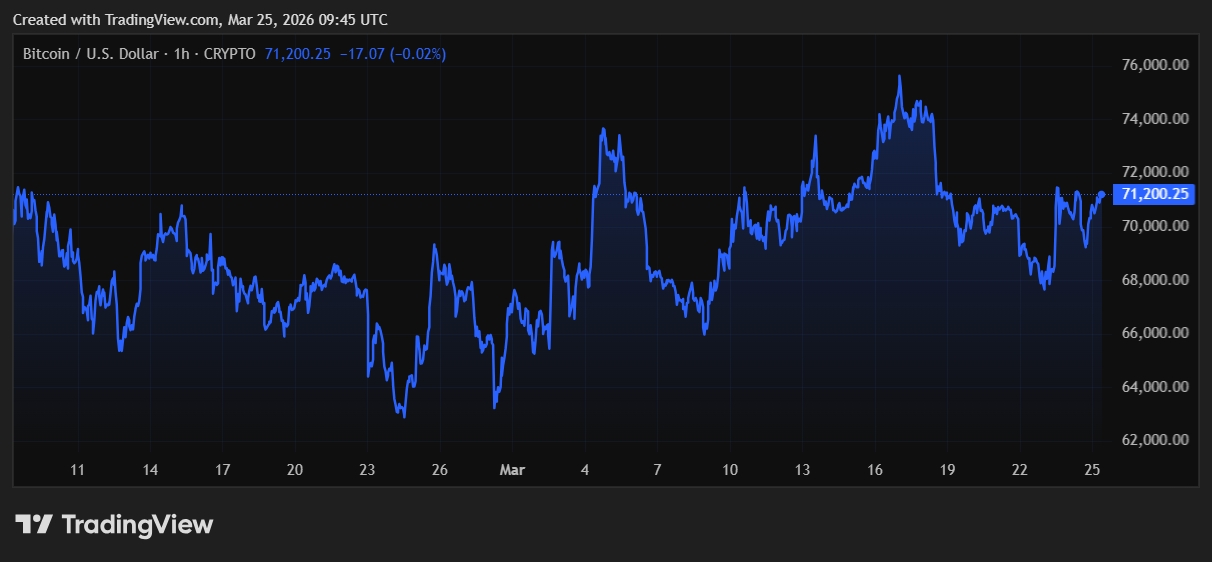
Still, macro conditions remain a key driver of sentiment and liquidity flows. Bitcoin reached an all-time high near $126,080 in October 2025 but has since stabilized amid geopolitical tensions and a hawkish U.S. Federal Reserve stance. The next catalyst will be whether regulatory alignment or renewed volatility shifts capital back toward domestic exchanges.



