

At Korea Blockchain Week 2025, SharpLink Gaming CEO Joseph Chalom described on-chain settlement as the “greatest risk reduction” in financial services history, underscoring the company’s long-term vision to bring traditional market structures onto decentralized networks.
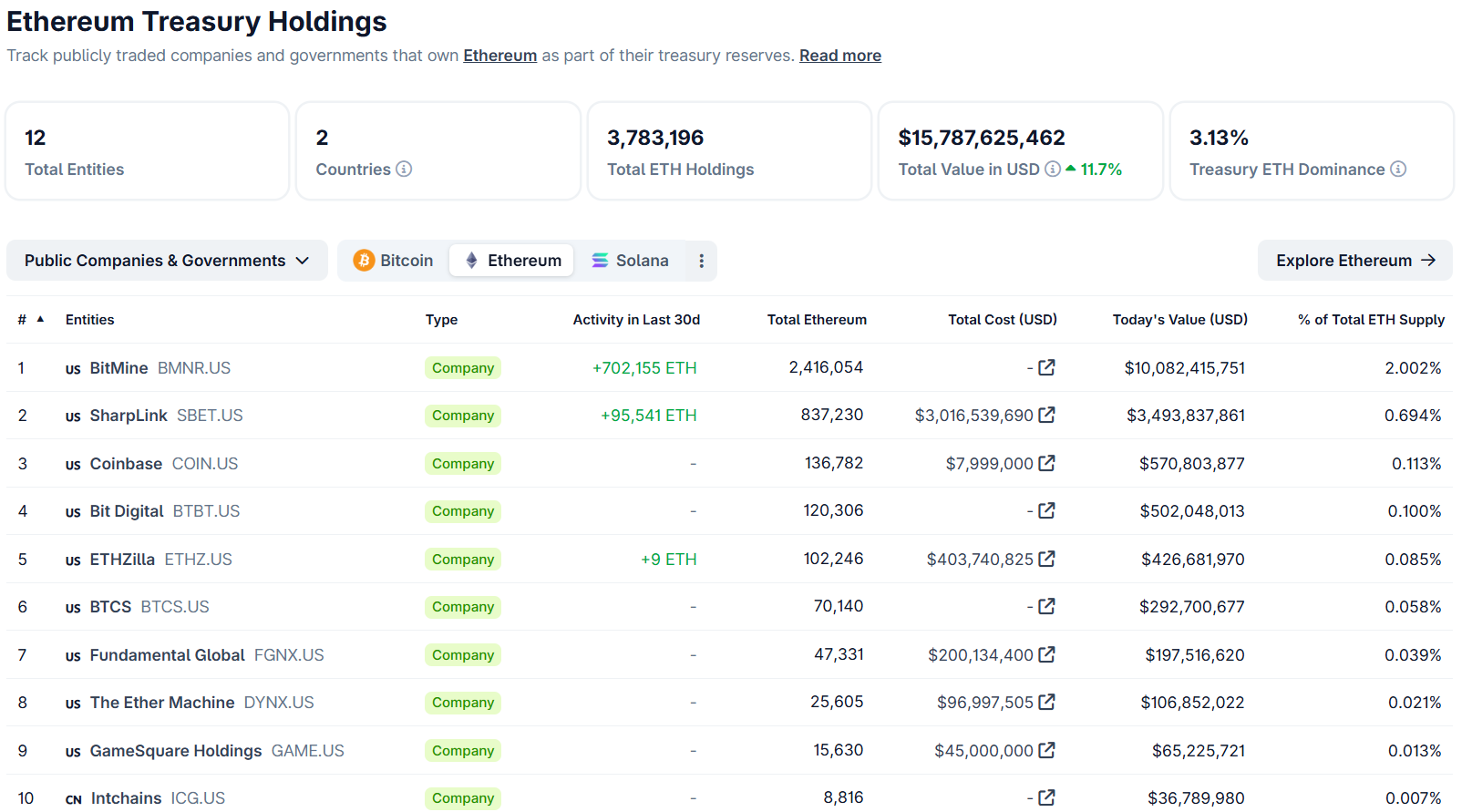
Speaking on a panel Wednesday, Chalom explained that SharpLink is thinking beyond its goal of securing 5% of Ethereum’s supply as a treasury firm. Instead, the company is eyeing a much larger target: transforming the $700 trillion global financial system.
“It really doesn’t matter if we get there first or second,” Chalom said. “We’re not just fighting over the $4 trillion crypto market cap—we’re focused on shifting the structure of traditional finance onto a trusted, programmable, digitally native network with atomic settlement.”
Chalom, who previously spent most of his career at BlackRock, emphasized that removing time and cost friction from financial markets could be the single biggest advancement in reducing systemic risk. He argued that digital asset treasury firms (DATs) should prioritize building protocols, advancing stablecoin initiatives, and supporting institutional decentralized finance (DeFi).
The growing role of DATs
Digital asset treasuries have emerged as a major trend in crypto, gaining traction as more institutions look for exposure to blockchain-based assets. Inspired by Michael Saylor’s high-profile Bitcoin treasury strategy, dozens of firms have created their own models to manage and expand cryptocurrency holdings.
At the same panel, DeFi Development Corp Chief Strategy Officer Dan Kang compared DATs to ETFs, highlighting the agility and potential upside of on-chain strategies.
“Buying an ETF is like sitting on a life raft,” Kang said. “Buying a DAT is like riding a speedboat—you can steer, accelerate, or slow down depending on market conditions.”
Measuring success
Chalom and Kang also outlined how treasury firms should measure performance. For Chalom, three factors matter most: daily average trading volume, strong management, and liquidity. He noted that most capital raising comes through “at-the-market” facilities, which require both liquidity and discipline to avoid dilutive fundraising.
Kang pointed to growth in assets per share as the key indicator, citing MicroStrategy’s performance as an example. By increasing its bitcoin per share fivefold over the past five years, the company’s stock has outperformed Bitcoin itself by 2.5x.
Navigating market cycles
With most DATs launched during bullish cycles, questions remain about how these firms will weather downturns. Kang argued that proof-of-stake treasuries provide resilience, since larger holdings can be staked or deployed on-chain to generate organic yield and sustain revenues.
Chalom added that SharpLink’s ambitions go beyond simple asset accumulation.
“I’m not in this to build a giant dividend company,” he said. “We want to create an operating business that lends, borrows, validates, and secures transactions with billions worth of ETH, while seeding and supporting new protocols to drive institutional adoption.”



