

The Securities and Exchange Commission (SEC) reduced the capital haircut on qualifying payment stablecoins from 100% to 2%. The shift allows broker-dealers to treat $100 of approved stablecoins as $98 in net capital, aligning them with conservative money market funds.
In new guidance from the Division of Trading and Markets, staff said they would not object to broker-dealers applying a 2% haircut to proprietary positions in payment stablecoins when calculating net capital. Previously, many firms applied a full deduction, effectively assigning no capital value to stablecoin balances. The updated position follows last year’s GENIUS Act, which established reserve and oversight standards for payment stablecoin issuers.
Does The 2% Haircut Unlock On-Chain Settlement?
Commissioner Hester Peirce described the prior treatment as a punitive framework that rendered stablecoins “worthless for net capital purposes.” Market participants argue the change removes a structural barrier that made on-chain settlement uneconomic for regulated dealers.
“This is a big deal,” wrote Prof. Tonya Evans on X, adding that “stablecoins are now treated like money market funds on a firm’s balance sheet.”
The guidance arrives as digital asset markets consolidate. Bitcoin traded near $68,100 with roughly $33 billion in 24-hour turnover, while Ethereum changed hands around $1,960 on about $18 billion in volume. Tether (USDT), the largest dollar-linked stablecoin by trading activity, maintained its peg near $1.00 with $57 billion to $68 billion in daily volume. Could capital recognition accelerate broker participation in tokenized securities and alternative trading systems?
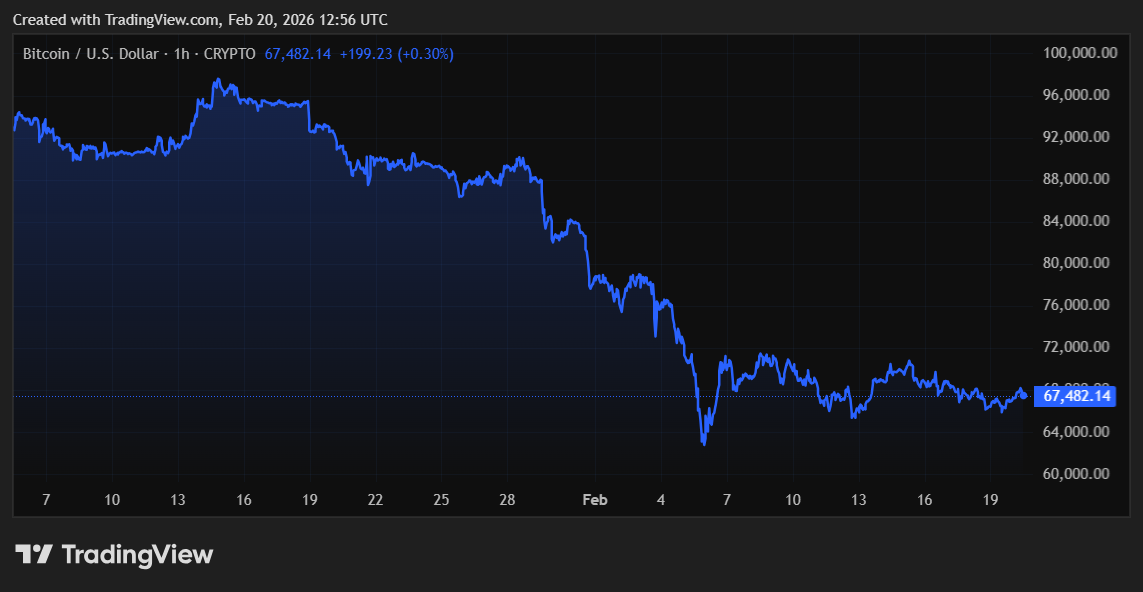
Policy observers expect the decision to influence debates around broader market-structure proposals, including the CLARITY Act and related legislative efforts under discussion in Washington. By permitting stablecoins inside regulated balance sheets, the SEC signals greater tolerance for integrating blockchain-based settlement with traditional brokerage infrastructure. The next catalyst will be whether broker-dealers expand stablecoin usage in securities clearing ahead of potential congressional action this summer.



