

The U.S. Securities and Exchange Commission has brought charges against seven entities it says were behind a wide-ranging crypto investment scam that defrauded investors of more than $14 million, largely by targeting people through social media and messaging apps.
In a complaint filed Monday in the U.S. District Court of Colorado, the SEC accused three alleged crypto trading platforms and four related investment clubs of running what it described as an “investment confidence scam.” According to regulators, the operation relied on familiar online tactics that made the scheme appear legitimate while quietly draining investors’ funds.


The entities named in the complaint are Morocoin Tech Corp., Berge Blockchain Technology Co., Ltd., and Cirkor Inc., along with AI Wealth Inc., Lane Wealth Inc., AI Investment Education Foundation Ltd., and Zenith Asset Tech Foundation.
Laura D’Allaird, chief of the SEC’s Cyber and Emerging Technologies Unit, said the case reflects a growing threat to everyday investors. She noted that similar scams are increasingly using digital platforms to create a false sense of trust, often with severe financial consequences for victims.
According to the SEC, the scheme operated from January 2024 through January 2025. It began with advertisements on popular social media platforms that invited users to join exclusive investment clubs. Once enrolled, participants were directed to WhatsApp group chats where individuals posing as experienced financial professionals shared investment advice and success stories.
Inside these chatrooms, members were shown what the SEC described as AI-generated trading tips designed to create the impression of steady profits. Over time, investors were encouraged to open accounts and deposit funds on Morocoin, Berge, and Cirkor, platforms that the agency says were entirely fictitious. While the sites claimed to offer licensed and regulated crypto trading services, the SEC alleges no actual trading ever took place.
The scheme allegedly went further by promoting fake security token offerings tied to companies that did not exist. When investors attempted to withdraw their money, they were told to pay additional fees in advance, a tactic that reportedly led to even greater losses.
In total, the SEC estimates that at least $14 million was misappropriated from U.S. investors. Investigators say the funds were then moved overseas through a web of bank accounts and crypto wallets, making recovery more difficult.
Alongside the enforcement action, the SEC issued a public investor alert warning that fraudsters frequently use social media, messaging apps, and group chats to promote fraudulent investments. The agency urged individuals to independently verify anyone offering financial advice or opportunities by using official resources such as Investor.gov.
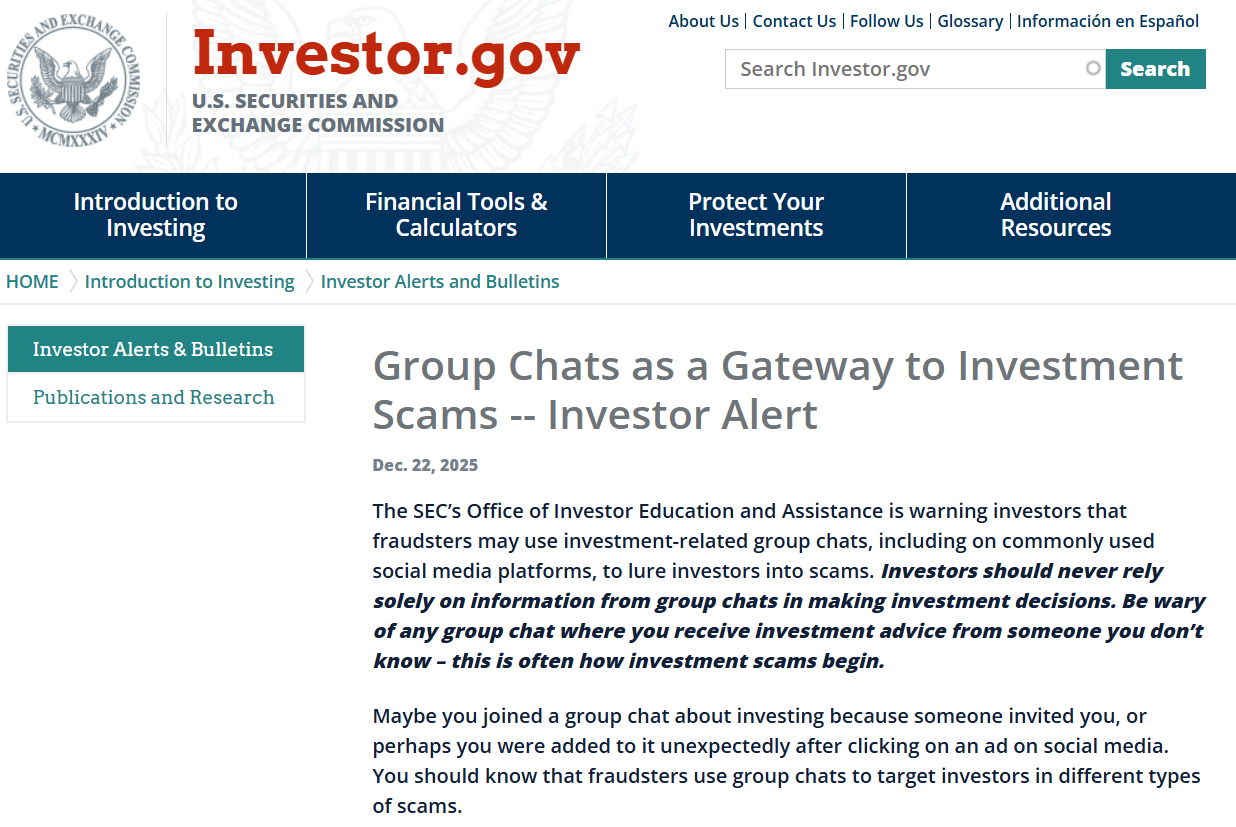
“Be wary of any group chat where you receive investment advice from someone you don’t know,” the SEC cautioned, noting that this is often how scams begin.
The case serves as another reminder that while digital platforms can offer access to legitimate investment information, they are also increasingly used by bad actors. Staying cautious, asking questions, and verifying claims remain key defenses for investors navigating the fast-moving world of online finance.



