
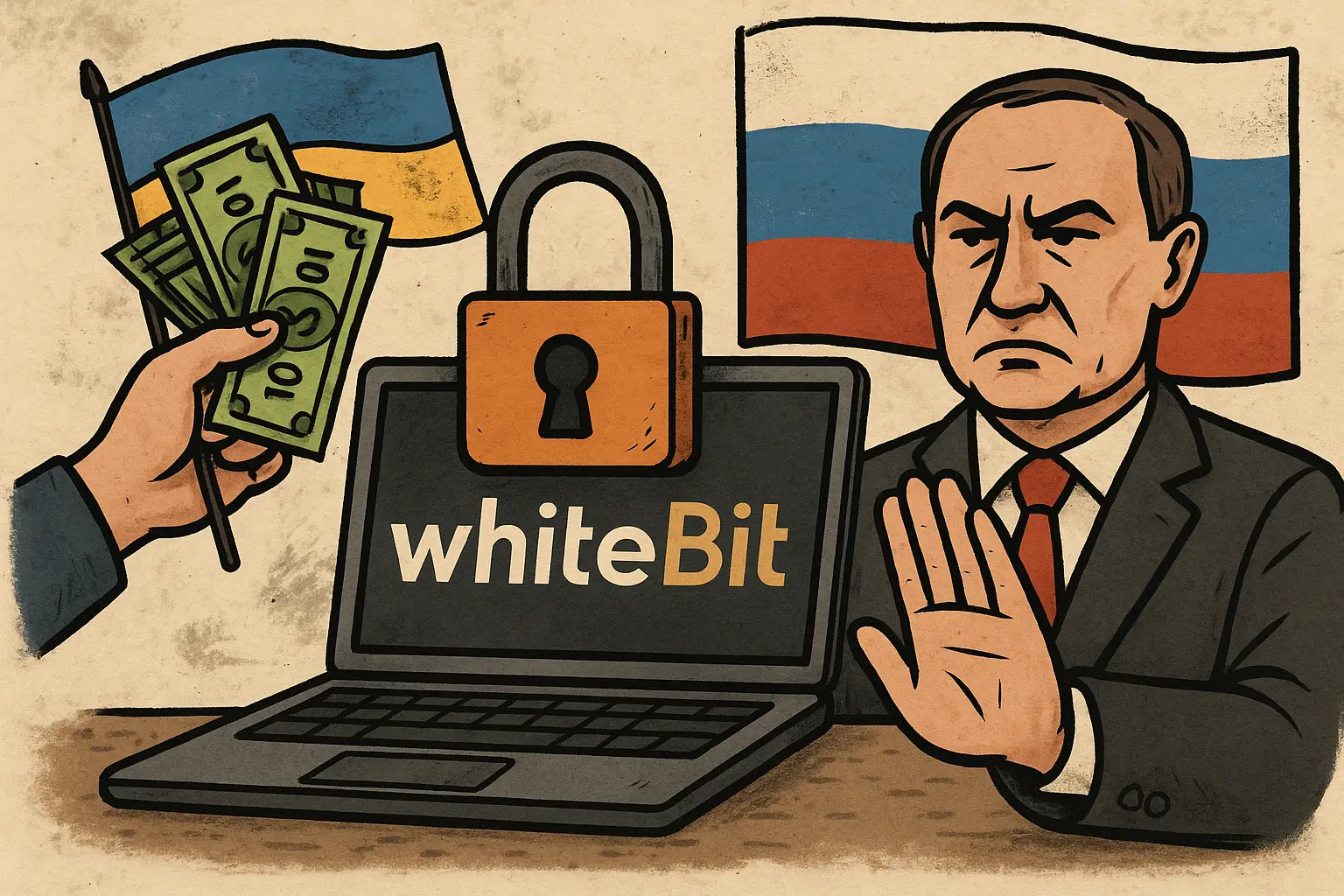
Russia has effectively barred cryptocurrency exchange WhiteBIT from operating within its borders after designating the platform as an “undesirable organization,” citing its financial and technical support for Ukraine-linked initiatives.
The decision was announced by Russia’s Prosecutor General’s Office, which said WhiteBIT had backed fundraising efforts connected to Ukraine’s military, including programs associated with the Armed Forces of Ukraine. Under Russia’s law on undesirable organizations, companies placed on the list must halt all activity in the country. Individuals or businesses that continue to cooperate with them can face fines or criminal charges, including possible prison sentences.
Russian authorities claim that WhiteBIT’s leadership transferred around $11 million in 2022 to causes related to Ukraine’s defense, including funding for drone procurement. The prosecutor general also accused the exchange of facilitating so-called “gray” financial schemes that allegedly allowed funds to be moved out of Russia.
The figure cited by Moscow closely matches disclosures published by WhiteBIT itself. The Lithuania-based exchange has openly detailed its charitable contributions to Ukraine-related initiatives on its website since the start of the war. WhiteBIT has publicly acknowledged its support for Ukraine and previously stated that it provided technical infrastructure for United24, a crypto-enabled fundraising platform launched at the initiative of Ukrainian President Volodymyr Zelenskyy. United24 supports both humanitarian relief and defense-related efforts.
Russia’s move comes against the backdrop of escalating financial and crypto-related restrictions tied to the ongoing conflict. In July 2025, Ukrainian authorities introduced a new sanctions package aimed at curbing Russian financial and crypto schemes. According to reporting by The Kyiv Independent, the measures blacklisted 60 legal entities and 73 Russian nationals accused of involvement in sanctions evasion and military financing.
 Kateryna Hodunova
Despite the ban in Russia, WhiteBIT continues to expand its global footprint. In December, the exchange announced its entry into the U.S. market, marking the launch with a high-profile advertising campaign in New York’s Times Square. The company has also reported expanding operations in several other countries in 2025, including Australia, Argentina, and Brazil.
WhiteBIT
As geopolitical tensions continue to shape the crypto industry, WhiteBIT’s designation in Russia highlights how digital asset platforms are increasingly caught in the crossfire between regulation, sanctions, and international politics. For users and exchanges alike, the case underscores the growing influence of global conflicts on the future of cryptocurrency markets.



