
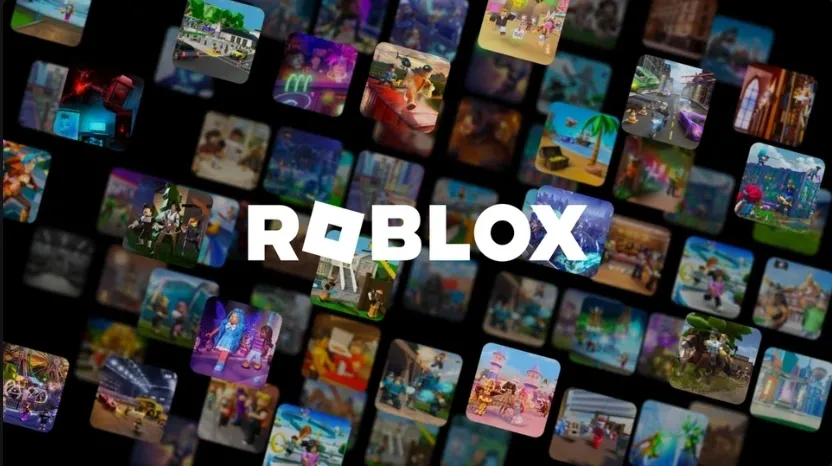
Roblox is often described as a gaming platform, but behind the scenes it operates more like a large-scale production studio. Thousands of small teams and solo developers release new experiences continuously, refine them based on player feedback, and monetize them globally. That pace brings two familiar challenges: repetitive production tasks that slow teams down, and friction when moving work between different tools.
Roblox’s 2025 updates show how artificial intelligence can ease both problems in practical ways. Rather than positioning AI as a standalone innovation, the company is embedding it directly into Roblox Studio, the environment where creators already design, test, and iterate their games.
AI built into the daily workflow
Roblox has taken a deliberate approach to AI adoption. Instead of asking creators to use separate AI products, it has placed new tools inside Studio itself. At its September 2025 Roblox Developers Conference, the company introduced “AI tools and an Assistant” aimed at improving productivity, particularly for small teams.
That focus is echoed in Roblox’s latest economic impact report, which highlights Studio features such as Avatar Auto-Setup and the Assistant as early examples of AI being used to speed up content creation. Notably, Roblox avoids abstract promises about disruption. Its messaging centers on measurable outcomes like shorter development cycles and higher output.
This framing makes it easier for creators to judge whether the tools are working. If AI saves time during the build-and-test loop, it earns its place in the workflow.
From ideas to working assets faster
One of the most tangible updates involves asset creation. Roblox is rolling out AI capabilities that go beyond generating static models. In selected categories, including vehicles and weapons, creators can now generate fully functional objects from a text prompt.
The difference is significant. Coming up with an idea is rarely the hardest part of development. Turning that idea into an object that behaves correctly inside a live game system often takes far longer. By narrowing that gap, Roblox reduces the time spent translating concepts into usable components that can be refined further in Studio.
The company has also expanded its language tools through APIs, offering text-to-speech, speech-to-text, and real-time voice chat translation across multiple languages. These features lower the barrier to localization and help creators reach wider audiences without rebuilding content from scratch. Similar tools are already common in enterprise training and customer support, and their inclusion here reflects a growing convergence between game development and other digital production environments.
Connecting tools, not adding more of them
Beyond individual features, Roblox is paying attention to how tools work together. The company has integrated the Model Context Protocol into Studio’s Assistant, allowing creators to coordinate tasks across third-party tools that also support MCP.
In practice, this means a creator could design a user interface in Figma or generate a skybox in another application, then bring the result directly into Studio with less manual handling. This kind of orchestration matters because many AI initiatives stall at the workflow level. Teams lose time copying files, fixing formats, or reworking assets that do not quite fit.
By treating AI as connective tissue between tools rather than another destination, Roblox aims to reduce that overhead and keep creators focused on building.
Productivity tied to real earnings
Roblox has been clear about linking these workflow gains to economics. In its RDC update, the company reported that creators earned more than $1 billion through the Developer Exchange program over the past year. It also set an ambition for 10 percent of global gaming content revenue to flow through its ecosystem.
To reinforce that link, Roblox announced an improved exchange rate, allowing creators to earn 8.5 percent more when converting Robux into cash. The economic impact report pairs AI-driven Studio improvements with monetization tools such as price optimization and regional pricing.
The message is straightforward. When faster creation is combined with clearer financial incentives, creators are more likely to adopt new tools as part of their core operations rather than treating them as experiments.
Using AI to scale safety and trust
Not all of Roblox’s AI work is visible to creators. In November 2025, the company published details about its PII Classifier, an AI model designed to detect attempts to share personal information in chat.
Roblox says it processes an average of 6.1 billion chat messages per day. The classifier has been in production since late 2024 and achieved a reported 98 percent recall on internal tests, with a 1 percent false positive rate. This type of operational AI reduces the need for manual review and supports consistent enforcement of safety policies at scale.
It is a quieter application of AI, but one that plays a critical role in making growth sustainable.
A broader lesson from Roblox’s approach
Several patterns stand out from Roblox’s strategy. The company places AI where decisions are already made, inside the build-and-review loop. It addresses tool friction early by focusing on orchestration. It ties productivity gains to measurable outcomes like revenue and payouts. And it treats AI systems as evolving tools that must adapt to new behaviors and risks over time.
Roblox’s specific tools may not apply directly to every industry. The underlying approach likely will. AI tends to deliver the most value when it shortens the path from intent to usable output, and when that output is clearly connected to real economic results.



