
Robinhood allocated $75 million to OpenAI through its venture fund, extending retail exposure to one of the most sought-after private AI companies. The move signals rising demand for indirect access to private markets as public investors seek participation in high-growth AI firms.
The investment, announced April 22, sits within Robinhood Ventures Fund I, a closed-end vehicle trading on the New York Stock Exchange under ticker RVI. Launched in March 2026, the fund holds stakes in private companies including Stripe, Ramp, Revolut, Databricks, and OpenAI.
Can Retail Investors Access Private AI Equity Safely?
Robinhood said the OpenAI position will serve as an underlying asset for venture-linked tokens tied to the fund, offering price exposure without direct ownership. Investors gain economic alignment through the fund structure, but do not receive voting rights or access to company-level disclosures. This model reflects a broader shift toward tokenized or fund-based exposure as private market demand grows.
The strategy follows earlier friction between the two firms in 2025, when OpenAI publicly distanced itself from Robinhood’s EU-listed “OpenAI tokens.” At the time, OpenAI stated it had not approved any equity linkage, prompting Robinhood to clarify the exposure came through a special purpose vehicle rather than direct shares.
“These ‘OpenAI tokens’ are not OpenAI equity,” OpenAI said in its prior statement, emphasizing the absence of partnership or endorsement.
The distinction remains central to current offerings, where investors hold indirect exposure through pooled vehicles instead of equity claims.
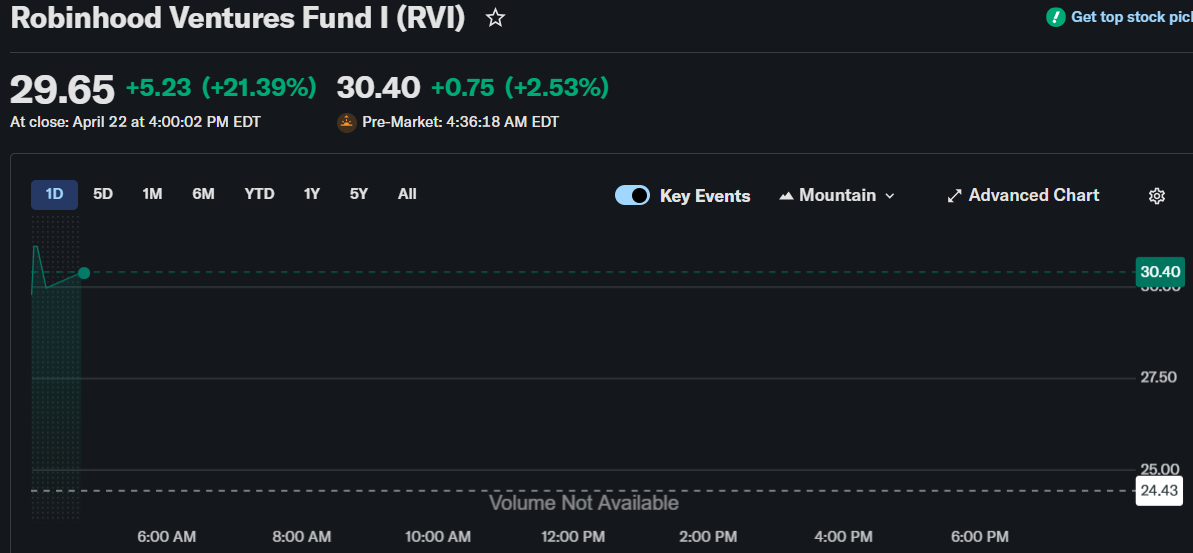
Robinhood shares rose about 2% following the announcement, while the fund gained roughly 13%, according to Yahoo Finance data. But will retail investors fully understand the structural limits of these instruments as demand accelerates? The next catalyst will be regulatory scrutiny around disclosure standards and how platforms define ownership in tokenized or fund-linked products.



