
A $1 million RLUSD vault filled in under 72 hours on the XRP Ledger, signaling early demand for regulated onchain yield.
The launch expands Ripple’s dollar-pegged stablecoin beyond payments into structured real-world asset income.
Soil, developed by ORQO Group, introduced what it describes as the first compliant real-world asset-backed yield protocol on the XRP Ledger.
The system allows holders of Ripple USD (RLUSD) to deposit tokens into onchain vaults that generate fixed returns backed by private credit, tokenized U.S. Treasuries, and market-neutral hedging strategies.
ORQO Group manages approximately $300 million in assets and holds regulatory licenses in Poland and Malta.
The firm said additional asset pools are expected in the coming weeks as it establishes its global headquarters in Abu Dhabi.
Can XRPL Compete For RWA Stablecoin Yield?
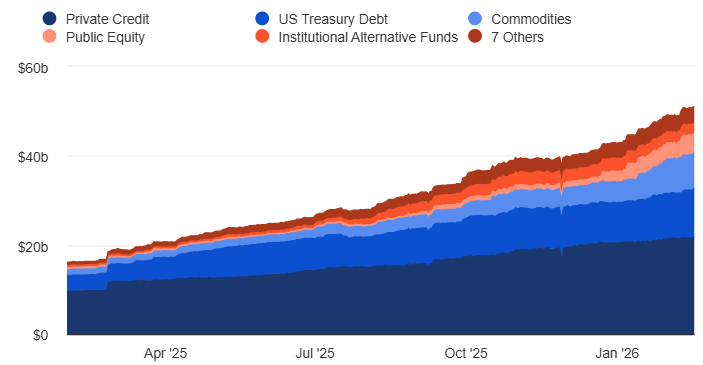
The rollout comes as the XRP Ledger overtook Solana in distributed real-world asset value, according to data from RWA.xyz.
Tokenized real-world assets are projected to reach $2 trillion by 2028, intensifying competition among blockchains seeking institutional issuance.
Stablecoins have traditionally functioned as settlement rails and collateral within decentralized finance.
By embedding fixed-income vaults directly on XRPL, Soil positions RLUSD as a yield-bearing instrument tied to regulated offchain assets rather than purely transactional flows.
“The stablecoin market’s transition toward a multi-trillion-dollar ecosystem requires the right infrastructure to deliver institutional-grade yield at scale,” said Nick Motz, CEO of ORQO Group and Chief Investment Officer of Soil.
His remarks frame yield infrastructure as a prerequisite for scaling beyond payments use cases.
The XRP Ledger, launched in 2012 for cross-border settlement, has recently introduced features targeting regulated finance, including a permissioned decentralized exchange amendment.
Whether RLUSD vault growth can sustain momentum may depend on additional institutional issuers and the scale of tokenized Treasury allocations migrating onchain in the coming quarters.



