
What Is Ripple?
Ripple is a San Francisco–based tech company building blockchain infrastructure for global payments. At the heart of its ecosystem is the XRP Ledger (XRPL), an open-source blockchain designed for fast, low-cost transactions. Its native cryptocurrency, XRP, acts as the fuel that powers payments, liquidity, and other on-chain activities.
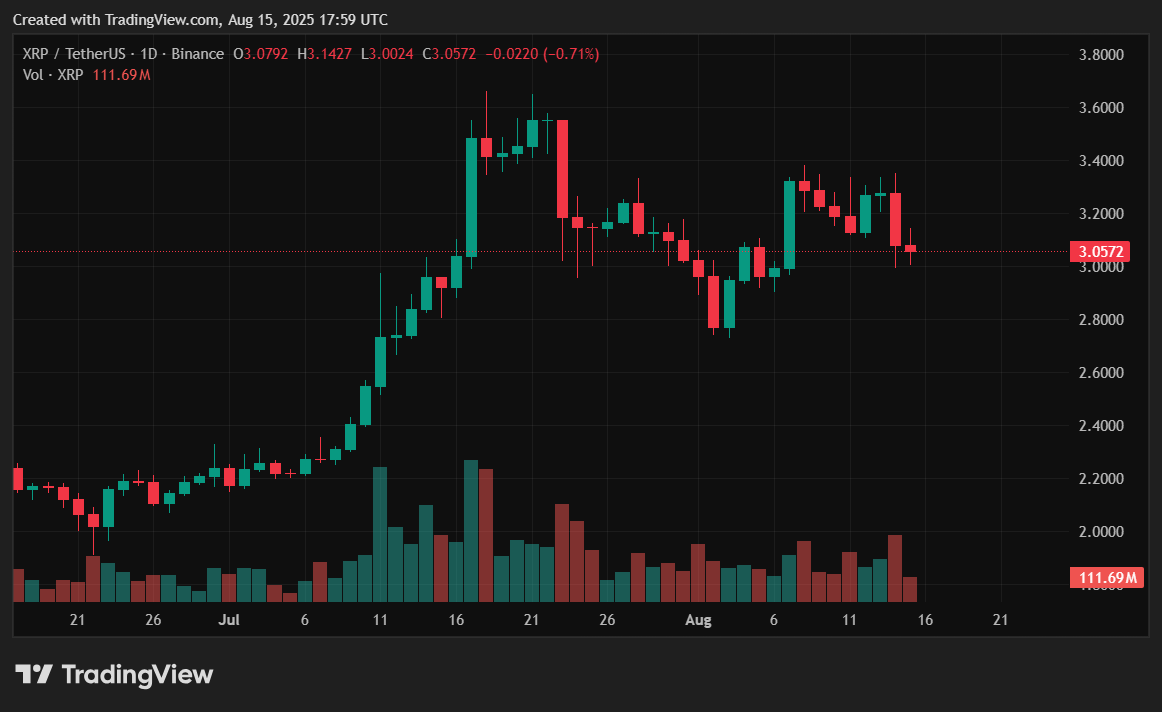
Ripple’s technology is used by banks, fintech firms, and crypto businesses to move money across borders in seconds, issue digital assets, and access liquidity without the need for pre-funded accounts. Its product lineup ranges from enterprise payment networks to stablecoin infrastructure and custody solutions.
While Ripple is a key contributor to XRPL, it’s not the only one. XRP is publicly traded and used in many applications beyond Ripple’s own products. The company holds part of its XRP in escrow to release gradually, ensuring supply transparency.
A Brief History
The concept behind Ripple dates back to 2004, when Ryan Fugger launched RipplePay, a decentralized payment platform. In 2012, the project shifted direction under Jed McCaleb and Chris Larsen, who founded OpenCoin to build a protocol for banks and financial institutions.
OpenCoin became Ripple Labs in 2013, and simply Ripple in 2015. The focus stayed the same—streamlining global payments—but the technology evolved into today’s high-speed blockchain network.
How the XRP Ledger Works
The XRP Ledger uses a unique consensus system rather than mining (Bitcoin) or staking (Ethereum). Transactions are validated by independent nodes, and once 80% of trusted validators agree, the transaction is confirmed—usually within 3 to 5 seconds—for just fractions of a cent in fees.
Anyone can run a validator, but for institutional use, Ripple maintains a Unique Node List (UNL) of trusted operators to ensure reliability.
Ripple’s Payment Solutions
RippleNet
RippleNet is the company’s global payments network, offering real-time settlement and tracking. It’s API-based and cloud-hosted, which simplifies integration for banks and payment providers while Ripple handles upgrades and security.
On-Demand Liquidity (ODL)
ODL uses XRP as a bridge currency to eliminate the need for holding funds in destination countries. A payment from Japan to India, for instance, could be instantly converted from yen to XRP, sent via the XRPL, and converted into rupees on arrival—without either party holding XRP long term.
The Role of XRP
XRP serves several functions:
- Bridge currency for fast, low-cost cross-border transfers.
- Transaction fees to deter spam and maintain performance.
- Liquidity provision through XRPL’s built-in DEX and AMMs.
- Collateral and escrow for conditional or time-locked payments.
The total supply of 100 billion XRP was created at launch in 2012, with no mining or inflation. Ripple placed 55 billion XRP into time-locked escrow in 2017, releasing up to 1 billion each month. As of August 2025, about 35.6 billion XRP remain in escrow.
Regulatory Milestones
Ripple has faced years of legal scrutiny, most notably a 2020 lawsuit from the U.S. Securities and Exchange Commission (SEC). The SEC argued XRP was an unregistered security.
In 2023, a federal judge ruled XRP is not a security when traded on public exchanges, though some of Ripple’s institutional sales violated securities laws. Ripple settled with the SEC, paying $125 million—far less than the $2 billion sought. The decision has since shaped how U.S. regulators view certain digital assets.
The Takeaway
Ripple and XRP showcase blockchain’s practical side—speeding up payments, cutting costs, and reducing friction in global finance. The technology’s ability to bridge traditional finance and crypto has made it a key player in cross-border settlement.
While the SEC case was a major hurdle, Ripple emerged with clearer regulatory standing and continues to grow its network worldwide. For institutions seeking faster, more efficient payments, Ripple’s blockchain-powered approach remains one of the most proven in the industry.



