
MoonPay and M0 have launched PYUSDx, a framework that allows developers to issue application-specific stablecoins backed by PayPal USD, signaling intensifying competition in programmable dollar infrastructure. The move gives builders a shortcut into branded stablecoin issuance without constructing a full stack of custody, compliance, and liquidity services from scratch.
Announced Friday, PYUSDx enables developers to create custom tokens backed by PYUSD as the reserve asset. Instead of independently managing reserves or negotiating banking relationships, builders can rely on the underlying PayPal USD infrastructure while launching tokens tailored to their own platforms. PYUSD itself is issued by Paxos Trust Company, a federally regulated national banking association that oversees reserves for PayPal’s dollar-backed stablecoin. The new framework, however, is operated by MoonPay Digital Assets Limited and functions separately from PayPal’s consumer products. Tokens minted through PYUSDx will not be supported for storage or transactions inside PayPal or Venmo accounts.
Can App-Specific Stablecoins Accelerate Adoption?
The launch comes as stablecoin competition shifts from simple dollar tokens toward programmable financial rails. PYUSD has trailed dominant players like USDC and USDT in overall circulation, limiting its footprint compared to larger rivals. By enabling third parties to build branded tokens backed by PYUSD reserves, PayPal can extend its monetary base beyond its own apps without directly integrating external stablecoins. The strategy mirrors a broader industry trend: instead of competing only on scale, issuers are racing to become foundational liquidity layers for embedded finance, gaming, AI agents, and cross-border payments.
MoonPay’s recent infrastructure moves reinforce that direction. Earlier this week, the company introduced “MoonPay Agents,” a non-custodial system designed to let AI systems create wallets and transact autonomously. PYUSDx fits that architecture, offering programmable dollars that could be embedded directly into automated applications. The promise to launch branded stablecoins “in days, not months” highlights the push toward faster deployment cycles as developers test new payment models.
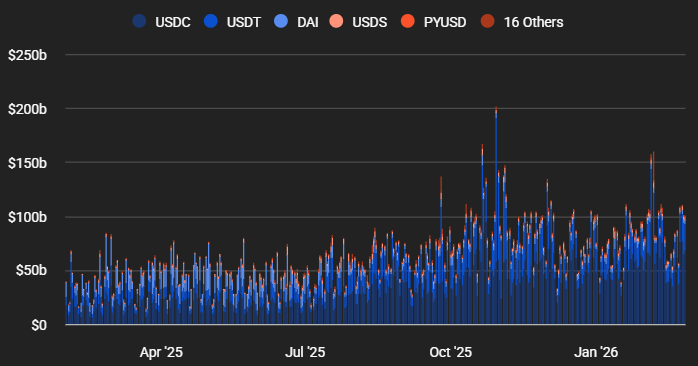
The next phase will depend on developer uptake and whether application-level tokens generate meaningful transaction volume. If AI-driven systems and embedded finance platforms begin issuing their own PYUSD-backed assets at scale, the competitive line between stablecoin issuers and infrastructure providers may blur further, setting up the next contest over who controls programmable dollar liquidity.



