

A wave of offensive tokens launched through Pump.fun, a popular Solana-based meme coin platform, has ignited a heated debate in the crypto community about the dangers of unregulated token creation. Several of the trending coins contained racial slurs or allusions to skin color, raising alarm over the ease with which discriminatory content can spread in decentralized markets.
Racist Tokens Enter the Spotlight
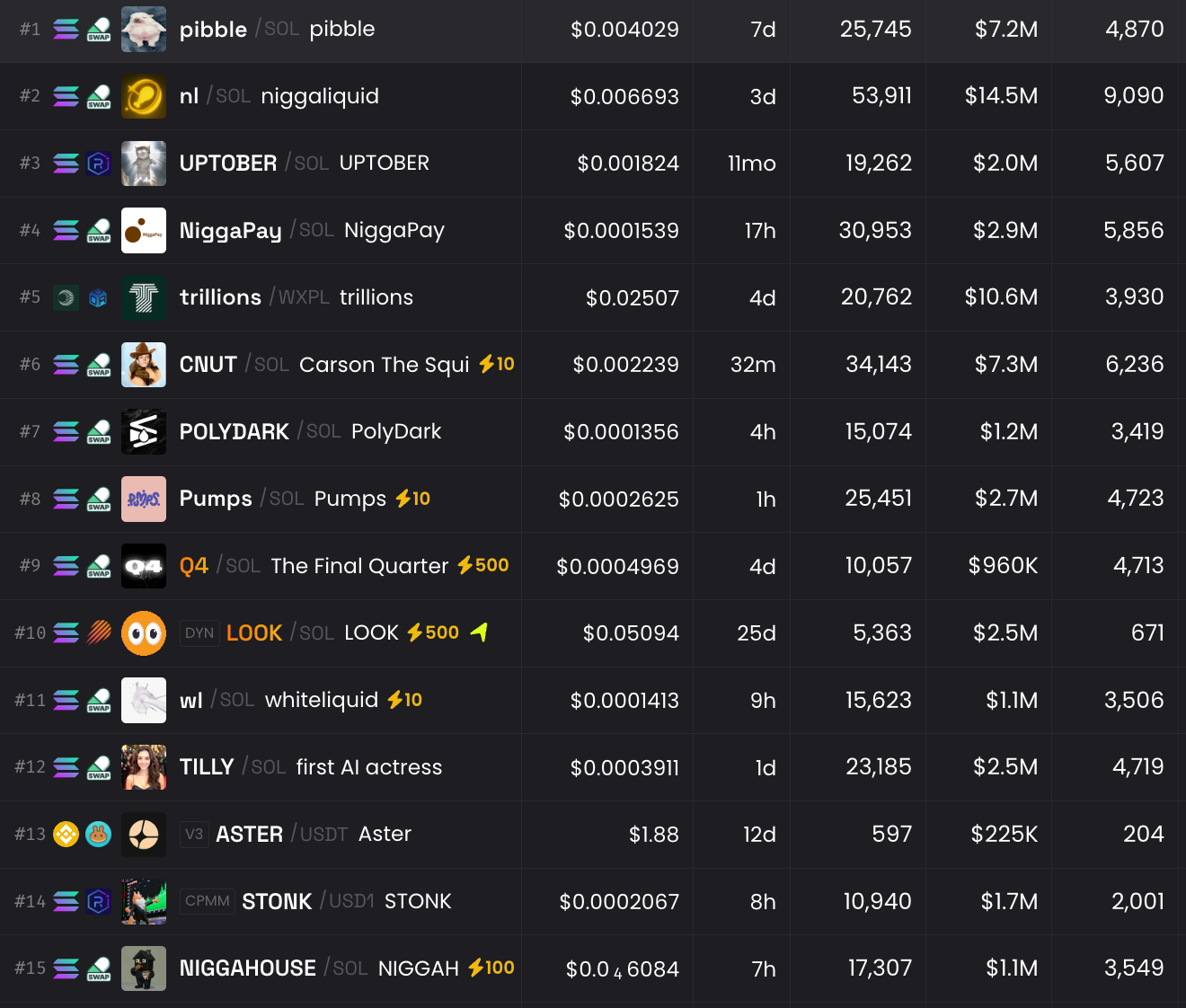
Out of the top 15 trending tokens on DEXScreener, four recently featured racist language. All were created on Pump.fun, a platform often described as a “meme coin factory” because of how quickly and cheaply it allows users to launch tokens.
The controversy escalated further after Pump.fun supporters reportedly vandalized the Hollywood sign in Los Angeles, hanging a banner with the project’s pill logo. The incident underscored how the meme coin craze is increasingly spilling into the real world.
Crypto enthusiasts from Pumpfun vandalized the Hollywood sign.
— 0xMarioNawfal (@RoundtableSpace) September 28, 2025
1) Whaat pic.twitter.com/mPA5WpBLQK
While racist meme coins aren’t new, their emergence as top-trending assets highlights a disturbing normalization of offensive content within parts of the crypto scene.
The Dark Side of Accessible Token Creation
Pump.fun has gained traction by making token creation simple and nearly frictionless. But that same accessibility has opened the door for abuse. Launching a token now requires little more than a few clicks—lowering the barrier not just for creativity, but also for hate speech.
Earlier examples illustrate the trend:
- A U.S. rapper promoted a token called “Swasticoin.”
- A “Hitler Musk” token appeared almost immediately after Elon Musk’s controversial salute at Donald Trump’s inauguration, widely interpreted as referencing Nazi symbolism.
Despite condemnation from industry leaders, offensive meme coins continue to surface and, in some cases, trend on decentralized exchanges.
Can Regulation or Filters Help?
Crypto leaders are increasingly vocal about the issue. Ethereum co-founder Vitalik Buterin has criticized “openly super-racist” meme coins on Solana and elsewhere, warning about their corrosive cultural impact.
The Solana Foundation has acknowledged the problem as well. Austin Federa, the foundation’s head of strategy, suggested platforms could adopt filtering mechanisms to limit exposure to racist or extremist content.
But unlike centralized exchanges, decentralized platforms (DEXs) don’t have a governing authority to pre-screen tokens. That lack of oversight creates what many see as a regulatory and ethical vacuum—one that makes it nearly impossible to prevent offensive projects from launching and spreading.
The Bigger Picture
The rise of racist meme coins on Pump.fun underscores a broader challenge for crypto: how to balance decentralization with accountability. While open networks empower innovation, they also leave the door wide open for malicious use.
Until the industry develops better safeguards, offensive tokens will likely continue to emerge—and trend—leaving the community, not regulators, to confront the fallout.



