
Pump.fun’s $18M Buyback Sparks Rally — But Is It Sustainable?
Pump.fun, one of the buzziest projects in the Solana ecosystem, is back in the spotlight after launching an $18 million token buyback that sent the price of its native token, PUMP, soaring by more than 15% in 24 hours. But while the move has energized traders, some industry watchers are questioning whether this rally is built on solid ground—or just temporary hype.
$18 Million Buyback Sends Price Surging
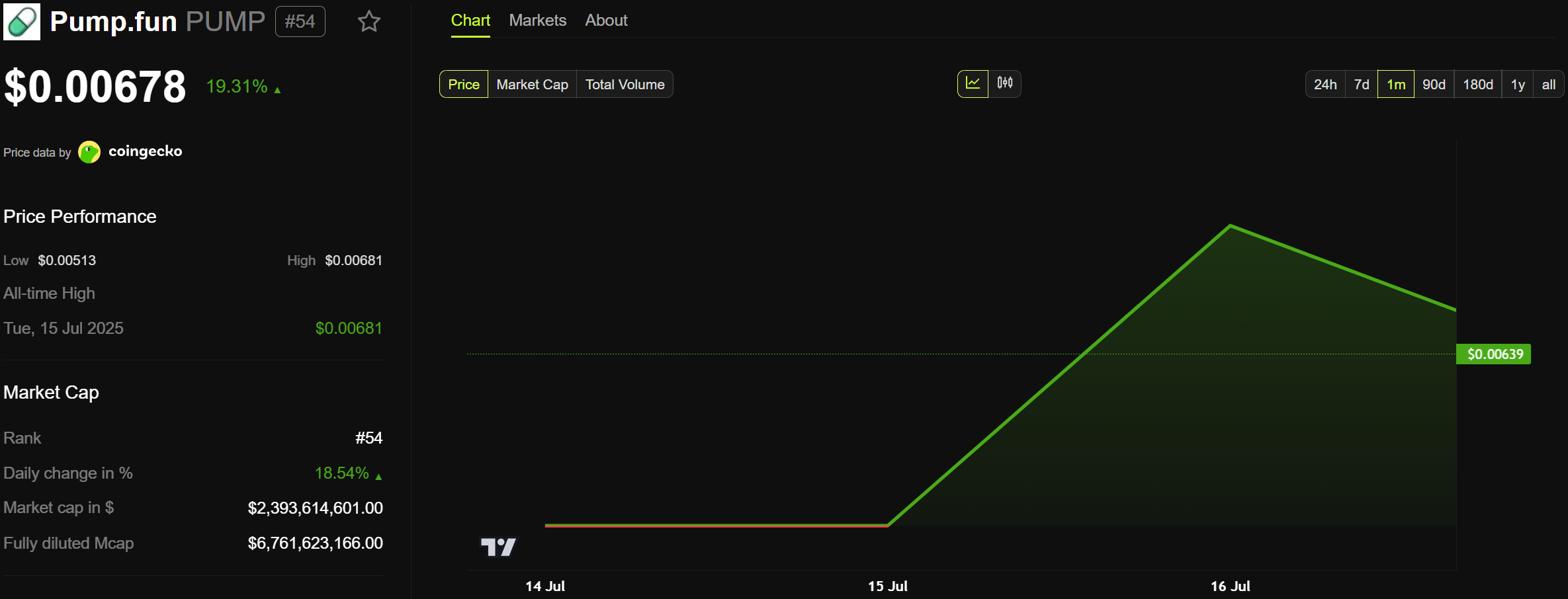
The buyback, revealed via on-chain data and confirmed by analytics platform EmberCN, shows that Pump.fun used transaction fee revenues to repurchase 3.04 billion PUMP tokens. The effort effectively reduced circulating supply, pushing the price of PUMP to $0.00678, a 19% increase in a single day.
Buybacks are a familiar playbook in both traditional finance and crypto. By purchasing their own tokens, projects aim to tighten supply and support prices. For investors, it can be seen as a show of confidence—or a sign that a project is trying to maintain momentum.
Is It Marketing or Real Momentum?
The buyback comes just days after Pump.fun’s highly publicized ICO, which helped catapult the platform to a $4 billion valuation. But critics have pointed out that PUMP still lacks fundamental utility: there’s no governance mechanism, no revenue-sharing function, and no direct use case for the token beyond speculation.
“Pump.fun sold tokens at $0.004 a few days ago and are now buying them back at $0.006. Crypto is not a serious industry,” one skeptical user posted on X.
This reaction underscores a wider debate in the crypto space: Do buybacks truly reflect confidence and growth—or are they marketing moves designed to prop up price and sentiment without delivering real value?
The Broader Buyback Trend
Pump.fun isn’t alone in turning to buybacks. Projects like FET, AAVE, IOST, and Polyhedra (ZKJ) have also recently announced similar initiatives, committing millions in capital to repurchase tokens.
While these moves may inject short-term bullish energy into token prices, they don't necessarily address deeper investor concerns about utility, long-term sustainability, or real innovation. Without tangible benefits for token holders or strong technical underpinnings, buyback-driven rallies can quickly reverse if sentiment sours.
A Meme Coin in Search of Meaning?
Despite its headline-grabbing price action, Pump.fun still operates primarily within the meme coin and presale market—an area often driven more by hype than by transparent governance or lasting utility. The absence of a clear roadmap or feature set has left some investors wondering whether PUMP can evolve beyond speculative status.
For now, the $18 million buyback has worked in Pump.fun’s favor, but the project’s long-term success will likely depend on whether it can move beyond quick wins and deliver meaningful ecosystem development.



