

A new breed of corporate players is reshaping how big money enters the crypto world—and it’s not through ETFs. They're called Digital Asset Treasury Companies, or DATCOs, and their growing presence is starting to turn heads across both Wall Street and the crypto community.
Think of DATCOs as publicly traded firms that directly hold Bitcoin and other digital assets on their balance sheets. But unlike ETFs, which passively follow the market, these companies can take bold, strategic bets—buying more assets, raising capital, and influencing market sentiment in real time.
And they’re doing it at scale.
From Experiment to Market Mover
According to Galaxy Research, DATCOs now hold over $100 billion in digital assets. That's not a rounding error—it’s a serious chunk of the crypto market. Companies like MicroStrategy, Metaplanet, and SharpLink Gaming are leading the charge.
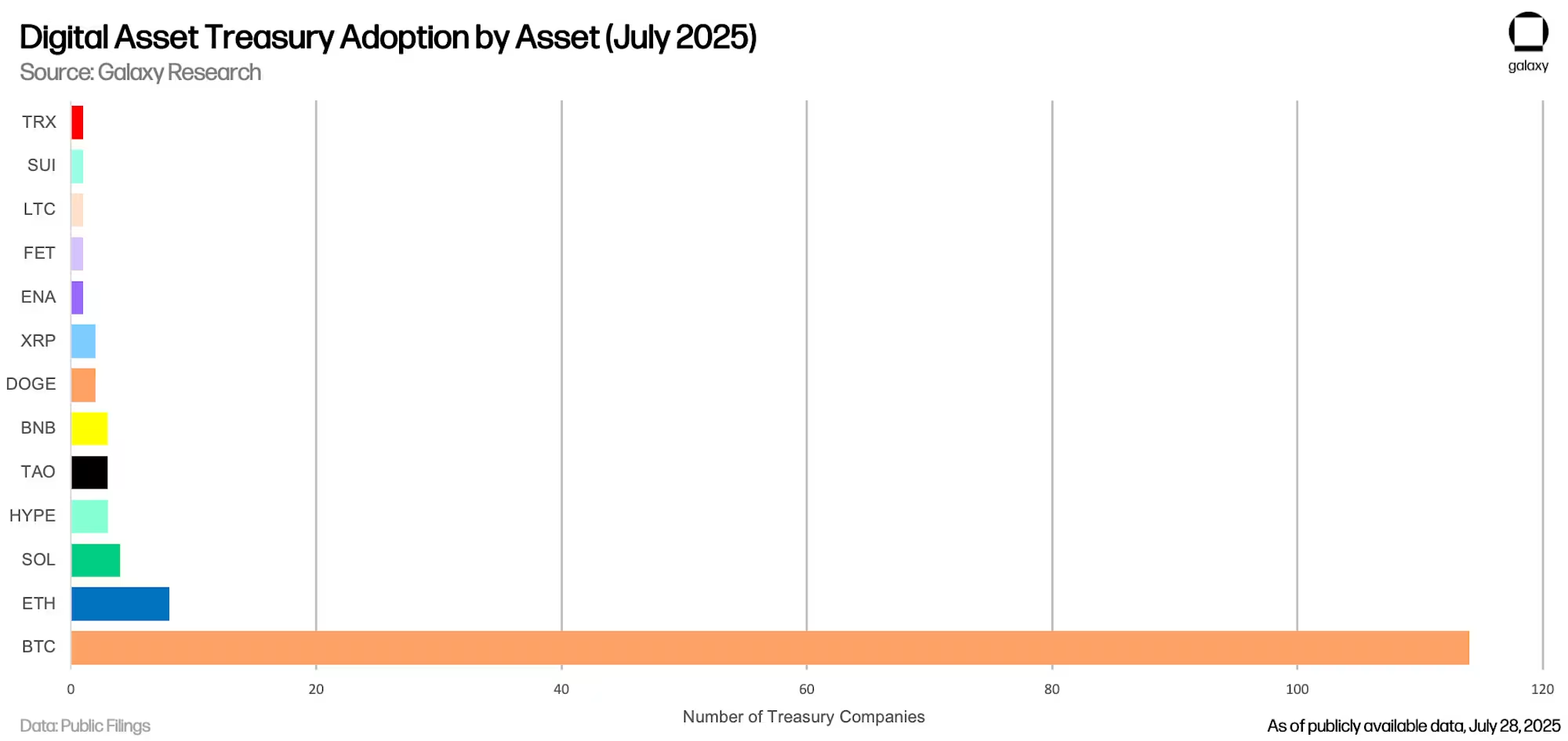
These firms aren’t just investing in Bitcoin—they're building entire corporate strategies around it. And it’s working. When a DATCO announces a new purchase, it often sees a bump in its stock price. That higher valuation allows the company to raise more funds (via tools like PIPEs, or Private Investment in Public Equity), and—no surprise here—buy more crypto.
It’s a loop. A bullish one.
“DATCOs have evolved from a novel capital allocation experiment into a structural source of buying pressure in crypto markets,” Galaxy Research noted in its report. “Their continued rise has reshaped how market participants gain exposure to digital assets—and how they think about the relationship between crypto and TradFi.”
MicroStrategy: The DATCO Blueprint
The most prominent example? MicroStrategy.
Since 2020, the business intelligence firm has turned itself into a Bitcoin juggernaut. Its CEO, Michael Saylor, has made BTC accumulation a central pillar of the company’s identity. That aggressive strategy hasn’t just made headlines—it’s inspired other public firms to adopt similar playbooks.
And when the market is rising, the strategy feeds itself: the more Bitcoin MicroStrategy buys, the more bullish its investors become, and the easier it is to raise new capital for even more crypto exposure.
But There’s a Catch…
This model isn’t without risk. As Galaxy points out, the very thing that makes DATCOs powerful—their direct, high-leverage exposure—could also be their Achilles’ heel.
If crypto markets tumble, companies that are heavily invested may be forced to sell off digital assets to manage their debts or stabilize their financials. That kind of institutional selling pressure could ripple across markets, much like what we saw during the Terra or FTX collapses.
Add to that the regulatory uncertainty: DATCOs operate in a legal gray zone. Changes to accounting standards, taxation, or corporate governance rules—especially in major markets like the U.S. or Japan—could suddenly make the model much less viable.
Galaxy warns that DATCOs could face a fate similar to SPACs, which once boomed under speculative hype before suffering massive valuation crashes once regulations tightened.
The Takeaway
DATCOs are no longer just a fringe experiment. They’ve become a serious force in crypto investing, providing a new bridge between traditional finance and digital assets. With the ability to actively deploy capital and shape market sentiment, they offer an alternative—and potentially more aggressive—route to crypto exposure than ETFs.
But like all powerful tools, they come with risks. As more capital flows into this model, investors and regulators alike will be watching closely to see whether DATCOs become the future of institutional crypto—or a cautionary tale in the making.



