
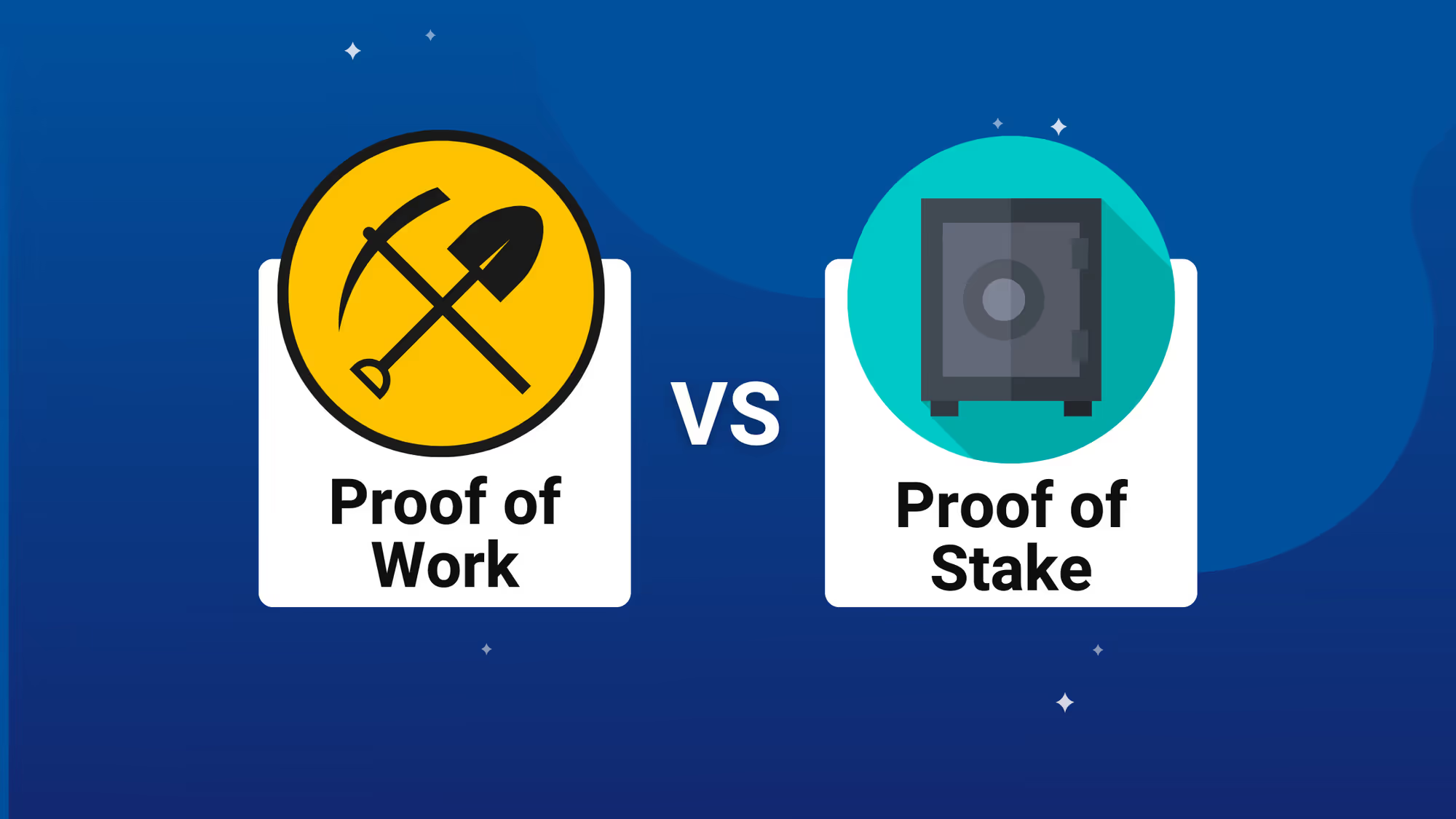
Understanding the Key Differences Between Proof of Work and Proof of Stake in Blockchain Technology
Blockchain technology relies on consensus mechanisms to validate transactions and secure the network. Two of the most prominent methods are Proof of Work (PoW) and Proof of Stake (PoS). While both aim to achieve the same goal—ensuring agreement across decentralized systems—they take very different paths to get there.
Here’s what you need to know about how each system works, and why the debate between them continues to shape the future of blockchain.
What Is Proof of Work?
Proof of Work is the original consensus model introduced by Bitcoin. In PoW, miners compete to solve complex mathematical problems. The first to solve it earns the right to add a new block of transactions to the blockchain—and gets rewarded with newly minted cryptocurrency.
This process requires massive computational power and energy, which has led to environmental concerns. Still, PoW is lauded for its security and decentralization. It’s been the backbone of Bitcoin and other major networks like Litecoin for over a decade.
Key Features of PoW:
- Highly secure and battle-tested
- Energy-intensive
- Requires powerful hardware (ASICs or GPUs)
- Slower transaction speed compared to newer models
What Is Proof of Stake?
Proof of Stake emerged as a more energy-efficient alternative to PoW. Instead of miners, PoS relies on validators—participants who lock up (or “stake”) a portion of their cryptocurrency to earn the right to validate transactions.
Validators are chosen based on the amount they’ve staked and sometimes other factors like how long they’ve held their stake. PoS dramatically reduces energy use, making it more sustainable.
Ethereum, the second-largest blockchain, switched from PoW to PoS in 2022 in an event known as “The Merge,” significantly cutting its energy consumption by over 99%.
Key Features of PoS:
- Energy-efficient
- Faster transaction throughput
- Accessible with standard hardware
- Potential risks of centralization if a few entities stake large amounts
Comparing Proof of Work vs. Proof of Stake
| Feature | Proof of Work | Proof of Stake |
|---|---|---|
| Energy Use | High | Low |
| Hardware Required | Specialized (ASICs/GPUs) | Regular computers or servers |
| Security | Very high | High, but still evolving |
| Speed and Cost | Slower, more costly | Faster, cheaper |
| Environmental Impact | Significant | Minimal |
| Vulnerability | 51% attack risk | Wealth concentration risk |
Which Is Better?
There's no one-size-fits-all answer. PoW remains the gold standard for security and decentralization, especially in networks where robustness is a top priority. PoS, on the other hand, offers a scalable and eco-friendly solution that supports modern applications like DeFi and NFTs.
As more blockchains explore hybrid models or improved versions of PoS (such as Delegated PoS or Liquid PoS), the future may see a blend of both mechanisms tailored to specific use cases.



