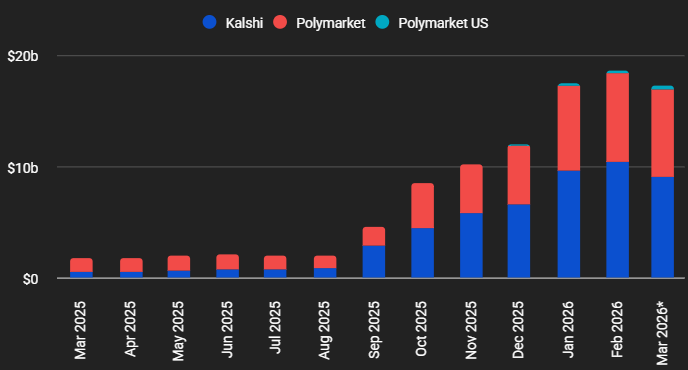
Kalshi and Polymarket processed over $18 billion in combined monthly volume in February as regulatory scrutiny intensified. The scale is forcing both platforms to formalize insider trading controls as lawmakers question market integrity.
Kalshi said Monday it introduced screening tools to block political candidates from trading on their own elections, extending existing restrictions on elected officials. The platform also partnered with IC360 to restrict athletes, coaches, and referees from participating in related sports markets. A whistleblower feature has been added to flag suspicious activity directly within its trading interface.
 Bobby DeNault
Can Prediction Markets Meet Regulatory Standards?
The updates come as U.S. lawmakers push to align prediction markets with traditional financial rules. Senators recently introduced the “Prediction Markets Are Gambling Act,” targeting contracts tied to sports and casino-style events. Kalshi reported $10.44 billion in February volume, compared with $7.94 billion on Polymarket, according to data. But can enforcement mechanisms scale with this level of activity?
Polymarket said it revised its rulebook across both its decentralized finance (DeFi) platform and its CFTC-regulated U.S. exchange. The firm outlined prohibited conduct including trading on confidential information, illegal tips, or events participants can influence, while expanding restrictions on spoofing, wash trading, and front-running.
“These rule enhancements make our expectations abundantly clear for every participant across both platforms,” said Neal Kumar, chief legal officer at Polymarket, adding that the platform uses layered surveillance combining on-chain data with third-party monitoring tools.
The next phase depends on how regulators respond to these controls, particularly as the Commodity Futures Trading Commission (CFTC) and Congress refine oversight of event-based contracts. Market participants will track whether enforcement actions or legislative outcomes reshape which contracts remain tradable in the U.S.