
Polymarket, the world’s largest fully onchain prediction market, is preparing a key infrastructure upgrade by moving from a bridged version of USDC to Circle’s native USDC on Polygon. The transition, announced Thursday alongside Circle, is expected to roll out in the coming months.
The platform currently relies on USDC.e, a bridged stablecoin, as its primary medium for trading, order execution, and settlement. Any funds deposited from other blockchains, including Ethereum, Solana, Arbitrum, and Base, are automatically converted into USDC.e on Polygon. While this setup has enabled cross-chain participation, bridged assets are often viewed as carrying additional complexity and risk compared with native issuance.
 Circle
By introducing native USDC on Polygon, Polymarket aims to simplify this process and strengthen the reliability of its core payment infrastructure. Native USDC is issued directly by Circle on supported networks, reducing dependence on third-party bridges and improving capital efficiency for users.
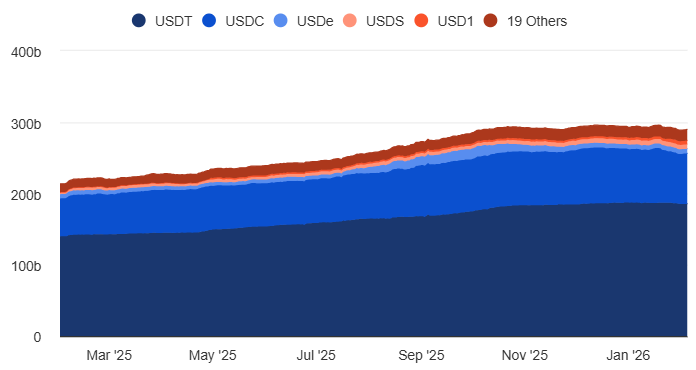
Circle CEO Jeremy Allaire described the partnership as a natural fit. In a statement, he said Polymarket has played a leading role in combining real-time information with market dynamics, and that native USDC would help deliver a faster and smoother user experience. USDC is currently the second-largest stablecoin globally and is natively issued on around 30 blockchains.
The move also aligns with Circle’s broader strategy. In outlining the company’s 2026 roadmap, Circle CTO Nikhil Chandhok said the firm plans to deepen native USDC support on high-impact networks while improving interoperability across chains. Expanding native issuance is a central part of that effort.
Circle Internet Financial
Beyond the stablecoin upgrade, Polymarket has hinted at further developments. Company representatives have previously suggested the possibility of launching a native POLY token, though no formal plans have been confirmed. There has also been speculation about whether Polymarket might eventually explore an application-specific Layer 2 network, a topic the company has not publicly addressed.



