

Polymarket has introduced stricter market integrity rules across its DeFi platform and U.S. regulated exchange, as prediction markets process record volumes exceeding $18.6 billion in February. The changes signal a shift toward institutional-grade compliance standards.
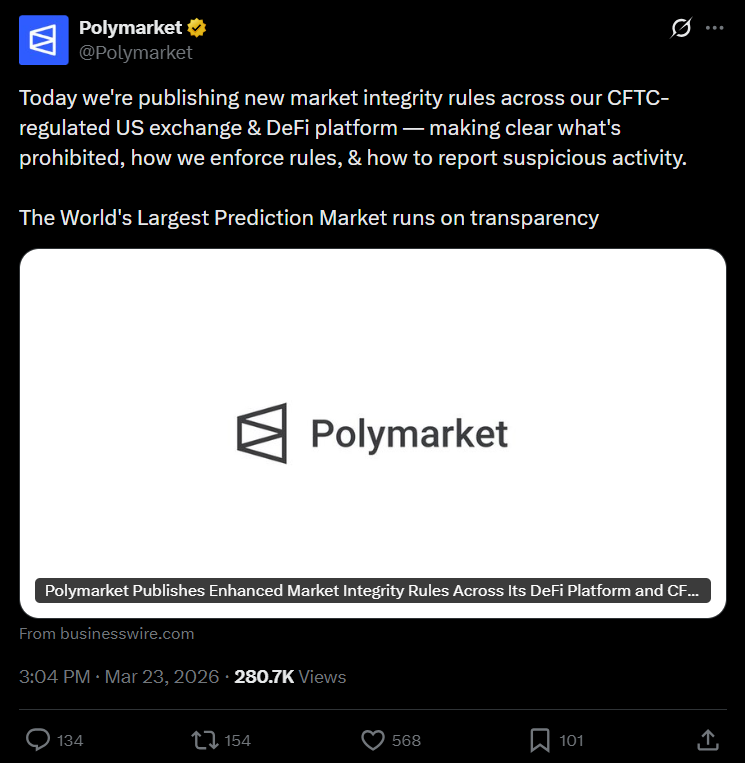
Polymarket outlined new prohibitions targeting insider trading, fraud, and manipulation, applying across both its decentralized platform and its Commodity Futures Trading Commission-regulated venue. The framework defines three categories of insider misconduct, including trading on stolen information, illegal tips, and positions held by individuals able to influence event outcomes.
Will Stronger Rules Attract Institutional Prediction Flow?
The update aligns with a broader regulatory push as the CFTC asserts jurisdiction over event contracts under the Commodity Exchange Act. Polymarket’s U.S. platform operates under an amended 2025 order requiring surveillance and reporting standards comparable to Designated Contract Markets. In parallel, DeFi-based venues continue emphasizing lower costs and self-custody, creating a divergence in compliance approaches.
But market growth is accelerating despite these structural differences. Combined trading volume across Polymarket and Kalshi reached approximately $18.6 billion in February, with more than $8 billion traded in the first half of March alone, according to industry data. Can stricter oversight coexist with the open-access ethos of decentralized markets?
Neal Kumar, Chief Legal Officer at Polymarket, said the updated rules aim to clarify expectations across participants while reinforcing existing compliance infrastructure. Enforcement on the U.S. platform includes real-time monitoring, external surveillance partnerships, and coordination with the National Futures Association, with penalties ranging from account suspension to regulatory referrals.
The changes also introduce formal reporting channels, including confidential complaint mechanisms for U.S. users and community-based reporting on the DeFi platform. As prediction markets expand into institutional use cases across media and finance, the next catalyst will be whether compliance frameworks become a competitive differentiator in capturing regulated order flow.



