

A prediction market tied to an Iranian missile strike on Israel drew more than $14 million in wagers. The contract later triggered death threats against a journalist whose reporting helped shape how the event was interpreted.
Emanuel Fabian, a military correspondent for The Times of Israel, said individuals contacted him after he reported that an Iranian missile struck an open area near the city of Beit Shemesh on March 10. According to Fabian, several of the messages demanded he change his reporting to say the projectile had been intercepted.
The requests appeared linked to a Polymarket contract titled “Iran strikes Israel on…?” which would resolve “yes” if a missile, drone, or airstrike hit Israeli soil that day. The market’s rules also specified that intercepted projectiles would not qualify as a confirmed strike.
Can Prediction Markets Influence Real-World Reporting?
Fabian said the messages escalated quickly. He reported receiving dozens of communications across email, social media, and messaging platforms, including WhatsApp threats warning that he would be harmed if the article remained unchanged.
The journalist said he refused to alter the report because it was based on statements from Israeli rescue services and military sources. He later filed a police report and provided investigators with copies of the messages.
“The attempt by these gamblers to pressure me to change my reporting so that they would win their bet did not and will not succeed,” Fabian wrote in his account of the incident.
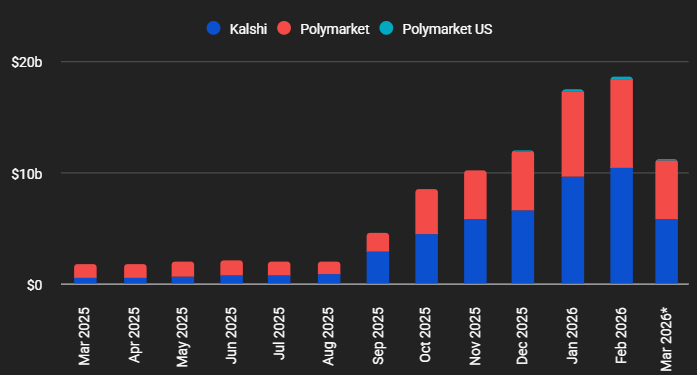
The episode highlights a growing tension as prediction markets expand into geopolitical events. Platforms such as Polymarket and Kalshi allow users to trade contracts tied to elections, policy decisions, and military actions, attracting billions in trading volume.
According to data dashboard, Kalshi recorded about $10.4 billion in trading volume in February while Polymarket logged roughly $7.9 billion. Combined activity across both platforms is now on pace to approach a seventh consecutive monthly record of roughly $20 billion.
Critics argue that markets tied to war or death could create incentives for manipulation or insider activity. Earlier this month, U.S. lawmakers introduced the “Death Bets Act,” which would ban contracts tied to war, assassination, or fatalities.
The proposed legislation follows separate concerns raised after blockchain analytics firm Bubblemaps identified several wallets that reportedly earned around $1 million betting that the United States would launch strikes on Iran shortly before the attacks occurred.
Prediction platforms have already begun adjusting their policies. Polymarket recently removed a contract asking whether a nuclear weapon would be detonated this year after public criticism.
As prediction markets grow, regulators and journalists alike may face new questions about how financial incentives interact with real-time information flows. The next test may come as lawmakers debate restrictions on event-based contracts tied to geopolitical conflict.



