

Polymarket, a fast-growing prediction market platform, has signed an exclusive agreement with Dow Jones Media to supply its forecasting data across several of the publisher’s flagship outlets, including The Wall Street Journal, Barron’s, and Investor’s Business Daily.
Under the deal, Polymarket’s prediction data will be featured both online and in print. Dow Jones also plans to use the data in new editorial tools, such as an earnings calendar that highlights market expectations for publicly traded companies. Polymarket announced the partnership in a post on X, describing it as a step toward bringing prediction markets into mainstream financial coverage.
We're honored to be named the Exclusive Prediction Market Partner of the Wall Street Journal & the Dow Jones.
— Polymarket (@Polymarket) January 7, 2026
The World's Largest Prediction Market™ 🤝 the most trusted voices in finance pic.twitter.com/S6o7qkCUS6
The agreement reflects a broader shift in how media organizations and financial professionals are using prediction markets. Rather than relying solely on traditional analyst forecasts or polls, these platforms aggregate views from a global user base, offering real-time insights into how markets collectively assess future events.
Polymarket’s partnership with Dow Jones adds to a growing list of high-profile media collaborations. The platform is already the exclusive prediction market partner for Yahoo Finance, while Google Finance has begun integrating data from both Polymarket and its competitor Kalshi directly into search results. Kalshi, meanwhile, serves as CNN’s official prediction market partner, with its data incorporated into on-air programming.
Industry observers say these deals point to increasing confidence in prediction markets as a useful information layer, not just a niche trading product. Leo Chan, co-founder and CEO of predictive intelligence startup Sportstensor, recently described the appeal of platforms like Polymarket as rooted in collective intelligence.
“What makes Polymarket so valuable is that they have data, collective intelligence, decentralized data from all around the world,” Chan said last month. “The wisdom of the crowd is able to give you much more accurate predictions on what’s going to happen.”
Chan added that the value of this data extends well beyond traders. Financial institutions, researchers, and media organizations increasingly see prediction markets as infrastructure for gathering insights that are difficult to capture through conventional methods.
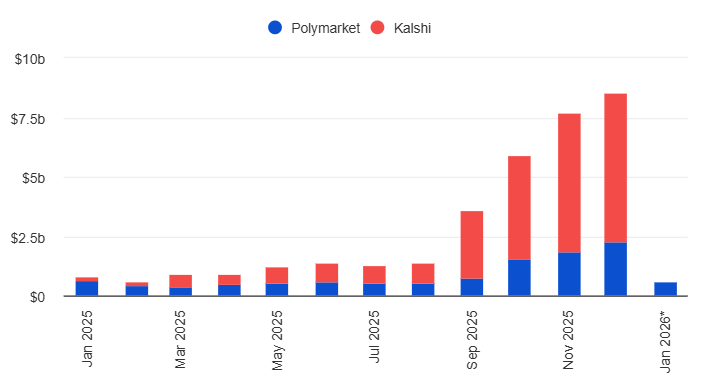
The commercial momentum behind these platforms is also reflected in their valuations. Following multiple funding rounds in 2025, Polymarket was most recently valued at around $9 billion. Kalshi, its largest U.S.-based rival, has been valued at approximately $11 billion.
Beyond media partnerships, Polymarket has continued to expand its product offerings. Earlier this week, the company announced plans to introduce a new suite of housing-related prediction markets through an integration with Parcl, an onchain real estate platform. The move signals growing interest in applying prediction markets to sectors such as housing, where forward-looking data can be especially valuable.
Polymarket has also confirmed plans to launch its own native token, POLY, along with an accompanying airdrop. The company first disclosed these plans in October, although it has not yet shared a specific launch timeline.
As prediction markets gain wider exposure through established financial publications, their role in shaping public understanding of economic and corporate outcomes appears set to grow. For readers of outlets like The Wall Street Journal and Barron’s, Polymarket’s data could soon become a familiar reference point alongside traditional market indicators.



